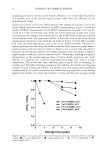
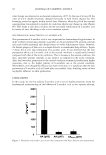
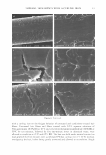
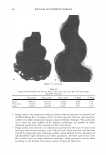
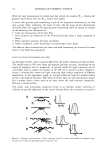
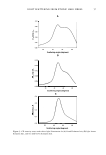
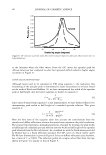
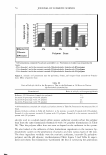
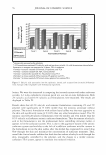
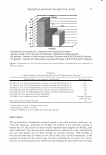
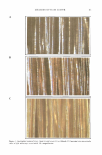
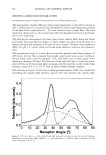
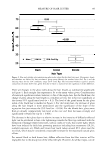
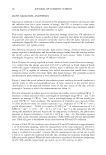
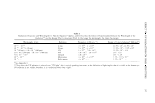
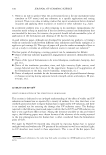
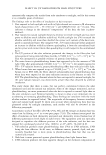
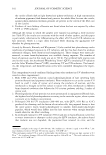
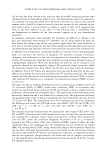
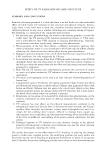
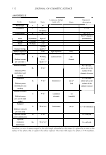
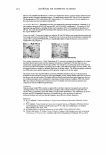
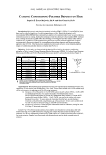
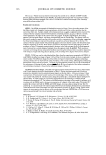
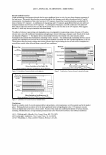
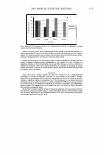
10 JOURNAL OF COSMETIC SCIENCE color change was observed at an elevated temperature, 40 ° C. In the case of a low pH, the color of w/o/w double emulsions changed eventually to dark brown (Figure 6a). The browning started to appear within several days. However, when the pH of the internal aqueous phase was adjusted to neutral, we could not observe any change in color (Figure 66). This result is also direct evidence for the successful stabilization of 1-ascorbic acid by means of ionic shielding in the w/o/w emulsion system. SKIN PERMEATION CHARACTERISTICS OF L-ASCORBIC ACID Skin permeation of 1-ascorbic acid is very important for dermatological applications. In order to show its functions properly, 1-ascorbic acid must permeate the stratum corneum and reach viable epidermal and dermal layers or viable subcutaneous layers. However, the barrier property of skin acts as a major obstacle to cransdermal drug delivery. Figure 7 shows the in vitro skin permeation of 1-ascorbic acids. It was observed that the skin permeation efficacy of 1-ascorbic acid in the neutral condition is significantly lowered compared with that of the acidic condition. This is because at the neutral condition, the skin, especially stratum corneum, is not injured, as compared to the acidic condition. Also, the lower skin permeation at the neutral condition stemmed possibly from higher ionization, that is, the higher polarity of 1-ascorbate ion at the neutral condition. Nevertheless, even though the efficacy was more or less low, it is significant that the skin permeation of 1-ascorbic acid still took place successfully. Ionic shielding seems to have negligible influence on skin permeation. CONCLUSIONS In chis study, we tried to stabilize 1-ascorbic acid in w/o/w double emulsions. From the fundamental understanding of the behavior of 1-ascorbic acid in the aqueous solution, - N E - -, 3000 2500 2000 1500 1000 500 0 AA (pH2) AA (pH7) A�gS0 4 (pH7) Figure 7. Evaluation of 1-ascorbic acid in vitro skin permeation with Franz diffusion cell measurements.

STABILIZATION OF L-ASCORBIC ACID 11 a stabilization system was constructed, considering the ionic shielding and pH adjust ment in the stable w/o/w double emulsions. In a proper condition, the 1-ascorbic acid could maintain its initial molecular characteristics for a long time (we are still testing). It is notable that the emulsion formulations containing 1-ascorbic acid did not show any browning phenomenon, even after long storage at high temperature, verifying directly that the stabilization of 1-ascorbic acid is achieved in w/o/w double emulsions. More over, the successful skin permeation of L-ascorbic acid stabilized in this study is expected to maintain its functions in the final applications. ACKNOWLEDGMENT This work was supported in part by the National Research Laboratory (NRL) program (Project No. 2000-N-NL-0l-C-270) of the Ministry of Science and Technology, South Korea. This study was also partially supported by a grant from the Korea Health 21 and R&D project, Ministry of Helath and Welfare, South Korea (03-PJ1-OH14-0001). REFERENCES (1) K. Iozumi, G. E. Hoganson, R. Pennella, M. A. Everett, and B. B. Fuller, Role of tyrosinase as the determinant of pigmentation in cultured human melanocytes, ]. Invest. Dermatol., 100, 806-811 (1993 ). (2) G. Prata, Regulatory mechanisms of melanogenesis: Beyond the tyrosinase concept,]. Invest. Dermatol., 100, 156-161 (1993). (3) Y. Shindo, E. Witt, and L. Packer, Antioxidant defense mechanisms in murine epidermis and dermis and their responses to ultraviolet light,]. Invest. Dermatol., 100, 260-265 (1993). (4) D. Darr and I. Fridovich, Free radicals in cutaneous biology,]. Invest Dermatol., 102, 671-675 (1994). (5) C. L. Phillips, S. B. Combs, and S. R. Pinnell, Effects of ascorbic acid on proliferation and collagen synthesis in relation to the donor age of human dermal fibroblasts,]. Invest Dermatol., 103, 228-232 (1994). (6) R. M. Colven and S. R. Pinnell, Topical vitamin C in aging, Clin. Dermatol., 14, 227-234 (1996). (7) B. M. Tolbert and J.B. Ward, "Dehydroascorbic Acid," In Advances in Chemical Series (American Chemical Society, Washington, 1982), Vol. 200, p. 101. (8) R. Austria, A. Semenzato, and A. Bettero, Stability of vitamin C derivatives in solution and topical formulations,]. Pharmaceut. Biomed. Anal., 15, 795-801 (1997). (9) M. Gallarate, M. E. Carlotti, M. Trotta, and S. Bovo, On the stability of ascorbic acid in emulsified systems for topical and cosmetic use, Int.]. Pharrn., 188, 233-241 (1999). (10) M. A. Trindade and C. R. F. Grosso, The stability of ascorbic acid microencapsulated in granules of rice starch and in gum arabic,]. Microencapsul., 17, 169-176 (2000). (11) P. Spiclin, M. Gasperlin, and V. Kmetec, Stability of ascorbyl palmitate in topical microemulsions, Int. ]. Pharm., 222, 271-279 (2001). (12) M. S. Uddin, M. N. A. Hawlader, and H.J. Zhu, Microencapsulation of ascorbic acid: Effect of process variables on product characteristics,]. Microencapsul., 18, 199-209 (2001). (13) E. Kimoto, H. Tanaka, T. Ohmoto, and M. Choami, Analysis of the transformation products of dehydro-1-ascorbic acid by ion-pairing high-performance liquid chromatography, Anal. Biochem., 214, 38-44 (1993). (14) J. R. Yuan and F. Chen, Degradation of ascorbic acid in aqueous solution,]. Agric. Food Chem., 46, 5078-5082 (1992). (15) 0. Solomon, U. Svanberg, and A. Sahlstrom, Effect of oxygen and fluorescent light on the quality of orange juice during storage at 8°C, Food Chem., 53, 363-368 (1995 ). (16) J. W. Kim, S. I. Lee, B. G. Chae, H.K. Kim, and H. H. Kang, Extremely stable w/o/w multiple emulsions by manipulating the characteristics of internal aqueous phase, 75th ACS Colloid and Surface Science Symposium, Carnegie Mellon University, Pittsburgh, June 10-13, 2001.
Purchased for the exclusive use of nofirst nolast (unknown)
From: SCC Media Library & Resource Center (library.scconline.org)