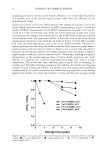
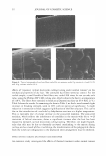
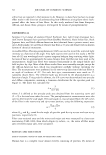
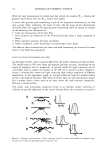
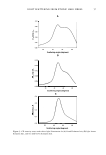
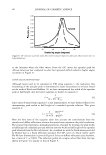
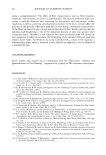
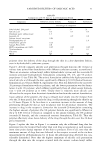
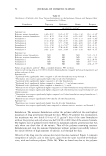
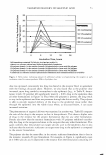
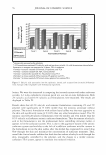
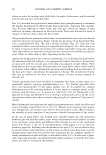
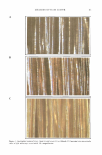
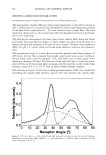
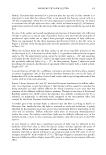
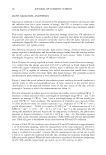
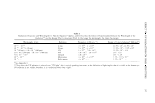
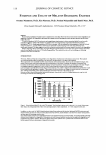
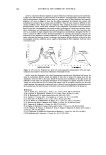
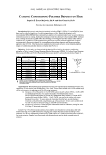
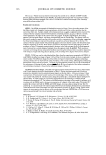
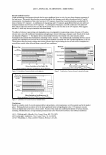
8 JOURNAL OF COSMETIC SCIENCE morphology of very fine internal water droplets. Moreover, it is evident that the presence of 1-ascorbic acid in the internal aqueous phase didn't have any influence on the morphological change. Stability of L-ascorbic acid in wlo!w dottble emttlsions. The stability of 1-ascorbic acid in the w/o/w double emulsions was evaluated by HPLC measurements. Figure 3 shows ex amples of HPLC measurements. In the HPLC measurement, 1-ascorbic acid was de tected at 6. 7 min of retention time. From the linear regression of peak area to the concentration, the stability of 1-ascorbic acid in the w/o/w double emulsions could be determined precisely. The long-term stability of 1-ascorbic acid in the w/o/w double emulsions was measured at time intervals and shown in Figure 4. At low pH, 1-ascorbic acid could not avoid degradation, even in the w/o/w double emulsions. However, by merely applying ionic shielding, the stability could be fairly improved, which shows a good accordance with the solutions shown in Figure 1. For a certain time, the stability was good. In the long run, however, the stability started to drop. In contrast, a dramatic improvement in stability could be achieved at pH 7. When ionic shielding was applied appropriately to the internal aqueous phase of w/o/w double emulsions, the initial stability of 1-ascorbic acid could be maintained for a long time, even at a high temperature. This reveals that ionic shielding plays a crucial role in stabilizing 1- ascorbic acid. The effect of loading amount on the stability of 1-ascorbic acid was also observed. Figure 5 shows the stability of 1-ascorbic acid with storage time at different loading amounts. It could be found that the stability was not dependent on the loading amount of 1-ascorbic acid. From those results, it can be said that once a proper system - E (' ( 1.0 0.8 0.6 0.4 0.2 \•-� -------: T\ - ■- 0.::: pH 7 T -•- 0 wt.% Mg5O 4 , pH 7 -•- 0.5 wt.% Mg5O 4 , pH 2 -•- 0 wt.% Mg5O4, pH 2 O.O+---r--...--T""--.----,.-----.----T-----.------.-----. 0 2 4 6 8 10 Storage time (week) Figure 4. Stability of L-ascorbic acid in w/o/w double emulsions with the storage time (40 ° C) for different systems: -■-, 0.5 wt% MgSO4/pH 7 -•-, without MgSO4/pH 7 -.A.-, 0.5 wt% MgSO//pH 2 -T-, without MgSO4/pH 2.

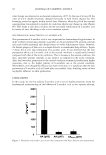
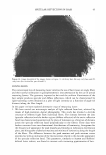
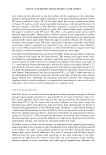
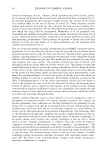
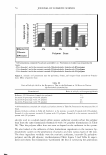
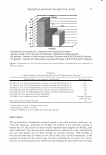
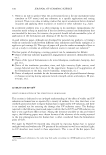
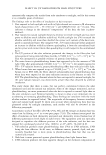
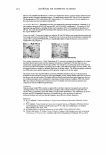
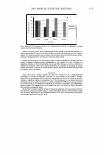
0 - C C - STABILIZATION OF 1-ASCORBIC ACID 1.0 -•--•--•-• -----t 0.8 -■- 1 wt.% L-ascorbic acid -•- 3 wt.% L-ascorbic acid -•- 5 wt.% L-ascorbic acid 0.6 0.4 0.2 0.0-t--....--.......-....---,--....... -....... ----------.... 0 2 4 6 8 Storage time (week) 10 9 Figure 5. Stability of L-ascorbic acid in w/o/w double emulsions with the storage time (40°C) at different concentrations: - ■-, 1 wt% L-ascorbic acid -•-, 3 wt% L-ascorbic acid -A-, 5 wt% L-ascorbic acid. All the samples were shielded with 0. 5 wt% MgSO4. The pH of the internal aqueous phase was adjusted to 7. is established, 1-ascorbic acid can be stabilized to a high concentration in the w/o/w double emulsions. A more attractive result in our study was that the 1-ascorbic acid stabilized showed no browning phenomenon. Figure 6 shows a photograph for the color change of 1-ascorbic acid-loading w/o/w double emulsions. Due to the deformation of chemical structure, the color of emulsion formulations changes inevitably from a white to a dark brown, which is accelerated at elevated temperatures. Such a phenomenon is a fatal defect in the final applications. In order to confirm the browning effect of w/o/w double emulsions, the (a) (b) Figure 6. Color change for L-ascorbic acid-loading w/o/w double emulsions after 10-week storage at 40°C: (a) pH 2, (b) pH 7. The concentration of L-ascorbic acid in the emulsions was fixed at 3 wt%.
Purchased for the exclusive use of nofirst nolast (unknown)
From: SCC Media Library & Resource Center (library.scconline.org)