12 JO URN AL OF COSMETIC SCIENCE (17) A. T. Florence and D. Whitehill, The formulation and stability of multiple emulsion, Int.]. Pharm., 11, 277-308 (1982). (18) S.S. Davis and I. M. Walker, Multiple emulsions as targetable delivery systems, Methods Enzymol., 149, 51-64 (1987). (19) S. Matsumoto and W.W. Kang, Formulation and applications of multiple emulsions,]. Disp. Sci. Tech., 10, 455--482 (1989). (20) A. R. Lee and K. Tojo, Characterization of skin permeation of vitamin C: Theoretical analysis of penetration profiles and differential scanning calorimetry study, Chem. Pharm. Bull., 47, 174-177 (1998). (21) K. Katayama, R. Matsui, T. Hatanaka, and T. Koizumi, Effect of pH on skin permeation enhancement of ascorbic drugs by I-menthol-ethanol system, Int.]. Pharm., 226, 69-80 (2001). (22) S. R. Pinnell, H. Yang, M. Omar, N. Monteiro-Riviere, H. V. Debuys, L. C. Walker, Y. Wang, and M. Levine, Topical L-ascorbic acid: Percutaneous absorption studies, Dermatol. Surg., 27, 137-142 (2001). (23) G. M. Eichenbaum, P. F. Kiser, S. A. Simon, and D. Needham, pH and ion-triggered volume response of anionic hydrogel microspheres, Macromolecules, 31, 5084-5093 (1998). (24) A. E. English, T. Tanaka, and E. Edelman, Polymer and solution ion shielding in polyampholyte hydrogels, Polymer, 39, 5893-5897 (1998). (25) A. E. English, T. Tanaka, and E. Edelman, Polyampholyte hydrogel swelling transitions: Limitations of the Debye-Huckel law, Macromolecules, 31, 1989-1995 (1998). (26) H. Iwase, Use of an amino acid in the mobile phase for the determination of ascorbic acid in food by high-performance liquid chromatography with electrochemical detection.]. Chromatography A, 881, 317-326 (2000).

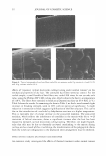
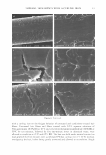
J. Cosmet. Sci., 55, 13-27 CTanuary/February 2004) Effects of thermal treatments with a curling iron on hair fiber S. B. RUETSCH and Y. K. KAMATH, TRI/Princeton, Princeton, NJ 08542. Accepted for publication October 2, 2003. Synopsis The effect of curling hair with a curling iron has been investigated. Possibilities of thermal damage with repeated curling according to, and in violation of, the manufacturer's specifications have been studied. The propensity of hair surface to damage depends on the moisture content of the hair, and these experiments have been conducted in both wet and dry conditions, with and without application of tension, and with short or prolonged times. Scanning electron microscopic (SEM) examination revealed that fibers treated under the dry condition (50% RH) show radial and axial cracking along with scale edge fusion. Similar thermal treatment on wet hair resulted in severe damage of the type described above, as well as bubbling and buckling of the cuticle due to the formation and escaping of steam from the fiber. Fibers subjected to repeated curling in the dry condition show slight increases in tensile mechanical properties, characteristic of a crosslinked fiber. Fibers treated with conditioners show an improvement in characteristic life, especially in the case of low-molecular-weight conditioners, such as CETAB, which can penetrate into the hair fiber (shown by TOP-SIMS analysis). INTRODUCTION Temporarily curling hair by application of heat is one of the grooming practices used for hair styling. This work examines the effects of such thermal treatments with a curling iron on the cuticular structure of the hair fiber. Manufacturers of curling irons claim that no damage is inflicted upon the hair fiber if the curling iron is used according to the specified treatment conditions, such as dry hair, short curling times, and normal tension (no applied load). The process of curling, by its very nature, has the potential for hair damage if the specifications are ignored. Therefore, we carried out a multifaceted study involving the recommended conditions, as well as "severe" conditions that ignored the specifications of the manufacturer of the curling iron. The protocols we investigated were the effects of: 1. Repeated, cyclical short-term curling/cooling of dry hair under moderate tension as specified by the manufacturer of the curling iron 2. Prolonged curling of dry hair under increased tension 3. Repeated, cyclical short-term curling/cooling of wet hair 13
Purchased for the exclusive use of nofirst nolast (unknown)
From: SCC Media Library & Resource Center (library.scconline.org)