106 JOURNAL OF COSMETIC SCIENCE of UV absorbers is another determining factor in providing photoprotection. The con centration of the sunscreens tested in this work was 5 % solids, and the formulations were applied by immersing the hair in the formulations, to aid in the uniformity of appli cation. The test protocol included application of the formulation, drying, irradiation for three days, washing with 1 % SLS, rinsing, and drying. This cycle was repeated ten times during the duration of the experiment. Benzophenone-3 and -4 were shown to provide better protection than the other UV absorbers tested in terms of protection from melanin photobleaching and retention of tensile properties. The ability of UV absorbers to penetrate the hair shaft was investigated. Although none of the UV absorbers tested were shown to have diffused through the hair fiber, the distribution of the UV filters on the hair fiber surface was even greater in the case of the oily-shine spray formulations. Two different formulations, carrying the same UV ab sorber, showed different overall effectiveness towards protection of the hair from the radiation. A number of mechanisms may be responsible for that, including H-bonding, interaction of the UV absorber with PVP, and other possibilities that are discussed in the article. One may conclude that when different formulations are used as vehicles for UV absorbers for the protection of hair, overall efficacy does not solely depend on the UV absorber used and on its concentration, but is the result of complex interactions between the active material, the vehicle used, and the substrate. A very good point was made in this study, to investigate the stability of UV absorbers under UV irradiation. This factor could be a determining one when prolonged irradiation times are used and the test formulation is not reapplied to the hair samples. The impact of the choice of UV absorber on the formulation's appearance and perfor mance (other than photoprotection) is eloquently presented by Georgalas (16). This author comments on the challenges of formulating with sunscreens in hair care. The paper covers a variety of chemical classes of sunscreen and discusses a few points that are very relevant to formulation strategy: 1. In rinse-off formulations (shampoos and conditioners), oil-soluble sunscreens can be treated as if they were fragrances (need to be solubilized/emulsified). Water-soluble sunscreens can sometimes be more easily incorporated, although incompatibilities and pH-dependent solubility may be very important. 2. In styling aids (carbomer gels), some water-soluble sunscreens may have a salt thinning effect and the oil-soluble sunscreens may require solubilizers/emulsifiers, which may have a sharp impact on the thickness of the gel and its clarity (causing a haze or imparting a yellow coloration to the gel). 3. With hairsprays, the large amount of solvent, ethanol, makes it easy to incorporate sunscreens into these formulations however, during application, hairsprays deposit droplets onto the hair shaft. A large portion of these droplets stay as such and dry at the intersection of the hair fibers, and consequently a very small portion of the hair shaft surface is covered by the hairspray formulation. In summary, hairs prays do not form a continuous film onto the hair fibers therefore, they do not offer uniform surface protection. 4. Some sunscreens, Benzophenone-3 and -4, for instance, are beige, powdery sub stances there is a need to make sure that the sunscreen active does not recrystallize once the solvent from which they were deposited onto the hair (e.g., ethanol or water) has evaporated.

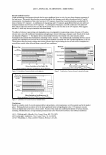
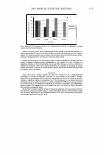
EFFECT OF UV RADIATION ON HAIR STRUCTURE 107 All of what has been written so far indicates that oil-soluble sunscreens present some challenges from the formulation point of view. The formulations need to be cosmetical ly acceptable, the sunscreen needs to be delivered to the hair in a more or less uniform manner, and it should be deposited onto the hair and retained by the substrate to pro vide protection for a period of hours or maybe a couple of days (until reapplication). Also, as has been reported so far, there is little learning that is transferable from one formulation to another all the data reviewed appears to be very formulation dependent. In summary, traditional water-insoluble UV absorbers are difficult to deliver to the hair, and traditional water-soluble UV absorbers can be easily washed off from the hair during the rinsing steps of hair care product application. The term traditional is used here to describe sunscreens that have been mainly used for skin protection and sun care formulations and that have also been investigated for the protection of human hair. A different class of sunscreens, cationically modified, is discussed in the next paragraphs. Zulli (1 7) describes the delivery of lipophilic UV absorbers (isoamyl p-methoxy cinnamate and avobenzone) to the hair via preparation of cationically charged nano vesicles. The nanoparticles described were prepared by high-pressure homogenization of a phospholipid dispersion. With this mechanism the particles can be designed to be positively charged or even negatively charged. The positively charged particles, unlike the negatively charged ones, show affinity for the hair, even from rinse-off treatments. A different class of UV filters was investigated by Gao and Bedell (18). In this case, affinity was achieved by cationically modifying the UV-absorbing molecule. The authors investigated the effectiveness of cinnamidopropyltrimonium chloride (CATC, a cationi cally modified UV absorber) as it compared to octylmethoxycinnamate (OMC) on natu ral grey hair. The paper describes a shampoo formulation based on sodium lauryl sulphate (10%) and 2% sunscreen (CATC or OMC). Under these conditions, OMC, an oil-soluble com pound, was solubilized by the surfactant. CATC was thought to form a complex with the surfactant, subsequently to be solubilized by it. The application of the formulation to the hair was by immersion and it was followed by a rinsing step. The application (and rinse) was performed after every 24 hours of irradiation the total irradiation time was 20 days (27°C and 65% RH). The distribution of the UV irradiation was given by combining the following two sources (no VIS light source was added): 280-320 nm (UVB), 0.14 mW cm- 2 (= 1.4 W m- 2 ), and 320-4 00 nm (UVA), 0.4 9 mW cm- 2 (= 4.9 W m- 2 ). The irradiated and non-irradiated hair was analyzed for color change (CIE L*a*b*, DL, Db, and DYI, yellowing index), fiber diameter and cross-sectional area, tensile strength, wet combing force, dynamic contact angle, and transverse swelling. The substantivity (19) of CATC, under the conditions employed, was found to be 4.5 g of material deposited per 100 g of hair. Only trace amounts of OMC deposited under the same conditions this is not surprising since the formulation was not optimized to deposit OMC. On the other hand, CATC, being cationically charged, has an intrinsic affinity for the hair fiber. Although the paper does not go into detail on the interactions between the cationically modified UV absorber and the anionic surfactant, it is plausible to expect that the two oppositely charged moieties will form some sort of complex, and perhaps it is the complex that is depositing onto the hair as well as, or instead of, the free cationic UV absorber molecule.
Purchased for the exclusive use of nofirst nolast (unknown)
From: SCC Media Library & Resource Center (library.scconline.org)