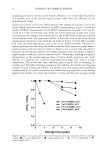
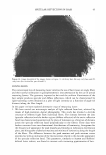
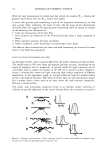
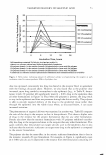
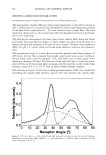
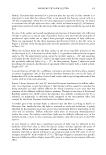
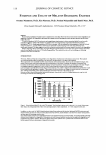
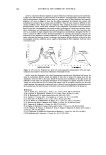
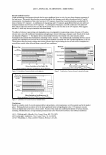
2003 ANNUAL SCIENTIFIC MEETING EFFEGT OF HAIR COLOR ON LUSTER Karin Keis, Ph.D., Ram Ramaprasad, Ph.D. and Yash Karnath, Ph.D. TRI/Princeton, Princeton, NJ 08542 Introduction The luster of hair is an essential quality for hair beauty. It is an optical phenomenon resulting from the specular reflection of light at the air-cuticle interface. So far many models of light reflection at air-cuticle interface have been described in the literature, however, there is no simple relationship between luster and the light reflected from hair (1-6). The large interest in luster has resulted in a large number of studies on the effect of various cosmetic products on luster and development of variety of methods for measuring it ( 1-12). For natural hair colors, such as blond, brown and black, the luster is the highest for the one with the darkest hue, explained by the low intensity of the diffusely scattered light, while the intensity of the specularly reflected light remains the same. In this work, the interest is in the instrumental evaluation of luster of hair dyed with different colors and depths of shade, to demonstrate the effect of artificial color on luster. Also, we make an attempt to study the effect of hair color on subjective evaluation of luster. Materials and Methods The naturally unpigmented Piedmont hair was dyed for 5, 20 and 45 minutes with commercially available semipermanent dyes. The colors were chosen to cover the extremes and middle of the visible spectrum. Also, the pure single-component dyes were used to saturate Piedmont hair fibers by dyeing under specific conditions. Using a UltraScan XE spectrophotometer equipped with integrating sphere, the total reflectance spectra and CIELAB color parameters were obtained. From measured L •, a• and b• parameters the changes in chroma, total color, lightness and hue were calculated. Luster was measured by using a modified Brice-Phoenix goniophotometer (GP) to record the intensity of scattered light as a function of angle. Measurements were carried out on 30 randomly chosen single hair fibers, for each color and dyeing time. He-Ne laser with a wavelength of 632 nm and white light from the Quartz Tungsten Halogen lamp was used as light sources. The dye penetration profiles on cross-sections of hair fibers were examined by optical microscope. Results and Discussion The largest change in reflectance curves was found to occur between 0 and 5 minutes of dyeing time. Thereafter the decrease in total reflectance is small indicating that additional dye uptake is small. Correspondingly, most change in luster occurred between 0 and 5 minutes dyeing time (see Figure 1). Even though the dye penetrates the fiber completely during 45 minutes, the dye concentration in cuticular sheath is much higher compared to fiber interior. The low color uptake is related to weak polar and van der Waals interactions of semipermanent dyes with hair. Red (sp) Green (sp) L----===�-r Blue (sp) 12 ------------------ - - 20 30 ◄O Dyeing time (min) Figure I. Luster for various dyeing times for different semipermanent colors (illumination A.=632 run). 121

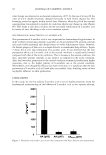
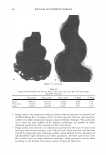
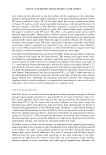
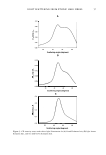
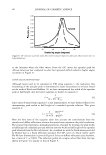
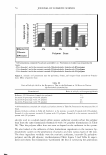
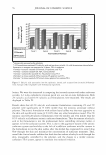
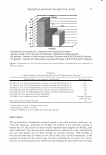
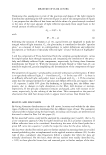
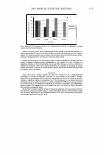
122 JOURNAL OF COSMETIC SCIENCE Luster by instrumental detection depends on spectral reflectance of the hair, spectral power distribution of light source and eventually on spectral response of the detector. Goniophotometric measurements when using a monochromatic illumination source serve as a sensitive probe of fiber absorptive and scattering properties. GP curves in Figure 2 show that the diffuse components for Piedmont hair colored with semipermanent and pure dyes to various colors are different. Thus, the luster values are different for hair colored to different colors. Results show the complexity when comparing the luster of colored hair from goniophotometric curves, arising from variations in dye composition, concentration and its penetration depth into the fiber. Semipermanent dyes namely consist of combination of various dyes (aromatic amines, amino nitrobenzenes and anthraquinone derivates) with different affinities. On the other hand, pure dyes serve as an example of single component dyes with homogeneous dye distribution throughout the fiber. ln order to analyze the effect of above mentioned parameters on scattering and absorptive processes, the expression for the dependence of diffuse reflectance on dye absorbance and the path length of the dyed region within the fiber has been derived. According to this equation, diffuse reflectance is reduced by dyes having higher extinction coefficient and are capable of penetrating the fiber completely. Such hair colors will increase luster. o.,l 0.36 1 0.3 :io.25 i 02j [!! io.1s1 40 50 80 70 80 Scatlaring angle (deg.-) 10 20 30 50 80 Figure 2. GP curves for Piedmont hair dyed with multi-component semipermanent (left) and single component dyes (right) to various hues (illumination wavelength 632 nm). Ideally, under the illumination with a broad homogeneous spectral power distribution light source, the luster by instrumental detection should not depend on hair color as long as the dyeing level and dye distribution within the fiber is the same. Beside the spectral power distribution of the light source and reflectance of the object, the perceptual description of color depends on spectral sensitivity of the eye. Talcing into account that the eye of a person with normal vision is not equally sensitive over the entire visible spectrum, the expression for perceived luster is derived. From the theoretical considerations under given assumptions, the luster from hair of chromatic colors is perceived differently by the human eye. References (l) R. F. Stamm, M. L. Garcia and J. J. Fuchs, J. Soc. Cosmet. Chem., 28, 571-599 (1977). (2) W. Czepluch, G. Hohm and K. Tolkiehn, J. Soc. Cosmet. Chem., 44, 299-317 ( 1993). (3) H.K.Bustard and R. W. Smith, Applied Optics, 30, 3485-3491 (1991). (4) A. Guiolet, J.C. Garson, and J. L. Levecque, Int. J. Cosmet. Sci., 9, 111-124 (1987). (5) C. Reich and C.R.Robbins, J. Soc. Cosmet. Chem., 44, 221-234 (1993). (6) J. H. S. Rennie, S. E. Bedford and J. D. Hague, Int. J. Cosmet. Sci., 19, 131-140 (1997). (7) C. Scanavez, M. Zoega, A. Barbosa, and I. Joekes, J. Cosmet. Sci., 51, 289-302 (2000). (8) Y. Tango and K. Shirnrnoto, J. Cosmet. Sci., 52, 237-250 (2001). (9) S. Nagase, S. Shibuichi, K. Ando, E. Kariya and N. Satoh, J. Cosmet. Sci., 53, 89-100 (2002). (10) M. Okamoto, R. Yalcawa, A. Mamada, S. Inoue, S. Nagase, S. Shibuichi, E. Kariya and N. Satoh, J. Cosmet. Sci., 54, 353-366 (2003). (11) F.J. Wortmann, E. Schulze zur Wiesche and A. Bierbaum, J. Cosmet. Sci., 54, 301-316 (2003). (12) R. McMullen and J. Jachowicz, J. Cosmet. Sci., 54, 335-351 (2003).
Purchased for the exclusive use of nofirst nolast (unknown)
From: SCC Media Library & Resource Center (library.scconline.org)