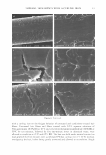
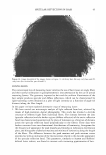
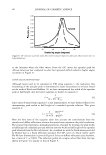
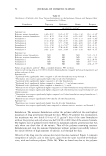
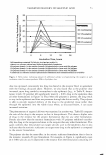
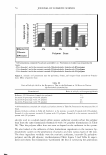
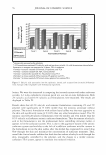
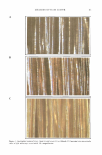
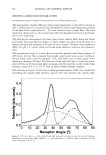
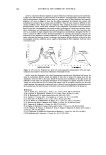
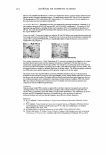
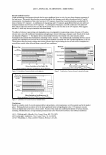
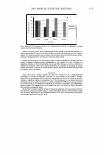
26 JOURNAL OF COSMETIC SCIENCE extent where it can be squeezed out at the cuticle edge, masking the scale structure along the squeeze line. Entire cuticle cells can be displaced and cracked into pieces (Figure 6). It is very likely that this process damages the cuticle sheath parallel to the major axis of the fiber because of the preferred orientation of the fiber with the major axis parallel to the curling iron. CONCLUSIONS DRY HAIR Thermal treatments by use of curling irons according to the manufacturer's specifica tions (dry hair, short times, and normal tension) result in minimal damage to the "dry" hair fiber. Prolonged (ten-minute) contact times combined with increased tension (10- 30 g) lead to compression, disintegration, radial cracking, and scale edge fusion of the surface cuticle cell at the f/m interface. WET HAIR Repeated short-term curling and wetting results in less damage to the cuticula, com parable to that observed in the "dry" fiber. Long-term effects lead to distortion of the cuticle cell due to trapped moisture expanding in the form of steam in the fiber, forming bulges or bumps in the scale faces and ripples at the scale edges. This type of damage occurs all around the fiber and is not restricted to the f/m contact zone. With wet hair, prolonged (ten-minute) contact times under increased tension lead to damage similar to that of the cuticula of dry hair, although under these wet conditions the damage is considerably more severe than in the case of the "dry" hair fiber. The high temperature flow of water-plasticized cell proteins creates mutilated and distorted cuticle cells when recommendations by the manufacturer are ignored and abusive practices are carried out. MECHANICAL PROPER TIES Thermal treatments by use of a curling iron according to the manufacturer's specifica tions (dry hair, small skein, short-term curling, and normal tension) showed, quite surprisingly, that repeated, cyclical short-term curling/cooling leads to changes in spe cific mechanical properties of the hair. The data showed that after repeated short-term curling/cooling, the post-yield modulus of the hair fibers had increased, possibly due to thermally induced crosslinking of components of the cortical domains. FATIGUE RESISTANCE Exposure to heat increased characteristic life (0), indicated by improved fatigue resis tance. This behavior is likely to be the result of crosslinking in the interior of the hair fiber as well as in the cuticula due to thermally induced dehydration. The presence of the conditioning compounds enhances this heat-induced crosslinking in the form of salt

THERMAL TREATMENTS WITH A CURLING IRON 27 linkages and hydrophobic bonding, leading to significant increases in fatigue resistance (increases in characteristic life). The outcome of this study suggests that curling of hair under moderate conditions specified by the manufacturer of the curling iron is not damaging to hair. On the contrary, it may be beneficial when used in combination with certain conditioning polymers. ACKNOWLEDGMENTS This research was carried out in context with our "Characterization and Quantification of Hair Damage" project, which is supported by TRI corporate participants from the international hair care industry. We thank TRI staffers Amy Lyttle for the tensile mechanical testing and Elena Petrovicova for the fatigue measurements. REFERENCES (1) W. Weibull, A statistical distribution function of wide applicability,]. Appl. Mech., 18,293 (1951). (2) M. Hara, P. Jar, and J. A. Sauer, Fatigue behavior of ionomers: Effect of concentration on sulfonated polystyrene ionomers, Macromolecules, 23, 4465 (1990). (3) M. Gamez-Garcia, The cracking of human hair cuticles by cyclical thermal stresses,]. Cosnzet. Sci., 49, 141 (1998). (4) S. B. Ruetsch, Y. K. Karnath, and H.-D. Weigmann, The role of cationic conditioning compounds in reinforcement of the cuticula,J. Cosnzet. Sci., 54, 63-83 (2003).
Purchased for the exclusive use of nofirst nolast (unknown)
From: SCC Media Library & Resource Center (library.scconline.org)