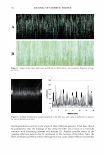
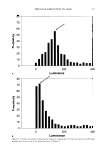
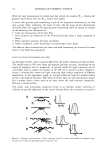
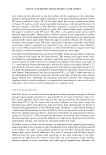
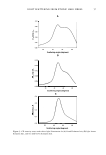
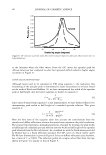
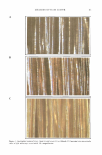
]. Cosmet. Sci., 55, 29-47 Qanuary/February 2004) Optical properties of hair-Detailed examination of specular reflection patterns in various hair types R. McMULLEN and J. JACHOWICZ, International Specialty Products, International Specialty Products, Wayne, NJ. Accepted for publication September 11, 2003. Synopsis Details of the specular reflection of curved hair tresses, resulting from illumination with a collimated incident light source, were examined both qualitatively and quantitatively using high-resolution photog raphy and image analysis. The reflections were found to consist of a multitude of light dots aligned with the fibers and typically separated by a distance of 81-145 µm. The contrast between the dots (specular reflection) and the darker regions (diffuse reflection) of the entire reflection band was found to increase with increasing pigmentation of hair. Highly pigmented Oriental hair provided more contrast within the specular reflection band than unpigmented natural white hair. A quantitative description of the light reflection patterns within the specular reflection band included two-dimensional distribution of luminosity, histograms of the frequency of appearance for peak maxima and minima in luminosity distribution plots, and histograms of absolute maxima and minima of luminosity along the length of the fibers. Specular reflection from African hair, which consists of many curls that provide multiple and randomly distributed reflection centers, have also been investigated. Using microscopy software, Image Tool 2.0, and a method termed image threshold, the number of reflection sites and their shapes could be quantified. For example, treatment of African hair with synthetic sebum was shown to significantly affect the reflection patterns, resulting in a decrease in the overall hair luster. Comparison of reflection patterns from Caucasian frizzy, very curly, and curly hair is also discussed. INTRODUCTION In a previous report (1), we described the measurements of luster for various types of hair by quantifying the intensity of light reflected from hair fibers spread over a cylindrical surface and illuminated by a collimated beam of light. Such an experimental setup allows one to obtain reflected light distribution curves similar to those typically generated by goniophotometers. By analyzing the shape of the reflection curves and by calculating luster parameters, we were able to investigate the effect of polymer and oil treatments on the luster of hair. While performing this analysis, we took note that the specular reflection band appeared to consist of a series of discrete microreflections arising from individual fibers and corresponding to the structural elements located along the fiber length. Thus, the specular reflection is not a continuous and uniform plane of light but possesses a dot-like or striped appearance. It should be emphasized that this effect is not only detectable by using high-resolution photography but can be easily observed with 29

30 JOURNAL OF COSMETIC SCIENCE the naked eye. Consequently, it may play a role in the perception of luster by a consumer and affect his judgment when making a hair treatment selection. In this paper, we examine the details of the specular reflection of hair by employing macro lenses, close positioning of the camera in relation to the photographed hair samples, and a high-resolution digital camera. Image analysis was employed to inves tigate the distribution of light intensity and the contrast between the highlights and shadows in the specular reflection area in order to derive a parameter characterizing the luster of hair. We have also employed another image analysis technique to assess the random reflection patterns produced by black, African hair, which cannot be analyzed by methods developed for straight hair of Caucasian or Oriental origin. Finally, we have also applied the same analysis technique for frizzy, very curly, and curly hair of Caucasian ongrn. EXPERIMENT AL METHODS The luster evaluation apparatus used in this study was described previously (1). An Olympus Camedia El0 digital camera with a front-element auxiliary macro lens was employed to collect images of illuminated hair, typically one tress, from a distance of S inches. Previously, we had obtained images that contained two tresses in each photo graph and the camera was positioned 10 inches away from the cylinder mount (1). We also utilized a 35-mm single-lens reflex (SLR) Nikon FE 2 camera equipped with an AIS 55-mm macro lens. In our previous study, we scanned the light intensity parallel to the fiber axes of a hair tress by employing image analysis software. In this work, light reflections within the specular reflection band were measured both in perpendicular and parallel directions in relation to the fiber axes. This was accomplished by using image analysis software, Sigma Scan Pro S .0. As discussed in the Results section of this report, the horizontal and vertical light intensity plots consisted of maxima and minima, which were determined by importing the data into Mathcad 2001 Professional (MathSoft Engineering & Education, Inc.) and utilizing customized programs written within the Mathcad package. In addition to this, we utilized Image Tool 2.0 (University of Texas Health Science Center, San Antonio, TX) to quantify light reflection from curly African hair. MATERIALS Luster analysis was performed on natural white, light blonde, medium blonde, dark blonde, light brown, medium brown, and dark brown hair of Caucasian origin purchased from IHI & Products, Inc. (Valhalla, NY). In addition to this, we utilized Oriental hair purchased from DeMeo Brothers (New York) and curly African hair as well as frizzy, curly, and very curly hair of Caucasian origin supplied by IHI & Products, Inc. Hair samples were precleaned with a 3% ALS solution and thoroughly rinsed prior to ex perimentation. Hair tresses from Caucasian and Oriental hair were obtained by gluing 3 g of fibers to 1.5 x 1.5-in. plexiglass tabs with Duco cement. The length and width of each hair tress were 10 inches and 1.25 inches, respectively. African hair was formed into small 0.5-1.0-gram tresses by tying the upper portions of fibers with a cord. A
Purchased for the exclusive use of nofirst nolast (unknown)
From: SCC Media Library & Resource Center (library.scconline.org)