4 JOURNAL OF COSMETIC SCIENCE were then prepared by filtering the diluted solutions with a sintered-glass filter. The liquid chromatographic system used was an HPll00 series equipped with a solvent delivery module, a UV detector, and an autosampler. The chromatographic separation was achieved using an YMC-Pack column (YMC-Pack NH 2 , A-603, 4.6 x 250 mm I.D. S-5 µm, 12 nm, Japan). The carrier solvent for HPLC analysis was the mixture of 50 mM of NH4H 2 PO 4 solution and acetonitrile (50/50 v/v). The flow rate was 1 ml/min. The detection wavelength was set at 264 nm for 1-ascorbic acid. The sample injection volume was 20 µl. In this HPLC condition, 1-ascorbic acid was detected at the retention time of 6. 7 min. The stability of L-ascorbic acid was defined by the ratio of measured concentration to initial concentration, [AA} m /[AA} 0 , where [AA} m is the measured concentration of ascorbic acid in the w/o/w double emulsion and [AA} 0 is the initial concentration of ascorbic acid in the w/o/w double emulsion. IN VITRO SKIN PERMEATION TEST Female hairless guinea pigs (strain IAF/HA-hrBR) were sacrificed for the in vitro skin permeation test. They were all eight weeks old. Abdominal skin was excised, divided, and mounted on Franz diffusion cells (Lab Fine Instruments, Korea). The diameter of each diffusion cell was 0.9 cm and the compartment volume was 5 ml. The receptor compartment was filled with 10 wt% glycerin aqueous solution. The receptor compart ment was kept at 32°C by circulating water through an external jacket and stirring constantly with a magnetic bar. In this study, three samples were measured: 5 wt% 1-ascorbic acid (pH = 2), 5 wt% 1-ascorbic acid (pH = 7), and 5 wt% 1-ascorbic acid (pH = 7)/0.5 wt% MgSO4 . HPLC analysis was carried out by taking 5 ml of receptor solution at a predetermined time (20-22). RES UL TS AND DISCUSSION DEGRADATION OF L-ASCORBIC ACID IN AQUEOUS SOLUTION In many cases, the degradation of L-ascorbic acid has been a reason for the declining quality in the final applications. As summarized in Scheme 1, 1-ascorbic acid degrades to various species in the aqueous solution (13 ). In the aqueous solution, L-ascorbic acid is oxidized readily to dehydro-1-ascorbic acid. The oxidation takes place especially at the most reactive enediol group (10). There it looks clear that the degradation of 1-ascorbic acid is started from the enediol group by pro-oxidants such as hydroxy peroxide, hydroxy radicals, and hydroperoxy radicals, as well as by metal ions. Important infor mation that we can obtain is that if the enediol group is protected effectively, it is possible to stabilize 1-ascorbic acid in the aqueous solution because one of the key destabilization factors is fundamentally excluded. PROPOSAL OF L-ASCORBIC ACID STABILIZATION SYSTEM When 1-ascorbic acid is dissolved in water, the pH of the solution decreases sharply due to the dissociation of the hydrogen ion from the enediol group. Considering the pK values for 1-ascorbic acid (pK 1 = 4.17, pK2 = 11.5 7), the main contribution to the lowering of pH is the hydroxy group located on the number 3 carbon (C3 ). In order to

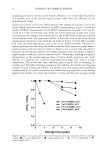
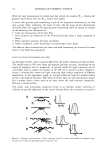
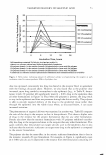
STABILIZATION OF 1-ASCORBIC ACID OH I HOH2CHCyOyO Mg2+Mg2�-- Mg2++H -o OH Mg 2 + Mg2+ OH I HOH 2 CHC y O y O Mg2+Mg2�-- Mg2++Na -o OH Mg2+ Mg 2 + 5 Scheme 2. Schematic representation of the ionic shielding process of L-ascorbic acid in aqueous solution. - � ( 1.0 �----.- � / ■ --- ::: / /0 / -------- 0 □ / 0 .4 / □�- pH 2, 2 week storage -•- pH 7, 2 week storage -□- pH 2, 4 week storage -o- pH 7, 4 week storage 0.2 o.o----.--r-----,.--"""T""-.--......... --r--""""T"--.----r---r---. 0.00 0.15 0.30 0.45 0.60 0.75 0.90 Concentration of MgSO 4 (g/dl) Figure 1. Stability of L-ascorbic acid solutions with the ionic strength at different pH and storage times after 2-week storage(-■-, pH 2 -•-, pH 7) and 4-week storage(-□-, pH 2 -0-, pH 7) at 40 ° C. In this observation, the concentration of L-ascorbic acid was 3 wt%.
Purchased for the exclusive use of nofirst nolast (unknown)
From: SCC Media Library & Resource Center (library.scconline.org)