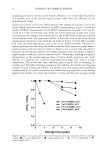
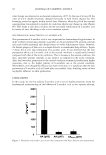
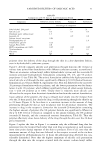
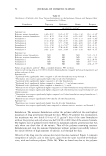
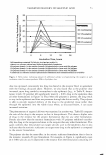
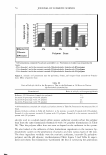
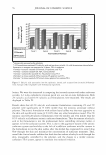
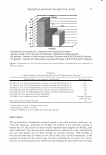
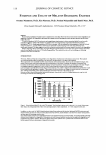
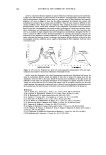
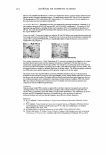
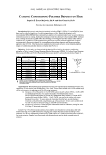
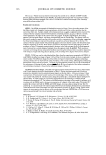
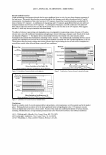
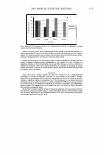
TARGETED DELIVERY OF SALICYLIC ACID 79 stream in an in vivo situation. TEA also appears to enhance entrapment of salicylic acid in the epidermis (see Figure 5 comparing formulations 4 and 5). The salicylic acid, to some extent, is present as the TEA salt, which is a pseudononionic, hydrophobic species. This species will favor interaction with the hydrophobic surfactant micelle and the hydrophobic regions of the polymer. In the absence of the surfactant and polymer (see formula 7 in Figure 5), the TEA salicylate along with the undissociated salicylic acid presumably penetrate very readily into the skin, presumably through the hydrophobic lipid regions of the stratum corneum. When present in the formulation, the isoceteth-20 surfactant and the polyolprepolymer both alternatively interact with the TEA salt of salicylic acid, as well as with salicylic acid via hydrophobic bonds, and delay their penetration into the stratum corneum the TEA salt seems to interact more efficiently, however. The remaining question is whether akering the delivery of salicylic acid to target the epidermis changes the efficacy of the drug in treating acne. No studies were done comparing the nonionic polymeric hydroalcoholic solution with the anionic system. It is felt that acne is a disease of the pilosebaceous unit and that the epidermis becomes hyperkeratotic. This leads to the blockage of the unit and proliferation of the P. acnes in the unit. Targeting salicylic acid to the epidermis of the unit would likely be optimal for the treatment of acne and for minimizing the irritation that seems to evolve from further drug penetration past the epidermis and into the cutaneous microvasculature. CONCLUSIONS Several conclusions can be derived from the current studies as follows: • Changing from the anionic to the nonionic (isoceteth-20) surfactant system for the hydroalcoholic solution slows down release/delivery of salicylic acid through.the skin into the receptor during a 24-hour time period, thereby reducing the rate of pen etration. • Adding the hydrophobic, nonionic polyolprepolymer-15 to the hydroalcoholic sur factant systems in a dose-dependent fashion reduces the rate of delivery of the drug through the skin to the receptor during the 24-hour period measured. • The reduced rate of delivery of the drug to the receptor parallels accumulation of drug in the epidermis thus these systems can be used to target salicylic acid preferentially to the epidermis. • A synergistic relationship exists between three components, namely nonionic surfac tant, hydrophobic polymer, and triethanolamine, which maximizes the benefit of slow release of salicylic acid and accumulation of the drug in the epidermis significantly over each alone or in pairs. • The synergistic nonionic system of polymer, nonionic surfactant, and triethanolamine reduces the initial large dose (and hence the rate) of salicylic acid passing through skin, as is seen with anionic hydroalcoholic systems this occurred in a dose-dependent fashion with the addition of polymer. • The cumulative irritation test verified that the nonionic polymer hydroalcoholic system is significantly milder than the anionic hydroalcoholic systems and that the addition of polyolprepolymer reduced irritation in a dose-dependent fashion. • Formulations that targeted delivery of salicylic acid to the epidermis and reduced the rate of penetration through skin were generally milder and often significantly so, depending on dose of polymer and the surfactant type. ■

■ 80 JOURNAL OF COSMETIC SCIENCE • Surfactant structure rather than dose of salicylic acid is the predominant factor con trolling irritancy of these hydroalcoholic formulations, since anionic formulations (reference formulations) with reduced doses of salicylic acid (0.5%) are still some of the most irritating formulations tested. Doses of salicylic acid (and alcohol) were secondary. Thus the idea of optimizing the slow release of the drug and targeting delivery of the drug into the epidermis while minimizing penetration through the skin translates into lower-irritation formulations to treat acne. Incorporation of hydrophobic polymers en ables slower delivery of the hydrophobic drug. Additionally, formulating with milder nonionic surfactants with low critical micelle concentrations that produce a large res ervoir of micelles to trap salicylic acid (either in solution or on the skin surface) provides a less aggressive and reduced level of surfactant monomer, helping to achieve that endpoint. An additional chemical strategy of keeping salicylic acid in the form of a pseudononionic TEA salt also enhances entrapment of the drug in the nonionic polymer vehicle and delays delivery through the skin, resulting in enhanced mildness. REFERENCES (1) P. C. Chen-Chow and S. G. Frank, Comparison of lidocaine release from Pluronic F-127 gels and other formulations, Acta Pharma. Suec., 18, 239-244 (1981). (2) M. Ishida, N. Nambu, and T. Nagai, Highly viscous gel ointment containing carbopol for application to the oral mucosa, Chem. Pharm. Bull., 31, 4561--4564 (1983). (3) J. R. Mhando and A. L. Wan Po, Two-stage release of benzocaine from sunflower oil/gelatin emulsion films, Int.]. Pharm., 59, 165-170 (1990). (4) D. Smith, A. O'Conner, D. Young, and R. Siegfried, Polymeric ester technology-An effective delivery concept for sun and skin care, IFSCC Magazine, 3, 21-30 (2000). (5) D. L. Smith and P. O'Conner, Optimizing efficiency of skin treatment active ingredients via special ized polymeric technology,]. Cosmet. Sci., 49, 90-93 (1998). (6) G. Di Colo, V. Carelli, B. Giannaccini, M. F. Serafini, and F. Bottari, Vehicle effects in percutaneous absorption: In vitro study of influence of solvent power and microscopic viscosity of vehicle on benzocaine release from suspension hydrogels,j. Phann. Sci., 69, 387-391 (1980). (7) M. D. Vlachou, D. M. Rekkas, P. P. Dallas, and N. H. Choulis, Development and in vitro evaluation of griseofluvin gels using Franz diffusion cells, Int.]. Pharmaceut., 82, 47-52 (1992). (8) R. Won, "Two step method for preparations of controlled release formulations," US Patent 5,145,675, September 1992. (9) E. Mathiowitz, R. Langer, A. Warshawsky, and E. Edelman, "Polymer composite for controlled-release or membrane formation," US Patent 4,898,734, February 1990. (10) P & G patent 88306436.2, March 1989. (11) Penederm patents US 5,045,317 US 4,971,800 US 5,051,260. (12) H. M. Fares and J. L. Zatz, Mechanism of polyethylene glycol-8/SMDI copolymer in controlled de livery of topically applied drugs,]. Cosmet. Sci., 50, 133-146 (1999). (13) L. D. Albacarys, G. E. Deckner, J. A. Listro, and D. M. McAtee, International patent (PCD WO 97/ 40816 or PCTIUS97/07012 ("Topical composition comprising dispersed surfactant complex"). (14) L. D. Albacarys, G. E. Deckner, J. A. Listro, and D. M. McAtee, International patent (PCT) WO 97/ 40817 or PCT!US97/07013 ("Topical composition comprising dispersed surfactant complex"). (15) R. L. Bronaugh, "A Flow-Through Diffusion Cell," in In Vitro Percutaneous Absorption: Principles, Fundamentals, and Applications, R. L. Bronaugh and H. Maibach, Eds. (CRC Press, Ann Arbor, MI, 1991) pp. 17-23. (16) R. S. Berger and J.P. Bowman, A reappraisal of the 21-day cumulative irritation test in man, ]. Toxicol. Cutan. Ocul. Toxicol., 1, 109-115 (1982). (1 7) L. D. Rhein, "In Vitro Interactions: Biochemical and Biophysical Effects of Surfactants on Skin," in Surfactants and Cosmetics, New Edition, Surfactant Science Series, M. Rieger and L. D. Rhein, Eds. (Marcel Dekker, New York, 1997). (18) L. D. Rhein, Review of properties of surfactants that determine their interactions with stratum corneum,J. Soc. Cosmet. Chem., 48, 253-274 (1997).
Purchased for the exclusive use of nofirst nolast (unknown)
From: SCC Media Library & Resource Center (library.scconline.org)