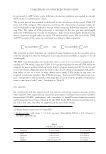
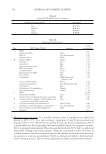
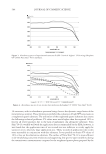
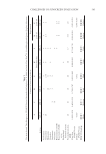
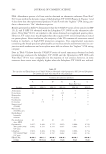
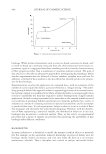
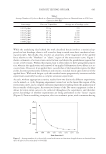
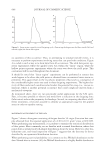
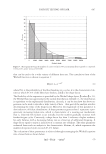
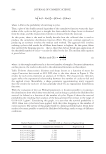
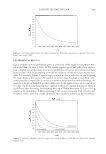
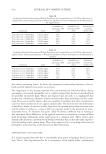
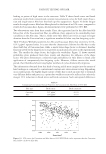
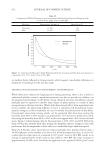
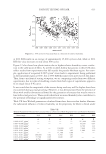
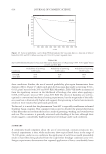
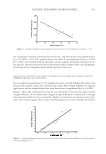
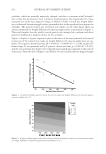
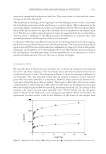
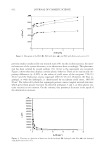
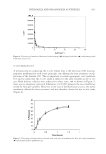
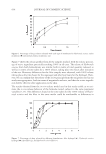
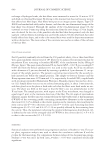
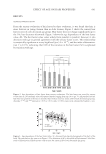
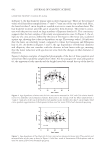
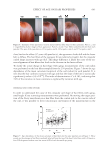
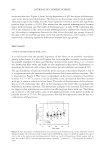
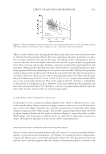
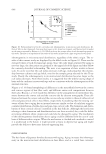
JOURNAL OF COSMETIC SCIENCE 596 FDA. Absorbance spectra of all test articles obtained on alternative substrate Vitro Skin® N-19 were within the dynamic range of the Labsphere UV 2000S (Figure 4). Figures 3 and 4 also show that the experimental products N and P, with the “highest” UVA rating, pro- duce a characteristic “fl at” absorbance spectra. Results presented in Table V demonstrate that the UVAI/UV ratios of test articles A (SPF 15), E, and P (SPF 30) obtained with the Labsphere UV 2000S on the alternative sub- strate, Vitro Skin® N-19, are similar to the ratios obtained on roughened quartz plates. However, CV values were much higher than the required 10% or less for products tested on quartz plates. After irradiation, the majority of the US commercial sunscreens tested belong to medium- or high-UVA protection categories. Two experimental sunscreens containing the broad-spectrum photostable actives bisoctrizole and bemotrizinol in con- junction with avobenzone and octocrylene were able to achieve the “highest” UVA rating category. Data in Table VI show that the UVAI/UV ratios of tested sunscreens obtained on both transmittance analyzers the Labsphere UV 2000S and the Optometrics SPF 290S with Vitro Skin® N-19, were comparable for the majority of test articles however, in some instances these ratios were slightly higher when the Labsphere UV 2000S was utilized. Table VI Test Articles and Their Respective UVAI/UV Ratios Obtained with Optometrics SPF-290 and Labsphere UV 2000S and with Vitro Skin® N-19 as Substrate Commercial sunscreen products A C D E K L Boots Five Star Actives SPF-15 SPF-15 SPF-15 SPF-30 SPF-30 SPF-25 Avobenzone 3 2 3 Octocrylene 10 2.35 Homosalate 10 8 Octisalate 5 4 Oxybenzone 5 3 5 Octinoxate 7.5 Bemotrizinol (USAN) Bisoctrizole (USAN) active Diethylhexyl butamido triazone Pre-irradiation dose, MED 10 10 10 20 20 17 Optometrics SPF-290S UVAI/ UV ratio 0.857- 0.882 0.441- 0.475 0.727- 0.753 0.823- 0.837 0.884- 0.891 0.743- 0.744 Labsphere UV-2000S UVAI/ UV ratio 0.905- 0.926 0.469- 0.519 0.750- 0.787 0.829- 0.862 0.880- 0.893 0.734- 0.736 FDA UVA rating High Medium High High High High

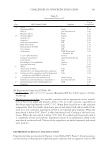
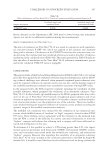
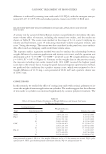
CHALLENGES TO SUNSCREEN EVALUATION 597 Ratios obtained on the Optometrics SPF 290S may be lower because this instrument exposes test articles to additional irradiation during the measurements. EFFECT OF IRRADIATION ON VITRO SKIN® N-19 The effect of irradiation on Vitro Skin® N-19 was tested in conjunction with experimen- tal sunscreen formula P (SPF~30), which was applied to the substrate and irradiated along with a reference. Calculations of the UVAI/UV ratios for this sunscreen were con- ducted using the irradiated and non-irradiated references to analyze the effect of reference irradiation on the calculated ratios (Table VII). The results presented in Table VII indicate that the effect of irradiation on the Vitro Skin® N-19 (reference) transmittance spectra and on the calculated UVAI/UV ratios is negligible. CONCLUSIONS The proposed rules of the Food and Drug Administration (FDA) for the UVA in vitro testing procedure were applied for the evaluation of various sunscreen formulations, and the follow- ing technical challenges were observed: when proposed roughened quartz substrates were used, the required coeffi cient-of-variation criteria were not met, and the dynamic ranges of the available transmittance analyzers were exceeded for sunscreens with high SPF values. In the proposed rules, the FDA requested comment regarding the suitability of other possible substrates, which prompted the evaluation of an alternative substrate, Vitro Skin® N-19. In this research, two modifi cations to the FDA’s proposed rules were evalu- ated: (a) the use of Vitro Skin® N-19 instead of roughened quartz substrate and (2) an increase in application time from ten seconds to 30 seconds to ensure a uniform distribu- tion of sunscreen product over the application area of the substrate. These two modifi ca- tions allowed meeting the required coeffi cient-of-variation criteria without exceeding the dynamic ranges of the available transmittance analyzers. The modifi ed test conditions were utilized for the evaluation of six commercial sun- screens, which fulfi lled criteria of “medium” or “high” categories—based on their UVAI/ UV ratios. These fi ndings were in agreement with the statement in the proposed rules that the FDA is aware of the diffi culty for current sunscreen formulations to meet the “highest” category and believes that allowing such a category will foster additional re- search and development in this area. To determine if it was possible to achieve a UVA rating greater than 0.95, two experi- mental sunscreen prototypes with bisoctrizole (USAN), bemotrizinol (USAN), avoben- zone, and octocrylene were tested under the modifi ed test conditions, and attained the “highest” category. Relevant data regarding the suitability of an alternative substrate, Vitro Skin® N-19, were included in the comments submitted to the FDA by Joseph W. Stanfi eld (6). It should be noted that bisoctrizole and bemotrizinol are being evaluated by Table VII Effect of Irradiation on Vitro Skin® N-19 Tested in Conjunction with Experimental Sunscreen P Sample description Irradiated sample and irradiated blank Irradiated sample and non-irradiated blank UVAI/UV ratio 0.9538 0.9690
Purchased for the exclusive use of nofirst nolast (unknown)
From: SCC Media Library & Resource Center (library.scconline.org)