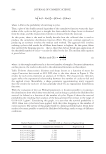
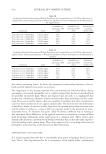
JOURNAL OF COSMETIC SCIENCE 598 the FDA under TEA and are not permitted in the US at this time, but they are approved for use in the rest of the world. ACKNOWLEDGMENTS We are grateful for the support of our colleagues at Ciba: Joseph Lupia, B. Scott Jaynes, Gustavo Vazquez, Shawn O’Brian, Shiela Loggins, and Ellen Werner. REFERENCES (1) Food and Drug Administration, 21 CFR Parts 347 and 352, Sunscreen drug products for over-the- counter human use, proposed amendment of fi nal monograph: Proposed rules, Federal Register, §352.1, 72(165), 49070–49122 (2007). (2) Atlas SunSpots®, Material Testing Product and Technology News, 38(81), 14–15 (2008). (3) Q-Glass Company, Inc. www.qglass.com (4) L. Ferrero, M. Pissavini, S. Marguerie, and L. Zastrow, Photochemical behavior assessment of sunscreen preparations by in vitro UV spectroscopy, IFSCC Magazine, 7(3), 197–205 (2004). (5) http://www.ims-usa.com/ittrium/visit?path=A1×66×1y1×a0×1×65y1×c6×1×65y1×cc×1×65 (6) J. W. Stanfi eld, Substrates for UVA in vitro testing. Docket No. 1978N-0038 RIN No. 0910-AF43, December 26, 2007, Suncare Research Laboratories, LLC.

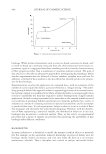
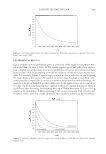
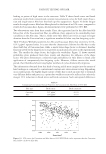
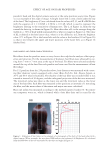
J. Cosmet. Sci., 60, 599–616 (November/December 2009) 599 Fatigue testing of hair—A statistical approach to hair breakage TREFOR A. EVANS, TRI-Princeton, 601 Prospect Avenue, Princeton, NJ 08540. Accepted for publication May 10, 2009. Synopsis The objective of this work is to describe an alternative approach for assessing hair breakage. The methodology involves the repeated application of force, together with an evaluation of the number of cycles required before breakage—an approach often termed fatigue testing. The technique provides novel results, which appear to indicate more sizable differences between samples than arise from conventional constant-rate extension ex- periments. For example, results illustrate a substantially higher tendency for breakage in Afro hair as com- pared to Caucasian hair—a conclusion that appears in line with consumer experiences. Also, fi ndings suggest a substantially larger contribution from the relative humidity of the environment to the propensity for break- age under these conditions. The fatigue approach also lends itself to a novel means of data analysis in which breakage is treated as a sta- tistical variable rather than as a mechanical parameter. By performing Weibull analysis of the data, a charac- teristic lifetime and a shape parameter are obtained to characterize the data, while survival probability plots can be generated to predict the propensity for breakage under a specifi c set of conditions. INTRODUCTION When talking to consumers about hair care needs and desires, it generally doesn’t take long before the term “strength” is mentioned. Consumers appear to equate hair strength with hair health. “Strong hair” is synonymous with healthy, beautiful, and vibrant hair, while terms such as “weak,” “fragile,” and “brittle” are often linked to hair that is in poor condition. This is well recognized by marketers of hair care products, who frequently compose claims surrounding hair strength in an attempt to drive sales. Scientifi cally, the strength of individual hair fi bers can easily be probed by standard mechanical testing approaches—most often the generation of stress-strain curves using constant-rate exten- sion experiments. Figure 1 shows a schematic of a typical stress-strain curve, together with a selection of parameters that can be extracted to provide quantifi cation. However, while these measures provide a means for characterizing the technical strength of hair, it can be argued that such experiments are not a particularly accurate simula- tion of how consumers make judgments. Instead, it appears likely that consumer as- sessment of hair strength comes from viewing the number of broken fi bers in a brush or comb after grooming, by noting the number of fi bers at the bottom of the tub after showering, or by observing split ends in a mirror. In fact, in the consumer vernacular, it seems likely that “strength” represents a self-assessment involving the ease of hair
Purchased for the exclusive use of nofirst nolast (unknown)
From: SCC Media Library & Resource Center (library.scconline.org)