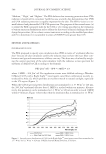
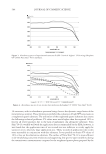
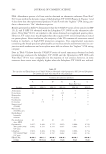
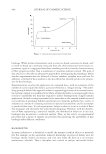
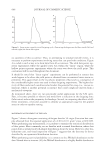
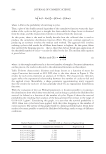
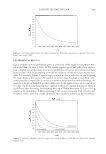
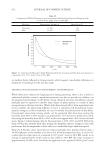
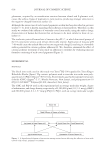
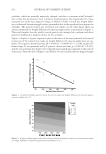
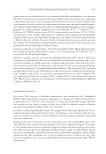
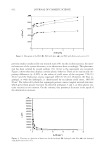
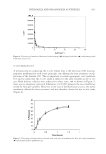
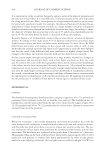
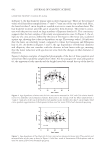
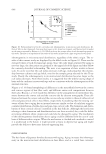
JOURNAL OF COSMETIC SCIENCE 588 “Medium,” “High,” and “Highest.” The FDA believes that increasing protection from UVA radiation is benefi cial for consumers’ health because scientifi c data demonstrates that UVB and UVA radiation protection is equally important for the skin. The FDA’s vision is to re- ward balanced and photostable UVB/UVA protection. The purposes of this research were: (a) to utilize the FDA’s proposed rules for the UVA in vitro testing procedure in the evaluation of various sunscreen formulations and to address the discovered technical challenges by mod- ifying this procedure (b) to evaluate various sunscreens according to the modifi ed procedure and (3) to determine if it was possible to attain a UVAI/UV ratio greater than 0.95. METHOD AND MATERIALS PRE-IRRADIATION DOSE The FDA proposed to specify a pre-irradiation dose (PID) in terms of “erythemal effective dose” because all solar simulators used by the industry may not have the exact fi lter com- bination and spectral transmittance of fi lters can vary. This dose was calculated by weigh- ing the output spectrum of the solar simulator with the reference action spectrum for erythema as defi ned by CIE according to the formula: 2 PID (J/m -eff) = SPF * 1 MED * 2/3 where 1 MED = 200 J/m2-eff. Pre-irradiation criteria were fulfi lled utilizing a Weather- O-Meter Ci65A with a Right LightTM inner/quartz outer fi lter combination recently in- troduced by Atlas (2), which provides an excellent match to natural sunlight, especially in the UV region (Figure 1). When the Ci65A spectral power distributions are normalized to 1.57 W/m2 at 420 nm, the 200 J/m2-erythemal effective dose (1 MED) is reached within ten minutes. Alterna- tively, this parameter can be normalized to 1.1 W/m2 at 420 nm in order to reach 1 MED within 14 minutes. Figure 1 shows that when the irradiation fl ux is normalized to 1.1 W/m2 Figure 1. Spectral power distributions of Ci65A with Right LightTM inner/quartz outer fi lters normalized to 1.57 W/m2 and 1.1 W/m2 at 420 nm. COLIPA Sun and Miami Peak Sun 26 S Direct.

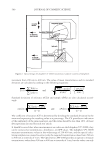
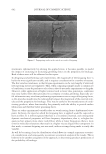
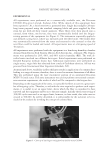
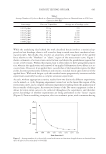
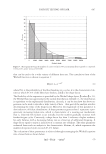
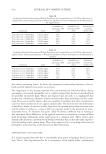
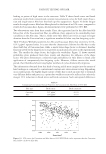
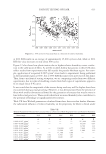
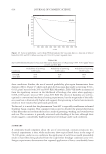
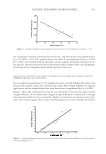
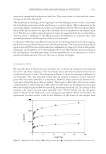
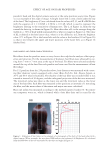
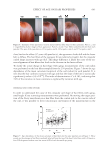
CHALLENGES TO SUNSCREEN EVALUATION 589 at 420 nm, it provides exposure conditions closely matching Miami Peak Sun 26 S Direct and COLIPA sun. In our study the irradiation fl ux was normalized to 1.57 W/m2 at 420 nm in order to expedite the pre-irradiation step. SUBSTRATES The FDA’s proposed rules use optical grade roughened quartz plates as substrates with an application dose of 2 mg/cm2, which is applied with a gloved fi nger (pre-saturated with test article) within approximately ten seconds with a very light spreading action. Optical grade roughened quartz substrates with dimensions of 5 cm × 5 cm × 2 mm (Q-Glass) were obtained from the Q-Glass Company (3). According to the manufacturer, Q-Glass plates are roughened on one side in a reproducible manner. It should be noted that the roughness of quartz plates is not specifi ed by the FDA however, L. Ferrero et al. showed that this parameter is important for uniform application and reproducible measurements on roughened substrate (4). In the proposed rules, the FDA requested comment regard- ing the suitability of other possible substrates, which prompted the evaluation of an al- ternative substrate, Vitro Skin® N-19 in this study. It was pre-cut in 6.2 cm × 6.2 cm pieces to provide a suffi cient area for transmittance measurements at the required 12 loca- tions and pre-hydrated according to reference 5. References (blanks) and substrates with applied test articles were placed on slide mounts, positioned inside the Ci65A, and pre- irradiated simultaneously in order to reach the required PIDs. TRANSMITTANCE ANALYZERS Labsphere UV 2000S and Optometrics 290S transmittance analyzers were employed in this study: • The Labsphere UV 2000S (Figure 2) utilizes a Xenon UV source, 10 watts, with fl ash radiation. It has an integrating sphere and a photodetector, and it provides a continu- ous emission spectrum from 290 nm to 400 nm, with suffi cient illumination at each wavelength, but not in excess of 0.2 J/cm2 the dynamic range from 290 nm to 400 nm is at least 2.7 absorbance units. • The Optometrics SPF-290S transmittance analyzer has a Xenon UV source, 125 watts, with an integrating sphere, a monochromator, and a photomultiplier the dynamic range from 290 nm to 400 nm is 2.5 absorbance units. MEASUREMENTS AND CALCULATIONS The determination of the UVAI/UV ratio according to the FDA’s proposed methodology consists of two consecutive parts. The fi rst part requires conducting spectral transmit- tance measurements in order to calculate the value of mean transmittance and its stan- dard deviation from 290 nm to 400 nm at 5-nm increments, and the second part requires determining the coeffi cient of variation. At least 12 measurements of transmitted spectral irradiance are required for reference without sunscreen: [C(λ)1,C(λ)2…C(λ) 12], and for the substrate with applied sunscreen: [P(λ)1,P(λ)2…P(λ) 12]. These calculations gener- ate 23 transmittance values with associated standard deviations, one for each 5-nm
Purchased for the exclusive use of nofirst nolast (unknown)
From: SCC Media Library & Resource Center (library.scconline.org)