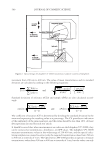
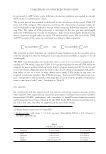
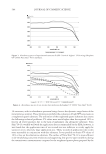
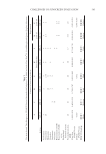
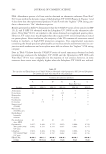
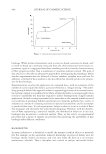
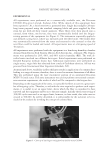
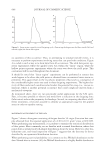
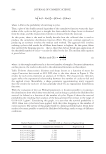
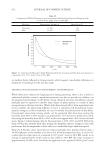
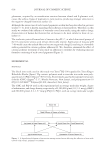
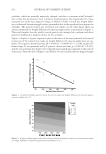
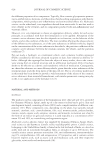
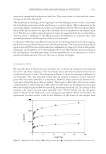
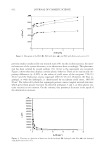
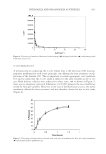
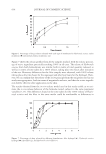
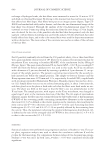
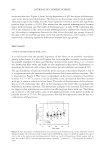
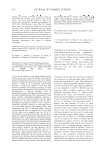
JOURNAL OF COSMETIC SCIENCE 590 increment from 290 nm to 400 nm. The value of mean transmittance and its standard deviation are calculated according to the following equations: O)/n O O Oº)) O O)/n ª º u ª « » « » ¬ ¬ ¼ ¦ ¦ 2 2 1 2 1 ( ( ) ( ( )) ( and ( ( )) ( n n P P s C s P( T(O) s C C(O¼) C Standard deviations of reference s(C(λ)) and sample s(P(λ)) are also calculated accord- ingly: O O O O ¦ ¦ 2 2 1 ( ) ( ) ( ) ( ( )) and ( ( 1) ( 1) n n C C P P(O) s C s P(O1)) n n The coeffi cient of variation (CV) is determined by dividing the standard deviation by the mean and expressing the resulting value as a percentage. The CV provides an indication of the uniformity of the sunscreen layer, and this value should be less than 10%. At least fi ve repetitions are used for each test article. It should be noted that when measurements are taken on the Labsphere UV 2000S, they can be extracted as transmittance, absorbance, or mPF values. The Labsphere UV 2000S measures transmittance values in the wider range of 250-450 nm, and the special calcu- lating template was created to extract only the required transmittance values from 290 nm to 400 nm at intervals of 5 nm. The Optometrics SPF 200S provides an option to measure transmittance values from 290 nm to 400 nm at intervals of 5 nm, but the values can only Figure 2. Optical design of Labsphere UV 2000S transmittance analyzer (courtesy of Labsphere).

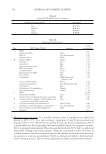
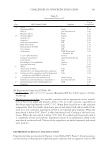
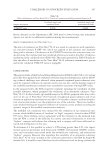
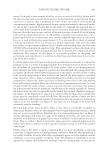
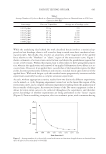
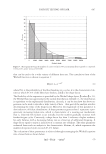
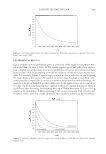
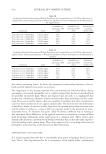
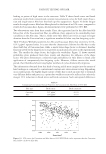
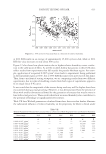
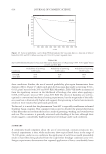
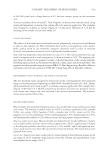
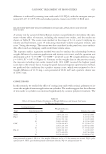
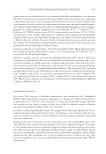
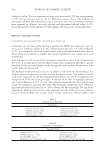
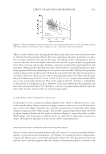
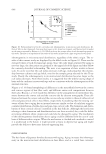
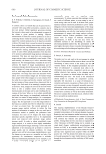
CHALLENGES TO SUNSCREEN EVALUATION 591 be extracted in mPF format and a different calculating template was needed to convert mPF values to transmittance values. The second part of this method is dedicated to the calculation of the actual UVAI/UV ratio and UVA category. This requires converting the transmittance average values for each wavelength to the absorbance average values using the following equation: A(λ) = -log T(λ). The index of UVA protection is calculated as the area per unit wavelength under the UVAI portion of a plot of absorbance, A(λ) versus wavelength, divided by the area per unit wavelength under the entire UV portion of the curve. The areas of the UVAI and UV sections of the curve are calculated according to these equations: O O O O O O O ³ ³ ³ ³ 400 400 400 400 340 340 290 290 ( ) ( ) ( )/ ( ) and ( ) ( ) ( )/ A d B d A d B d(O) The integrals in these formulas are calculated using Simpson’s rule for irregular areas, with the assumption that the biological action spectrum factor, B(λ), is equal to 1 for all wavelengths. The FDA is proposing that test results for each in vitro or in vivo test be categorized ac- cording to UVA rating categories (Table I). It is proposing that the overall UVA radiation category for use in product labeling be the lowest category determined by the in vitro and in vivo test results. Manufacturers of products that do not obtain a minimum UVA protec- tion either in vivo or in vitro, or who choose not to make UVA claims or run tests, are required to label the product “No UVA Protection.” Each overall UVA protection cate- gory corresponds to and (on product labeling) may be used with the graphical representa- tions in the form of solid “stars” illustrated in Table II. TEST ARTICLES Six commercial and two experimental test articles containing various sunscreen actives were utilized. Two experimental sunscreen prototypes contained bisoctrizole (USAN), bemotrizinol (USAN), avobenzone, and octocrylene. It should be noted that bisoctrizole and bemotrizinol are being evaluated by the FDA under TEA and are not permitted in the US at this time, but they are approved in the rest of the world. Experimental test articles: formulations and manufacturing procedures (A) Experimental sunscreen N (Table III) • Technical data: pH value = 5.0-6.0 viscosity (Brookfi eld DV-II + T-F @3rpm) = 130,000–190,000 cps. Table I UVA Rating Categories Category In vitro result In vivo result Low 0.20 to 0.39 2 to under 4 Medium 0.40 to 0.69 4 to under 8 High 0.70 to 0.95 8 to under 12 Highest Greater than 0.95 12 or more
Purchased for the exclusive use of nofirst nolast (unknown)
From: SCC Media Library & Resource Center (library.scconline.org)