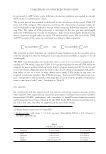
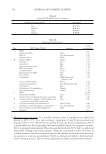
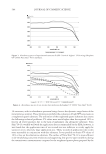
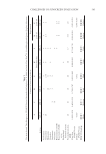
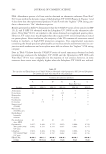
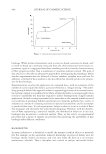
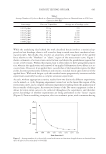
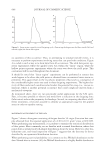
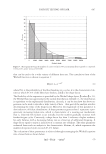
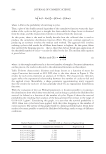
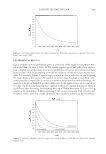
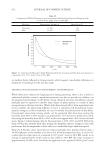
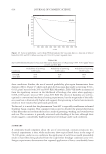
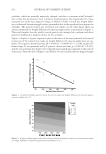
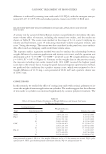
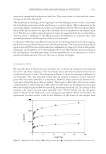
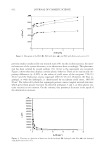
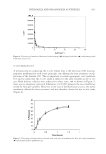
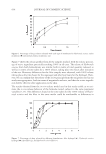
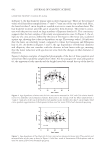
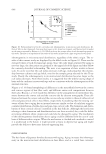
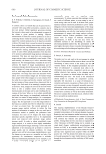
JOURNAL OF COSMETIC SCIENCE 614 these conditions. Further, the use of survival probability plots again demonstrates these dramatic effects. Figure 13 shows such plots for Caucasian hair under a repeating 0.012– 0.013 g/um2 stress at both 20% and 60% RH. Meanwhile, Table VIII shows in numerical form the signifi cant increase in the likelihood of breakage that arises when applying a 0.009–0.010 g/um2 stress at 90% versus 60% RH. The effects of humidity are well rec- ognized in conventional mechanical testing experiments, but the magnitude of the infl u- ence seen here is dramatically higher and suggests that grooming in humid environments results in more trauma than previously predicted. To this end, it is noted that the phenomenon “hair fall” is especially troublesome in humid Southeast Asian countries. This consumer term is used to describe the general observation of hair fi bers that are lost from the head as a result of grooming, washing, and everyday wear and tear. The occurrence is generally associated with shedding of the hair, although these results suggest a considerably higher propensity for breakage under such conditions. SUMMARY A commonly heard complaint about the use of conventional, constant-strain-rate me- chanical experiments is that, while results may show typical break forces in the range of 70–100 grams, under in vivo conditions the application of such forces would presumably result in hair fi bers being plucked from the scalp before breakage conditions arise (11). Fatigue experiments demonstrate that repeated application of forces considerably lower Figure 13. Survival probability curves (from Weibull analysis) for Caucasian hair as a function of relative humidity (20% and 65%) when receiving a 0.012–0.013 g/um2 repeated stress. Table VIII Survival Probability Results for Caucasian Hair upon Application of a Repeating 0.009–0.010 g/μm2 Stress at 60% and 90% RH Conditions Probability of surviving 1,000 cycles Probability of surviving 5,000 cycles Probability of surviving 10,000 cycles 60% RH 97% 91% 86% 90% RH 66% 5% 0%

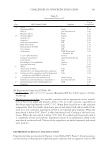
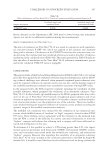
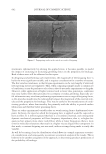
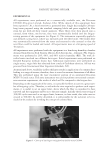
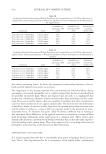
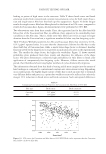
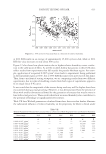
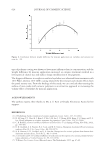
FATIGUE TESTING OF HAIR 615 than the break force can still give rise to breakage, with the failure rate being propor- tional to the magnitude of the applied stress. Results suggest that the relationship between these parameters is exponential in nature, sometimes allowing seemingly small changes to have large effects. The automated nature of the Dia-stron equipment ensures that experiments are not labor intensive, but depending on the force selected, a full carousel of 50 fi bers can take weeks to run. As such, the data in Figure 12, showing breakage data across three humidities and a range of stresses, represents approximately six months of instrument time. However, with patience, this approach appears to yield novel data that provide unique insight into the breakage of hair fi bers. At the simplest level, results can be expressed as an S-N curve showing the relationship between the number of cycles-to-fail and the magnitude of the repeating stress. However, by performing Weibull analysis of the data, a characteristic lifetime and a shape param- eter are obtained that serve to describe the data, and from these two parameters, one is able to generate probability survival plots that predict the propensity for breakage under a specifi c set of conditions. As such, by this analysis, breakage is treated as a statistical parameter rather than as a mechanical one. Systematic experiments allow for modeling the effect of a variety of variables. By keeping the fatiguing conditions constant, it is possible to investigate the effect of hair type— where differences between Afro and Caucasian hair appear in line with well known con- sumer experiences. Meanwhile, dramatic differences as a function of relative humidity are new and noteworthy. By keeping the hair and the environmental conditions constant, it becomes possible to model how increasing or decreasing fatigue forces infl uence the like- lihood for breakage. Moreover, the presence of an exponential relationship between the applied stress and cycles-to-break indicates how even relatively small changes can have large benefi ts. On the reverse side, this exponential relationship suggests problems for individuals with fi ne hair, as normal grooming forces lead to higher stresses as a conse- quence of smaller fi ber diameters, with a commensurate increase in the likelihood of breakage. ACKNOWLEDGMENTS The author thanks Unilever HPC NA, and in particular Joanne Crudele, for sponsor- ship of this work. Assistance in sample preparation and instrument operation by Kristen Boccumini and Kimun Park is greatly appreciated. The scanning electron microscopy image of hair containing fatigue-induced cracks was supplied by Anthony Ribaudo. REFERENCES (1) K. K. Chawla, Fibrous Materials (Cambridge University Press, 1998), Chapter 10. (2) Y. K. Kamath, S. B. Hornby, and H. D. Weigmann, Mechanical and fractographic behavior of Negroid hair, J.Soc.Cosmet.Chem., 35, 21–43 (1984). (3) J. A. Swift, S. P. Chahal, D. L. Coulson, and N. I. Challoner, Flexabraison: A method for evaluating hair strength, Cosmet. Toiletr., 116(12), 53–58 (2001). (4) C. Robbins, Hair Breakage during combing. I. Pathways to breakage, J. Cosmet. Sci., 57, 233–243 (2006).
Purchased for the exclusive use of nofirst nolast (unknown)
From: SCC Media Library & Resource Center (library.scconline.org)