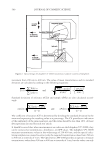
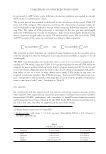
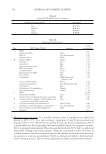
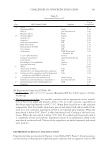
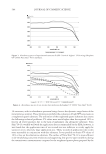
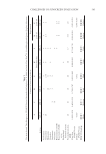
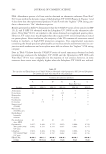
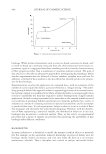
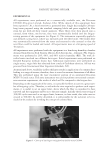
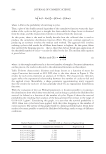
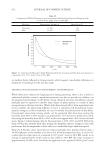
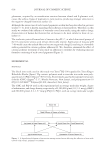
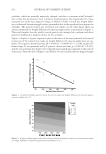
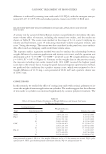
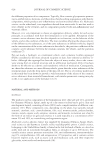
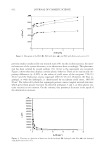
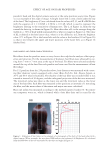
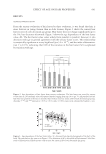
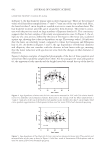
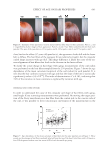
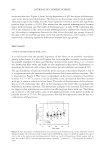
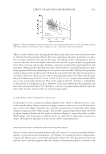
JOURNAL OF COSMETIC SCIENCE 618 glutamate, acquired by an esterifi cation reaction between silanol and L-glutamic acid, causes the surface charge of pigments to turn positive, producing stronger attraction to the negative-charged keratinous surface (2). Although the interaction of such treated pigments on skin has been described in previous studies (3–6), little is known regarding their adhesion to keratin fi bers. Therefore, in this study, we evaluated the infl uence of variously coated iron oxides, using the surface charge characteristics of human hair keratin that are known to be most similar to those of eye- lashes (7). The isoelectric point of human hair is known to be pH 3.7, at which functional groups of the 18 constitutive amino acids remain electrically neutral. Application of mascara (pH 7–8) would cause the eyelash fi bers to become negatively charged, resulting in a favorable surface potential for cationic polymer adhesion (8). We, therefore, examined the effect of cationic polymer treatment of iron oxide on adhesion to eyelashes by evaluating mascara formulae consisting of such coated pigments (Figure 1). EXPERIMENTAL MATERIALS The black iron oxide used in this study was Tarox® BL-100 supplied by Titan Kogyo Kabushiki Kaisha (Japan). The cationic polymers used to treat the iron oxide were poly- quaternium-6 (PQ-6) (Salcare® SC30 Ciba, Switzerland), guar hydroxypropyl trimonium chloride (GHC) ( Jaguar® C 17 Rhodia Novecare, New Jersey), and polyquaternium-10 (PQ-10) (UCARETM Polymer JR 400 Amerchol, New Jersey). The GHC and PQ-10 used in this experiment had an average molecular weight, degree of substitution, and charge density, respectively, of 2,200,000 g/mol, 0.2, 1.1 meq/g (GHC) and 600,000 g/mol, 0.4, 1.57 meq/g (PQ-10). PQ-6, with an average molecular weight Figure 1. A hypothesized diagram of interaction among various factors affecting the adhesion of iron oxide treated with cationic polymers to eyelashes.

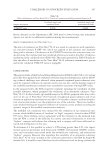
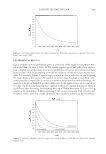
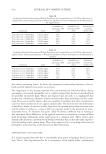
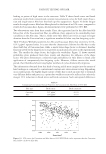
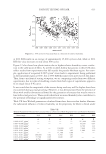
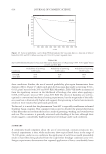
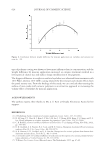
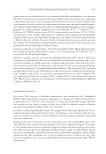
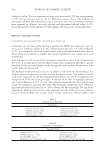
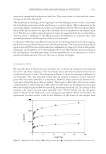
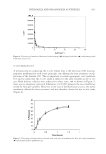
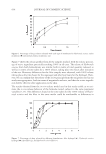
CATIONIC TREATMENT OF IRON OXIDES 619 of 240,000 g/mol and a charge density of 6.2, had one cationic group in each monomer unit. Artifi cial eyelashes (Echo’s Eyelash® Taeil, Republic of Korea) were manufactured, using untreated human hair, to measure the volume effects by mascara application. The eyelashes were designed to achieve an average length of 7.0 mm and a thickness of 72.0 μm by referring to the results of a previous study (9). SURFACE TREATMENT The surface of iron oxide was treated with cationic polymers by a wet process well known to those in the industry (2). This method has been used to treat pigments with a hydro- philic surface (such as clay minerals), inorganic materials (such as silica or titanium dioxide), and polymeric materials (such as polymethyl methacrylate). Iron oxide was dispersed in deionized water in a ratio of 1:2. The cationic polymers were agi- tated in a separate tank to reach transparency in deionized water at 50°C. The aqueous poly- mer slurry was added to the pigment to form a colloidal dispersion of the coating materials. Following agitation for 1 hr, the mixture was fi ltered to form a paste and dried under heat. The pigment was then ground using an atomizer (BRA-15 Baro Engineering, Republic of Korea) and fi nally screened with a polarizer (CSTS-601 Chang Sung Hitech, Republic of Korea). MEASUREMENT OF ZETA POTENTIAL AND PARTICLE CLUSTER SIZE The zeta potential values and particle cluster sizes of the coated pigments were measured using a zeta potential spectrophotometer (ELS-8000 Otsuka Electronics Co. Ltd., Japan). All measurements were made at pH 7 to simulate mascara application. The samples were diluted 1,000-fold in 0.1 M NaCl solution or deionized water for zeta potential or par- ticle cluster size, respectively, and sonicated 5 min prior to measurement. The measure- ments were repeated three times. MASCARA FORMULATION Mascara bulks were prepared employing a basic mascara formula using coated and uncoated iron oxides. The formula included: water (to 100%), acrylates copolymer (20%), paraffi n (10%), iron oxides (10%), beeswax (5.0%), carnauba wax (3.0%), stearic acid (3.5%), palmitic acid (1.5%), polybutene (1.0%), triethanolamine (1.0%), butylene glycol (1.0%), and hydroxyethylcellulose (0.2%) with necessary chelating agents and preservatives. Mascara weight measurement. Mascara weight was defi ned as the weight difference of artifi - cial eyelashes before and after twelve mascara applications. Twelve applications is defi ned as dividing the eyelashes into three sections (i.e., left, middle, right) and applying mas- cara in each section twice from the top and twice from the bottom. The experiments were repeated three times. Sensory test. Sensory tests were conducted by a trained panel of thirty Korean women in the age range of 20-35 regularly using mascara every day. Volume and spreadability scores were marked in the range of 0-14.
Purchased for the exclusive use of nofirst nolast (unknown)
From: SCC Media Library & Resource Center (library.scconline.org)