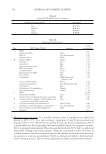
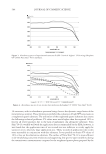
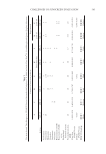
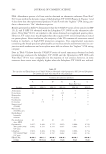
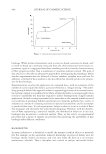
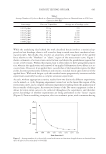
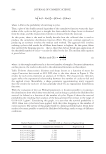
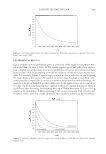
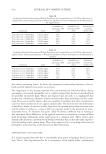
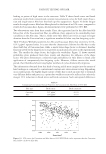
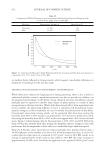
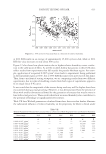
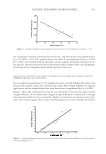
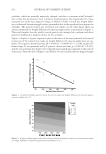
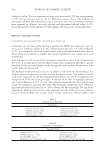
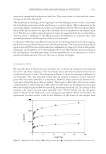
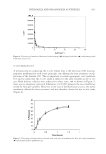
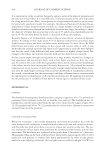
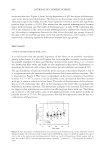
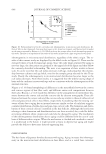
JOURNAL OF COSMETIC SCIENCE 620 Table I Effect of Cationic Polymer Treatment on Particle Cluster Size and Zeta Potential of Iron Oxides Coating material Particle cluster size (nm) Zeta potential (mV) Weight difference (mg) Type Concentration (%) None 0 4396.7 ± 74.6 -12.033 ± 0.605 7.673 ± 0.111 PQ-6 3 2934.0 ± 74.1 25.273 ± 1.222 8.973 ± 0.068 5 1562.4 ± 29.3 52.483 ± 0.468 15.123 ± 0.136 10 1099.3 ± 84.6 63.437 ± 1.217 15.843 ± 0.060 GHC 3 1514.3 ± 41.2 43.927 ± 0.612 11.350 ± 0.461 5 1290.6 ± 8.54 45.677 ± 0.389 11.913 ± 0.178 10 1215.0 ± 36.7 47.693 ± 0.441 12.517 ± 0.333 PQ-10 3 3579.8 ± 21.0 28.080 ± 0.896 9.090 ± 0.187 5 2372.2 ± 10.5 33.763 ± 1.293 10.573 ± 0.095 10 2057.4 ± 29.9 40.553 ± 0.338 11.230 ± 0.099 Data presented as mean ± SD (n = 3). PQ-6: polyquaternium-6. GHC: guar hydroxypropyl trimonium chlo- ride. PQ-10: polyquaterium-10. DATA ANALYSIS Data were presented as mean ± SD, and all statistical analyses were performed using MINITAB 15 software (Minitab Inc., Pennsylvania). RESULTS AND DISCUSSION EFFECT OF TYPE AND CONCENTRATION OF CATIONIC POLYMERS ON ZETA POTENTIAL AND PARTICLE CLUSTER SIZE OF TREATED IRON OXIDES Iron oxide, naturally having a negative surface charge, was coated with cationic polymers in an effort to improve its adhesion to the eyelashes. The type and concentration of the coating polymers were shown to signifi cantly modify the zeta potential and particle clus- ter size of the treated iron oxides by using two-way ANOVA (p 0.05). The zeta potential of iron oxide was relatively affected more by the type of polymer used than its concentration. PQ-6 and GHC especially resulted in a higher positive zeta poten- tial value than PQ-10 treatment. The concentration of coating polymers was in direct proportion to the surface zeta potential in all three types. The type of cationic polymer also showed a stronger effect on the particle cluster size compared to its coating concentration. The data indicated that treatment by any of the three polymers tested resulted in a smaller-sized particle cluster of iron oxide. The rela- tively low difference in particle cluster size by means of GHC concentration strongly suggests that cationic treatment itself has more infl uence than the concentration of the polymers (Table I). RELATIONSHIP BETWEEN SURFACE ZETA POTENTIAL AND PARTICLE CLUSTER SIZE OF TREATED IRON OXIDES The relationship between the surface zeta potential and particle cluster size of treated iron oxides was evaluated by general linear model (GLM) analysis. Figure 2 describes

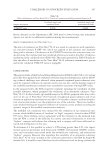
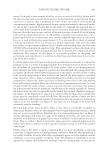
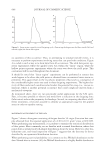
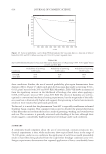
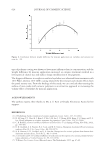
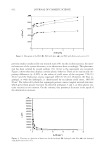
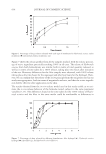
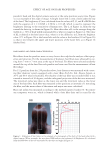
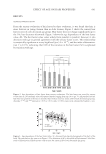
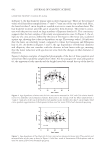
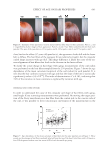
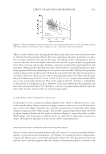
CATIONIC TREATMENT OF IRON OXIDES 621 the signifi cant correlation between the two factors, and the equation was determined as P = –35.293Z + 3451.9 (P: particle cluster size (nm) Z: zeta potential (mV) p = 0.000 R2 = 0.951). It is evident from the data that cationic polymer treatment results in a stron- ger particle–particle interaction due to the positive surface charge of the coated pigments, producing an even dispersion and a smaller particle cluster size. EFFECT OF ZETA POTENTIAL AND PARTICLE CLUSTER SIZE OF TREATED IRON OXIDES ON WEIGHT DIFFERENCE BY MASCARA APPLICATION Factor analysis was performed, at 5% signifi cance level, to verify whether the surface zeta potential and particle cluster size of treated iron oxides affect weight difference by mascara application, and the results showed that both factors have a signifi cant effect (p = 0.000). Figure 3 shows the correlation between the zeta potential of treated iron oxides and the weight difference. It was shown that a bigger weight difference is achieved by a stronger zeta potential, which in turn is caused by a higher concentration of coating cationic poly- mers. The results suggest that cationic-treated pigments are more strongly attracted to Figure 2. Correlation between zeta potential vs particle cluster size of treated iron oxides (n = 27). Figure 3. Correlation between zeta potential of treated iron oxides and weight difference by mascara applica- tion on eyelashes (n = 27).
Purchased for the exclusive use of nofirst nolast (unknown)
From: SCC Media Library & Resource Center (library.scconline.org)