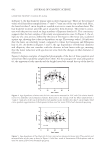
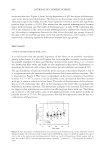
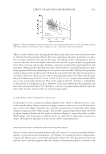
JOURNAL OF COSMETIC SCIENCE 638 It is important to clarify actual hair changes by aging in terms of the physical properties and the structure of hair fi bers. It is very diffi cult to continue research on the same individual for a long period of time. Thus, investigations on a large number of panelists are necessary for statistically signifi cant results. For example, Ootsuka and Nemoto (3) showed the age dependence of hair diameter from research on a large number (18,262) of Japanese females and males even though the individual deviation was large. According to them, the diameter of female hair increased up to the age of 35 and decreased gradually past the age of 40. On the other hand, for males, it decreased with age after puberty. Recently, Nagase et al. (9) presented a study of the variation in hair curvature in Japanese women. According to that study, about 47% of Japanese women have curved hair, from slightly wavy to frizzy, and their curl radius varies widely from 0.6 cm to 16 cm. By TEM observations and amino acid analyses on the convex and concave sides of curls, it was shown that the internal structure and amino acid composition in each side were different and that the trend of the difference had some similarities to highly crimped wool. The changes in hair shape and internal structure with age was, however, not reported. In this current paper, through investigations on a large number of panelists, changes in hair appearance and macroscopic form, such as hair shape, are shown as they vary with age. To examine the cause of this hair-aging phenomena, the microstructural morphology in hair fi bers has also been investigated. Recently, Kajiura et al. (10) analyzed the internal nanostructure in micro-areas of curly and nearly straight single human hair fi bers of sev- eral races by small-angle scattering with an X-ray microbeam of synchrotron radiation. As a result, it was shown that the macroscopic curl shape of human hair is consistent with the inhomogeneous distribution of the internal microstructure. By applying this method, the microstructure of a number of hair fi bers of various ages is examined in this study. EXPERIMENTAL PANELISTS Two hundred thirty Japanese female panelists, ranging in age from 10 to 70, and with no permanent wave treatment in the last six months, were selected. The breakdown was: 21 panelists for each fi ve-year period from the age of 10, except for the ranges of ages 20 to 24 (20 panelists) and 60 to 70 (21 panelists for the eleven years). Informed consent was obtained from all of the panelists. EVALUATION OF HAIR LUSTER Before the evaluation, a hair stylist shampooed and rinsed the panelists’ hair with the same shampoo and conditioner, a simple formula without silicone and cationic polymers, and dried the hair with a hot dryer so as not to impose any tension on the hair. The sen- sory evaluations of hair luster were performed by a professional hair stylist and two hair researchers. The hair luster was evaluated in fi ve grades from 1 (lusterless) to 5 (lustrous). Photographs of hair on the back of the head were taken with a digital camera (1632 × 2464 pixels) for each panelist to evaluate hair luster quantitatively. In order to take photos under the same lighting conditions, the two light sources (artifi cial sunlight, 100 W), the

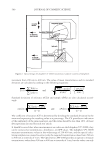
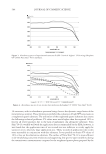
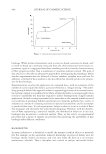
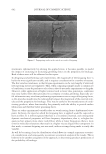
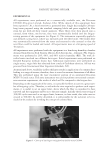
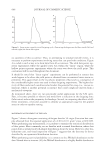
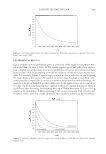
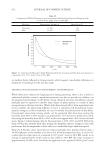
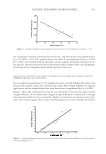
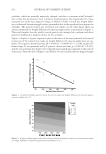
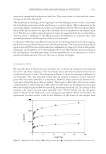
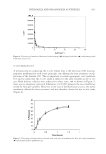
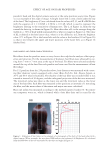
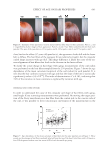
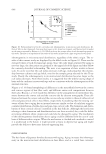
EFFECT OF AGE ON HAIR PROPERTIES 639 panelist’s head and the digital camera were set at the same positions every time. Figure 1a is an example of this type of image. A bright luster belt is seen a little under the top of the head. The brightness (L) was calculated from the values of R, G, and B of RGB data with the equation of L = 0.299R + 0.587G + 0.114B, which is used to represent the brightness relating to the sensitivity of human eyes. The L of Figure 1a, from the top toward the hair tip, is shown in Figure 1b. Here this value of L is the average along the width of ca. 30% of head width (surrounded by a white rectangle in Figure 1a). The value of ΔL is defi ned as the hair luster value, where it is the difference in L from the brightest value (171 in Figure 1b) at the luster belt and the value at the baseline (38 in Figure 1b) so that it ties between the upper and lower positions of the luster belt, as in Figure 1b (dashed line). HAIR SAMPLES AND THEIR CHARACTERIZATION Hair fi bers from the panelists were cut very close to the scalp for the analyses of hair prop- erties and structure. For the measurements of diameter, hair fi bers were obtained by cut- ting from 7-mm × 7-mm areas at the top of the head. Ten fi bers were selected randomly around the top of the head for each panelist and were used for the measurement of hair fi ber shape. For 132 panelists from the 230 panelists above, hair diameter was measured with a rotat- ing fi ber diameter system equipped with a laser (Kato Tech Co. Ltd., Kyoto, Japan), at 20°C and 65% relative humidity. The shadow of the hair fi ber was recorded while it was rotated at intervals of 30 degrees, and the orthogonal projection of the hair was measured. The maximum value was taken as the major axis and the minimum value as the minor axis of the hair fi ber. Each fi ber was measured at fi ve positions at intervals of 1 mm along the fi ber, and the mean values of the minor and major axes were calculated. Hair curl radius was measured according to the method reported earlier (9). To remove any temporary water set, which is formed while a hair fi ber dries and is caused by the Figure 1. Evaluation of hair luster. (a) An example of a photograph of the back of the head taken with a digital camera. White rectangle: the area where RGB analysis was performed. (b) Brightness (L) calculated from the RGB data of the area surrounded by the white rectangle in Figure 1a.
Purchased for the exclusive use of nofirst nolast (unknown)
From: SCC Media Library & Resource Center (library.scconline.org)