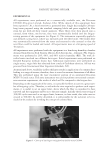
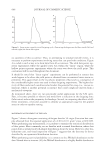
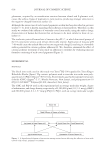
JOURNAL OF COSMETIC SCIENCE 640 exchange of hydrogen bonds, the hair fi bers were immersed in water for 10 min at 25°C and dried on vibrating fi lter paper. By drying in this manner, hair does not have any tension that affects hair fi ber shape. Hair fi bers were put on an image scanner (Epson, Type GT- X800) and sandwiched softly with a bonnet, and then the two-dimensional image of the hair shape was obtained. Through the analysis of the two-dimensional image (9), the curvature at every 1-mm step along the trajectory, from the root along a 15-cm length, was calculated. In the case of the panelists who had had their hair permed, only the hair segment with no history of perming was used for the analysis. On the other hand, hair color hardly affects hair shape, and so the color-treated hairs were used for shape measurements with no distinction. The mean value of the curvature was used as an index of the curliness of the hair fi ber. STRUCTURAL ANALYSIS For 82 panelists randomly selected from the 230 panelists above, two or three hair fi bers were again randomly chosen (total of 187 fi bers) to be analyzed for internal structure by microbeam X-ray scattering at beamline BL40XU of the synchrotron facility SPring-8 (Hyogo, Japan). The quasi-monochromated X-ray beam (ΔE/E ∼ 0.02 X-ray wavelength = 0.083 nm) from the helical undulator (11) was used in this study. An X-ray microbeam with a diameter of 5 μm was obtained by inserting a pinhole of 3-μm diameter 15 cm up- stream of the sample position. The parasitic scattering was removed by the second pin- hole inserted just before the sample position. The sample-to-detector distance and the X-ray exposure time were 1470 mm and 1.2 s, respectively. A cooled CCD, coupled with an X-ray image intensifi er (Hamamatsu Photonics, Shizuoka, Japan), was used as a detec- tor (12). Sample fi bers were set out on a slotted mounting plate, at about 1-mm intervals, and then glued on to the plate at both ends such that the fi bers were fi xed under no ten- sion. The plate was held on the stage so that the fi ber’s axis was perpendicular to the X-ray beam. The sample position, with respect to the X-ray microbeam, was changed in equal steps (5 μm), in the transverse direction of the fi ber. The tilt angle of intermediate fi laments against the fi ber axis was estimated from the full-width value at half maximum (FWHM) of the scattering profi le concerning intermediate fi laments in the azimuthal direction (10,13). P is defi ned as the relative position in the transverse direction from the most convex side (P = 0) to the most concave side (P = 1) of the curl. Scattering data from both regions (0 P 0.2 and 0.8 P 1.0) are possibly affected by the scattering from the cuticle. Thus, the parameter indicating the internal inhomogeneous distribution, η2, is defi ned as the ratio of the averaged value of FWHM in the convex side (0.2 P 0.5) to that in the concave side (0.5 P 0.8). STATISTICS Statistical analyses were performed using regression analysis or Student’s t-test. For scat- ter plots, regression analysis was used to obtain the correlation coeffi cient R and the p-value for the linear slope. For comparisons between values of two decennial age groups, Student’s t-test was used. In both cases, p-values 0.05 were considered statistically signifi cant.

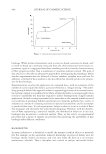
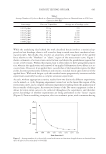
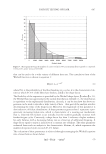
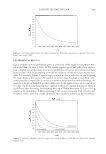
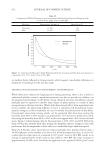
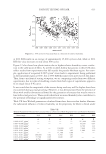
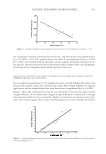
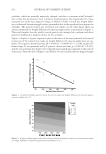
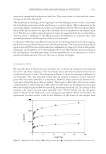
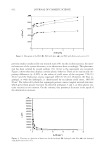
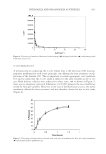
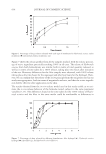
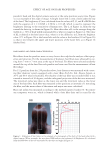
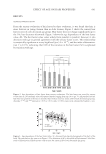
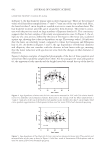
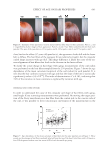
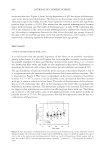
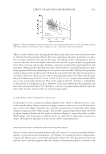
EFFECT OF AGE ON HAIR PROPERTIES 641 RESULTS CLINICAL INVESTIGATION From the sensory evaluation of hair luster by three evaluators, it was found that hair is more lustrous in young women than in elder women. Figure 2 shows the sensory hair luster scores of each decennial age group. Hair luster does not change signifi cantly up to the 30s, but decreases afterwards. Figure 3 shows the age dependence of the hair luster value, ΔL. The hair luster value varies widely from panelist to panelist however, it also decreases with age in general agreement with the sensory luster scores. This relationship is statistically signifi cant at a very high level (p = 3.0 × 10⁻¹¹), and the index of determina- tion r2 is 0.176, indicating that 18% of the variation in the hair luster (ΔL) is explained by variation with age. Figure 2. Age dependence of hair luster from sensory evaluations. The hair luster was scored by sensory evaluations on 230 randomly selected Japanese females ranging from age 10 to age 70. All panelists had not had their hair permed in the last six months. Bars with an error bar: mean ± SD of each decennial age group. Asterisks *, **, and *** represent p 0.05, p 0.01, and p 0.001, respectively, obtained by Student’s t-test. Figure 3. Age dependence of the hair luster value, ΔL, obtained from digital photographs of the back of the head. The panelists are the same as in Figure 2. The defi nition of ΔL is described in Experimental. Solid line: result of linearization. Filled squares with an error bar: mean ± SD of each decennial age group.
Purchased for the exclusive use of nofirst nolast (unknown)
From: SCC Media Library & Resource Center (library.scconline.org)