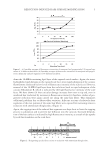
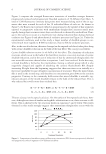
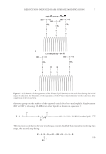
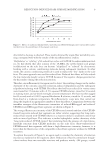
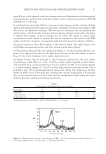
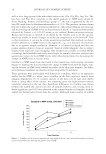
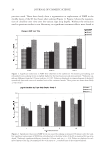
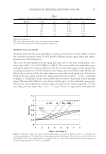
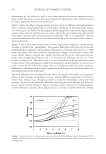
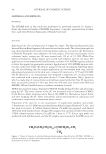
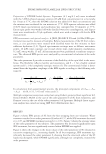
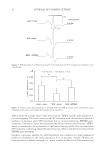
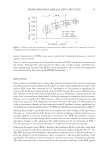
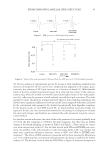
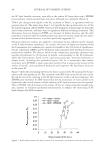
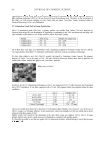
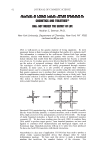
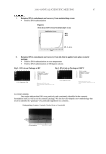
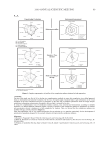
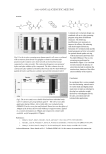
JOURNAL OF COSMETIC SCIENCE 8 The fi rst step (equation 3) is unlikely to be a reversible reaction the second step (equation 4) is probably reversible. In the initial stages (fi ve minutes of reduction), the F-layer (lipid layer on the scale faces) will appear as shown in Figure 4a. After completion of the second step of reduction, the fi nal appearance of the F-layer (lipid domains) on the scale faces will appear as shown in Figure 4b. It is important to point out again that this surface (exposed scale face) delipidation reaction has nothing to do with the reduction taking place in the bulk of the hair fi ber by the conventional reversible two-step reaction mechanism. The hair that has undergone these reduction reactions will have mainly -SH groups, and a small amount of - x SO groups (air-oxidized -SH groups), and in the case of reduction with ammonium thioglycolate, hair will also have the mixed disulfi de K-S-S-R, which is a -C-S-S-CH2-COO¯ group (depending on the pH). Also, it should be noted that at short reaction times (equation 1), the concentration of the mixed disulfi de is high and decreases progressively with treatment time. Since the pH of the Rhodamine tagging solution is ~5.8, it is unlikely that the -SH group ionizes to -S¯ to form salt linkages with the quaternary nitrogen of the Rhodamine B. However, Rhodamine B can easily form a salt link with the -COO¯ of the mixed disulfi de. This is the cause of such high fl uores- cence intensity at short reduction times when the concentration of the mixed disulfi de with the -C-S-S-CH2-COO¯ group is the highest. Wettability as a measure of surface damage caused by reduction. We wanted to substantiate the fact that chemical oxidation shows progressive damage to the cuticle surface as a function of increasing treatment time, while in the case of the reduction reaction, the fl uorescence intensity reaches a maximum by fi ve minutes of reduction treatment and gradually decreases during longer exposure times. Therefore, we used an alternate technique, which is well-suited to detect and characterize changes in the surface chemistry of the scale faces, namely, wettability scanning using the Wilhelmy technique (using our TRI/scan apparatus) (8). In this case, work of adhesion, which is a measure of surface wettability, was used to express changes in the surface chem- istry of progressively oxidized and reduced hair fi bers. The magnitude of the work of adhesion should refl ect the increase in surface energy caused by oxidation and reduction processes, involving the removal of the lipid and creation of acid functionalities in the hair surface. Work of adhesion is given by the expression LV ı (1+cosș) (5) where cos θ is the contact angle and σLV is the surface tension of the wetting liquid. Studies at TRI using this technique, using water as the test liquid, have shown that the “work of adhesion” for the reduced hair increases much more rapidly and to a greater extent than that of oxidized hair (Figure 5). The results obtained in these earlier studies, using single-fi ber wettability scanning, support the results obtained in our current research quite well. As can be seen in Figure 5, the progressively increasing hydrophilic nature of the scale faces, stemming from increased lipid scission by hydrolysis and pro- gressive formation of acid groups on the scale faces, increases the work of adhesion of the hair fi ber surface during chemical oxidation with hydrogen peroxide. However, in the case of reduction, a maximum of hydrophilicity is reached by six minutes of treatment,

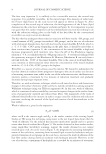
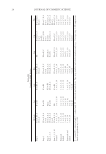
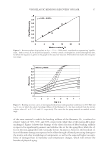
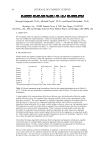
REDUCTION-INDUCED HAIR SURFACE MODIFICATION 9 after which a decrease is observed. These results obtained by single-fi ber wettability scan- ning correspond well with the results of the microfl uorometric studies. “Relipidation” or “refatting” of the reduced hair surface with CETAB. In earlier oxidation stud- ies, we had shown that after scission of the 18-MEA, the newly formed acid groups (acidifi cation) on the scale faces can become “relipidized” or “refatted” by electrostatic bonding with a cationic conditioning molecule during subsequent treatment. In other words, the cationic conditioning molecule is used to replace the “lost” lipids on the scale faces. The same approach was used for reduced hair. Reduced hair fi bers will also adsorb the low-molecular-weight cationic CETAB because of the negative charges generated on the hair surface during the reduction reaction. Therefore, microfl uorometry was again used to detect the resulting changes in the surface chemistry of the cuticula caused by reduction-induced delipidation and the subsequent relipidation/refatting with CETAB. Hair fi bers that had been reduced for various times were treated for 15 minutes with a 0.5% aqueous CETAB solution, rinsed for 30 seconds in running water, and air-dried overnight at room temperature. The hair was then tagged for 60 seconds with a 0.020% aqueous Rhodamine B solution, rinsed for 15 seconds, and blow-dried at a moderate temperature. Microfl uorometric scans were then carried out along the length of an appropriate number of these hair fi bers. Comparisons between the interfi ber averages of the fl uorescence intensities of reduced/RB-tagged and reduced/ CETAB-treated/RB-tagged hair segments are shown in Figure 6. The averaged fl uorescence intensity of the CETAB-treated controls and that of the CETAB- treated long-term-reduced hair segments are rather similar, suggesting that long-term- reduced hair treated with CETAB behaves in a manner similar to unaltered control hair with an intact lipid layer. This indicates a similar hydrophobic surface chemistry of the “long-term-reduced, CETAB-treated” hair stemming from the presence of a lipid-mono- layer-like structure from CETAB molecules on the scale faces. Short-term-reduced/ CETAB-treated hair segments still show a high fl uorescence intensity however, it is lower than the fl uorescence of the comparable reduced hair segments without the CETAB treatment. To explain the results of Figure 6, we again need to consider the chemistry of reduction reactions as explained in the equations above. Reduction of hair by ammonium thiogly- colate involves these two reversible reactions and produces mainly -SH groups, a small Figure 5. Effects of oxidation (alkaline H2O2) and reduction (NH4OH thioglycolate) on hair fi ber surface wettability (on the outer β-layer of the exposed scale faces).
Purchased for the exclusive use of nofirst nolast (unknown)
From: SCC Media Library & Resource Center (library.scconline.org)