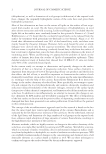
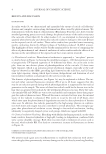
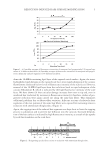
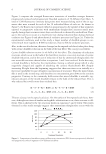
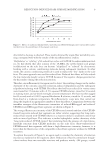
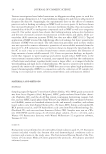
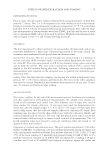
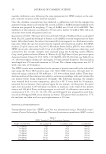
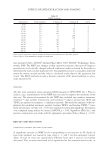
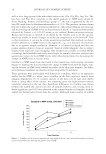
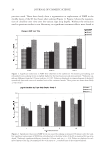
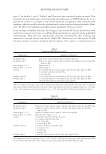
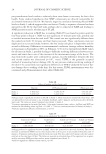
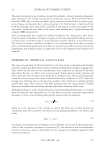
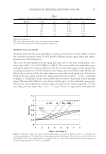
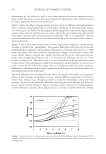
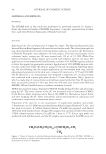
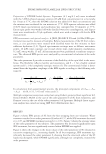
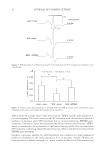
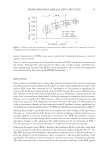
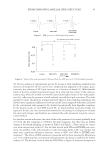
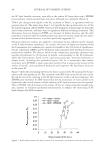
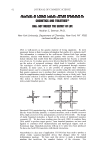
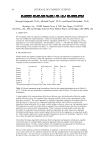
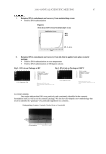
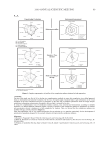
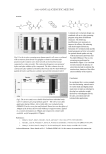
JOURNAL OF COSMETIC SCIENCE 6 Figure 3 compares the averaged fl uorescence intensities of interfi ber averages between progressively reduced and progressively bleached segments of 30 different hair fi bers. A total of 1200 fl uorescence intensity data points were measured along each of the six seg- ments that were scanned for each of the 30 individual fi bers of each set. As shown in Figure 3, the fl uorescence intensity (which is proportional to dye uptake) of hair segments exposed to progressive reduction with ammonium thioglycolate increases much more rapidly during short treatment times than was observed in chemically oxidized hair. Dam- age to the scale faces occurs at a much faster rate during reduction than during chemical oxidation (see Figure 4) and photochemical oxidative processes (see Figure 2a). Under the experimental conditions used in this study, a larger number of disulfi de groups is con- verted much more rapidly to R-SH by reduction, than to SOx by oxidative processes. Also, in the case of reduction, thioester cleavage (on the exposed scale faces) takes place along with cystine disulfi de reduction (in the bulk of the hair fi ber). The concept is as follows: Cystine disulfi de reduction reaction (in the bulk of the hair fi ber). The chemistry of reduction reactions, which occur in the bulk of the hair fi ber, involves a two-step reaction of cystine disulfi de reduction, and in the case of reduction of hair by ammonium thioglycolate, the two reversible reactions shown below in equations 1 and 2 are involved. In the fi rst step, a mixed disulfi de is formed as the intermediate, having a carboxyl group which is also negatively charged and capable of adsorbing the cationic fl uorochrome RB. Sharply increasing FI right from the beginning suggests that these reactions occur initially at a faster rate (probably because of higher concentration of reactants). Then the mixed disul- fi de is used in the second step, and therefore its concentration goes down as the reaction progresses. Contrary to the commonly held notion that mixed disulfi de is unstable, sig- nifi cant amounts of the mixed disulfi de remain in the bulk of the reduced hair. This is why reduced hair swells more than oxidized hair. K S S K RSH K S S R KSH R (1) K S S R RSH R S S R KSH R (2) Thioester cleavage (on the exposed scale faces). On the surface of the exposed scale faces, how- ever, although reactions of similar nucleophilic substitutions occur, their outcome is dif- ferent. This is shown by the two reactions shown in equations 3 and 4 below. The results obtained in this study strongly suggest that ammonium thioglycolate reacts with the Figure 3. Comparisons of interfi ber averages of fl uorescence intensities (FI%) between progressively bleached and progressively reduced segments of 30 different hair fi bers.

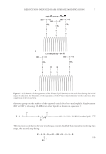
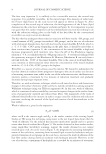
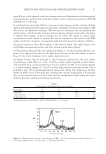
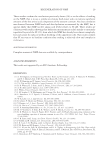
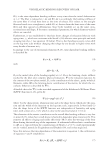
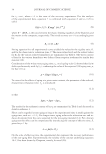
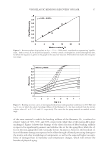
REDUCTION-INDUCED HAIR SURFACE MODIFICATION 7 thioester group on the surface of the exposed cuticle face by a nucleophilic displacement (RS¯ or OH¯), releasing 18-MEA (or other lipids) as shown in equation 3: ( O || (or other lipid) — RS −) →C^^^^^^^^^→K ↑ S O || C^^^^^^^^^K– K– – O S – S – S-R +18-MEA — (3) The reaction is similar to the one involving a cystine disulfi de functionality involving two steps, the second step being: ( ) S n K S R K SH R S S R RS R (4) Figure 4. (a) Schematic of the appearance of the F-layer (lipid domains) on the scale faces during the initial stages of reduction. (b) Schematic of the appearance of the F-layer (lipid domains) on the scale faces after completion of the second step.
Purchased for the exclusive use of nofirst nolast (unknown)
From: SCC Media Library & Resource Center (library.scconline.org)