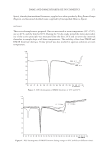
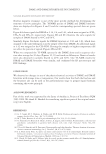
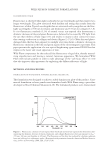
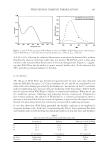
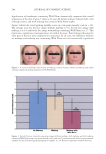
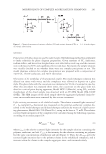
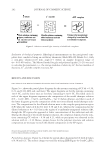
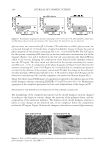
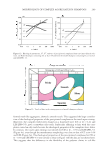
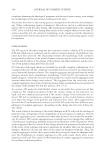
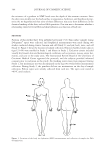
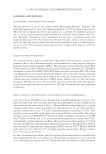
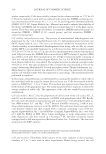
JOURNAL OF COSMETIC SCIENCE 270 2-Dimethylaminoethanol is an acetylcholine precursor (7) that has been found effective in oral formulations to treat hyperactivity in children (8). In 2002 it began to be used in topical for- mulations of cosmetic skin tensors (9,10). The commercial availability of different derivatives of DMAE should in theory make it possible to substitute different products for each other in formulations without technological problems arising from structural changes that might af- fect the effi cacy of the active principle. We therefore compared DMAE and DMAE bitartrate (Figure 1) to detect potential differences that might interfere with the long-term stability of different formulations under different conditions and storage temperatures. We also evaluated the behavior of DMAE and DMAE bitartrate alone and in solution. Samples were analyzed with different physicochemical methods that included ultraviolet (UV) and infrared (IR) spectroscopy, differential scanning calorimetry (DSC) for DMAE bitartrate, and nuclear magnetic resonance spectroscopy (1H-NMR). Because of its fl uid nature, free-base DMAE was not analyzed by DSC. MATERIALS AND METHODS MATERIALS The products used as ingredients in our formulations were: dimethylaminoethanol, a color- less liquid with a faint fi sh-like odor, supplied by Roig Farma-Grupo (Fagron, Barcelona, Figure 1. Molecular structure of DMAE. Figure 2. DSC thermogram of DMAE bitartrate at 25°C.

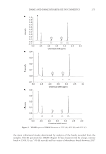
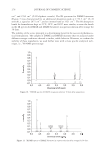
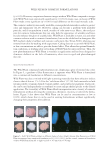
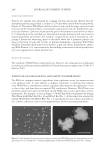
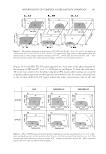
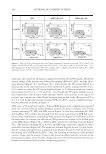
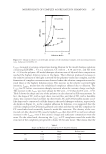
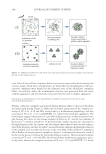
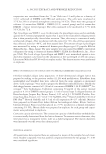
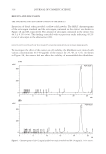
DMAE AND DMAE BITARTRATE IN COSMETICS 271 Spain), dimethylaminoethanol bitartrate, supplied as a white powder by Roig Farma-Grupo (Fagron), and deionized distilled water, supplied by Interapothek (Murcia, Spain). METHODS Three sets of samples were prepared. One set was stored at room temperature (20°–25°C), one at 40°C, and the third at 60°C. During the 30-day study period the molecular stabil- ity of the active principle was measured after the fi rst 24 h and at seven-day intervals thereafter in samples kept at all three temperatures. The stability of free-base DMAE and DMAE bitartrate during a 30-day period was also studied in aqueous solutions at room temperature. Figure 3. DSC thermograms of DMAE bitartrate at 40°C and 60°C. Figure 4. DSC thermograms of DMAE bitartrate during storage at 40°C (stability at different times).
Purchased for the exclusive use of nofirst nolast (unknown)
From: SCC Media Library & Resource Center (library.scconline.org)