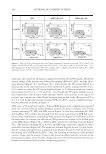
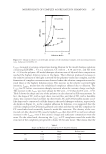
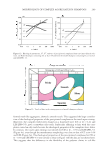
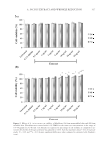
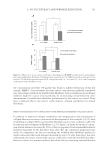
JOURNAL OF COSMETIC SCIENCE 308 skin (26). If conditions were favorable for proteolysis to individual amino acids, keratin 1 may have been an additional source of citrulline for the sites with lower SC hydration. SC cohesiveness, measured as protein removed by the tape strip, showed signifi cant dif- ferences between body sites, and these differences persist through the SC (Figure 4). This confi rms recent work by Breternitz et al. (27), showing signifi cant differences in protein amounts removed from varying body sites. Koyama et al. (6) found lower levels of citrulline and serine in the cheek versus the back and higher arginine and histidine. Similarly, Egawa and Tagami (5) reported lower NMF for the cheek versus the forearm. These accounts are consistent with our result of lower citrulline in “face” versus back, although we evaluated the jaw rather than the cheek. The outcomes are not consistent with those of Horii et al. (2), who found signifi cantly lower FAA in the lower leg along with reduced skin hydration and increased xerosis. The higher FAA in the calf is somewhat consistent with the fi ndings of Takahashi and Tezuka (4), who reported higher FAA in the lower leg of older subjects with xerosis versus younger normal controls, but some of the increase was attributed to age (4). Proteolysis of fi laggrin to free amino acids and to further conversion products takes place when fi laggrin-containing coenocytes move up into the drier regions of the stratum cor- neum. Thus, proteolysis may not occur until the outermost layers need moisture for SC plasticization of the outermost layers (28). While we did not quantify dryness, calf skin is often visibly scaly, suggestive of aberrant desquamation. Greater amounts of FAA in the calf may indicate an up-regulation in order to subsequently increase hydration. Reduced SC turnover may also explain higher levels of FAA (29). Assessments of SC thickness and turn- over rates are needed to evaluate this explanation. Additional experiments including the analysis of PCA, urocanic acid, and lactates by other analytical methods are warranted. ACKNOWLEDGMENTS This work was supported by an SCC Graduate Fellowship (M. Robinson). REFERENCES (1) I. R. Scott and C. R. Harding, Filaggrin breakdown to water binding compounds during development of the rat stratum corneum is controlled by the water activity of the environment, Dev. Biol., 115(1), 84–92 (1986). (2) I. Horii, Y. Nakayama, M. Obata, and H. Tagami, Stratum corneum hydration and amino acid content in xerotic skin, Br. J. Dermatol., 121(5), 587–592 (1989). (3) J. Nikolovski, G. N. Stamatas, N. Kollias, and B. C. Wiegand, Barrier function and water-holding and transport properties of infant stratum corneum are different from adult and continue to develop through the fi rst year of life, J. Invest. Dermatol., 128(7), 1728–1736 (2008). (4) M. Takahashi and T. Tezuka, The content of free amino acids in the stratum corneum is increased in senile xerosis, Arch. Dermatol. Res., 295(10), 448–452 (2004). (5) M. Egawa and H. Tagami, Comparison of the depth profi les of water and water-binding substances in the stratum corneum determined in vivo by Raman spectroscopy between the cheek and volar forearm skin: Effects of age, seasonal changes and artifi cial forced hydration, Br. J. Dermatol., 158(2), 251–260 (2008). (6) J. Koyama, I. Horii, K. Kawasaki, Y. Nakayama, Y. Morikawa, and T. Mitsui, Free amino acids of stratum corneum as a biochemical marker to evaluate dry skin, J. Soc. Cosmet. Chem., 35, 183–195 (1984). (7) M. Robinson, M. Visscher, A. LaRuffa, and R. Wickett, Natural moisturizing factors (NMF) in the stratum corneum (SC). I. Effects of lipid extraction and soaking, J. Cosmet. Sci., 62, 13–22 (2010).

REGIONAL VARIATION IN FAAs IN STRATUM CORNEUM 309 (8) M. Robinson, M. Visscher, A. LaRuffa, and R. Wickett, Natural moisturizing factors (NMF) in the stratum corneum (SC). II. Regeneration of NMF over time after soaking, J. Cosmet. Sci., 62, 23–29 (2010). (9) A. B. Cua, K. P. Wilhelm, and H. I. Maibach, Frictional properties of human skin: Relation to age, sex and anatomical region, stratum corneum hydration and transepidermal water loss, Br. J. Dermatol., 123(4), 473–479 (1990). (10) W. Manuskiatti, D. A. Schwindt, and H. I. Maibach, Infl uence of age, anatomic site and race on skin roughness and scaliness, Dermatology, 196(4), 401–407 (1998). (11) Z. Ya-Xian, T. Suetake, and H. Tagami, Number of cell layers of the stratum corneum in normal skin— Relationship to the anatomical location on the body, age, sex and physical parameters, Arch. Dermatol. Res., 291(10), 555–559 (1999). (12) D. A. Schwindt, K. P. Wilhelm, and H. I. Maibach, Water diffusion characteristics of human stratum corneum at different anatomical sites in vivo, J. Invest. Dermatol., 111(3), 385–389 (1998). (13) J. W. Fluhr, H. Dickel, O. Kuss, I. Weyher, T. L. Diepgen, and E. Berardesca, Impact of anatomical location on barrier recovery, surface pH and stratum corneum hydration after acute barrier disruption, Br. J. Dermatol., 146(5), 770–776 (2002). (14) A. V. Rawlings and C. R. Harding, Moisturization and skin barrier function, Dermatol. Ther., 17(Suppl 1), 43–48 (2004). (15) J. Kubilus, I. Scott, C. R. Harding, J. Yendle, J. Kvedar, and H. P. Baden, The occurrence of profi lag- grin and its processing in cultured keratinocytes, J. Invest. Dermatol., 85(6), 513–517 (1985). (16) J. Kubilus, R. W. Waitkus, and H. P. Baden, The presence of citrulline in epidermal proteins, Biochim. Biophys. Acta, 581(1), 114–121 (1979). (17) I. R. Scott, C. R. Harding, and J. G. Barrett, Histidine-rich protein of the keratohyalin granules. Source of the free amino acids, urocanic acid and pyrrolidone carboxylic acid in the stratum corneum, Biochim. Biophys. Acta, 719(1), 110–117 (1982). (18) E. Girbal-Neuhauser, J. J. Durieux, M. Arnaud, P. Dalbon, M. Sebbag, C. Vincent, et al., The epitopes targeted by the rheumatoid arthritis-associated antifi laggrin autoantibodies are posttranslationally generated on various sites of (pro)fi laggrin by deimination of arginine residues, J. Immunol., 162(1), 585–594 (1999). (19) C. Masson-Bessiere, M. Sebbag, E. Girbal-Neuhauser, L. Nogueira, C. Vincent, T. Senshu, et al., The major synovial targets of the rheumatoid anthritis-specifi c antifi laggrin autoantibodies are deiminated forms of the alpha-and beta-chains of fi brin, J. Immunol., 166(6), 4177–4184 (2001). (20) J. G. Barrett and I. R. Scott, Pyrrolidone carboxylic acid synthesis in guinea pig epidermis, J. Invest. Dermatol., 81(2), 122–124 (1983). (21) N. W. DeLapp and D. K. Dieckman, Gamma glutamyl peptidase: A novel enzyme from hairless mouse epidermis, J. Invest. Dermatol., 90(4), 490–494 (1988). (22) P. K. Smith, R. I. Krohn, G. T. Hermanson, A. K. Mallia, F. H. Gartner, M. D. Provenzano, et al., Mea- surement of protein using bicinchoninic acid, Anal. Biochem., 150(1), 76–85 (1985). (23) G. B. Jemec and J. Serup, Epidermal hydration and skin mechanics. The relationship between electrical capacitance and the mechanical properties of human skin in vivo, Acta Derm. Venereol., 70(3), 245–247 (1990). (24) N. Nakagawa, S. Sakai, M. Matsumoto, K. Yamada, M. Nagano, T. Yuki, et al., Relationship between NMF (lactate and potassium) content and the physical properties of the stratum corneum in healthy subjects, J. Invest. Dermatol., 122(3), 755–763 (2004). (25) R. Nachat, M. C. Mechin, H. Takahara, S. Chavanas, M. Charveron, G. Serre, et al., Peptidylarginine deiminase isoforms 1-3 are expressed in the epidermis and involved in the deimination of K1 and fi lag- grin, J. Invest. Dermatol., 124(2), 384–393 (2005). (26) A. V. Rawlings and P. J. Matts, Stratum corneum moisturization at the molecular level: An update in relation to the dry skin cycle, J. Invest. Dermatol., 124(6), 1099–1110 (2005). (27) M. Breternitz, M. Flach, J. Prassler, P. Elsner, and J. W. Fluhr, Acute barrier disruption by adhesive tapes is infl uenced by pressure, time and anatomical location: Integrity and cohesion assessed by sequen- tial tape stripping. A randomized, controlled study, Br. J. Dermatol., 156(2), 231–240 (2007). (28) A. V. Rawlings, I. R. Scott, C. R. Harding, and P. A. Bowser, Stratum corneum moisturization at the molecular level, J. Invest. Dermatol., 103(5), 731–741 (1994). (29) D. Roberts and R. Marks, The determination of regional and age variations in the rate of desquamation: A comparison of four techniques, J. Invest. Dermatol., 74(1), 13–16 (1980).
Purchased for the exclusive use of nofirst nolast (unknown)
From: SCC Media Library & Resource Center (library.scconline.org)