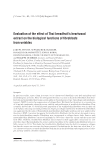
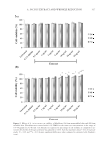
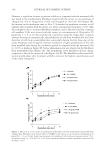
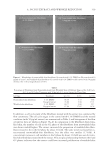
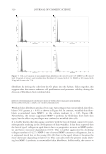
J. Cosmet. Sci., 61, 311–324 (July/August 2010) 311 Evaluation of the effect of Thai breadfruit’s heartwood extract on the biological functions of fi broblasts from wrinkles JARUPA VIYOCH, SUPASIRI BURANAJAREE, FRANÇOIS GRANDMOTTET, SOPHIE ROBIN, DELPHINE BINDA, CÉLINE VIENNET, NETI WARANUCH, and PHILIPPE HUMBERT, Cosmetics and Natural Products Research Center (CosNat), Faculty of Pharmaceutical Sciences and Center of Excellence for Innovation in Chemistry, Naresuan University, Phitsanulok, 65000 Thailand (J.V., N.W.), Faculty of Pharmaceutical Sciences and Center for Innovation in Chemistry, Naresuan University, Phitsanulok, 65000 Thailand (S.B.), Engineering and Cutaneous Biology Team, University of Franche-Comté, Inserm UMR 645, IFR133, Besançon, 25000 France (F.G., S.R., D.B., C.V., P.H.), and Dermatology Department, St. Jacques Hospital, Besançon, 25030 France (P.H.). Accepted for publication April 23, 2010. Synopsis In previous studies, extract from Artocarpus incisus’s heartwood (breadfruit tree) had antioxidant and antimelanogenic activities. Here, we investigated the extract’s action on facial skin fi broblasts from wrin- kled skin and nonwrinkled skin biopsies, particularly in the production of type I procollagen and metallopro- teinase-1 (MMP-1) and in the reorganization of collagen fi bers. We found that the extract at a concentration of 50 μg/ml signifi cantly enhanced percent viability and proliferation of wrinkled-skin fi broblasts. Flow cytometry showed that a 3.6-fold increased proportion of the wrinkled-skin fi broblasts were in their cell cycle S-phase, indicating increased proliferation. Type I procollagen synthesis by wrinkled-skin fi broblasts was augmented by the extract. Nonwrinkled-skin fi broblasts had higher synthesis and were unaffected by the extract. MMP-1 secretion was greater for wrinkled-skin fi broblasts, but the extract decreased its secre- tion for both fi broblasts samples. Fibroblasts were incorporated in collagen lattice disks. Lattices with nonwrinkled-skin fi broblasts contracted uniformly by 56% after a three-day culture and the extract had little effect. However, wrinkled-skin fi broblast lattices failed to show appreciable contractions (to 12% after three days). But remarkably, the extract conferred an ability of the wrinkled-skin fi broblast lattices to fully contract (to 53%). This shows that wrinkled-skin fi broblasts have the ability to reorganize collagen but that the extract can reactivate this latent potential. Our fi ndings for the fi rst time reveal that A. in- cisus’s heartwood extract reversed the fi broblast defi ciencies in the metabolism and reorganization of colla- gen and may underlie a wrinkle treatment. Address all correspondence to Philippe Humbert.
Purchased for the exclusive use of nofirst nolast (unknown)
From: SCC Media Library & Resource Center (library.scconline.org)