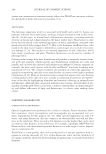
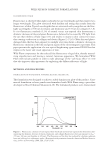
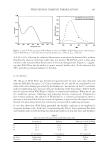
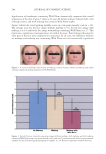
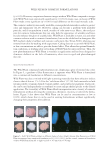
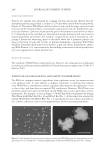
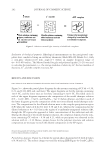
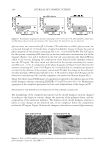
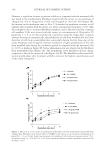
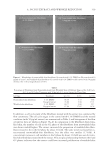
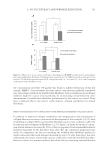
JOURNAL OF COSMETIC SCIENCE 322 fi broblasts (by 53% at three days). Furthermore, the contraction was uniform as shown by the disk shape of the lattices (Figure 7B). These observations show that our extract im- proved the contractile ability and reorganization of the collagen fi bers shown by the wrinkled-skin fi broblasts. Taken together with the above-mentioned results, these obser- vations suggest that the extract affects not only enhancement of dermal collagen produc- tion, but also the restoration of dermal collagen produced by fi broblasts. However, it is important to note that a limitation of this study is the source of the fi broblasts used. As the study was performed with fi broblasts obtained from only one individual, further investigation in fi broblasts from various sources is necessary to ensure the effi cacy of the extract on the restoration of fi broblast functions. CONCLUSIONS Nowadays, the botanical extract is playing an increasingly important role in cosmetics. The isolation and purifi cation of active ingredients is sometimes unnecessary for cosmet- ics, and purifi cation may lead to a loss of biological activity and may cause toxicity. Our Figure 7. Effect of A. incisus extract on the contractile capacity of nonwrinkled-skin and wrinkled-skin fi - broblasts. Fibroblasts embedded in the collagen lattice were treated with 0.1% DMSO (control) or 50 μg/ml extract. (A) The diameter of each lattice was measured over seven days of culture. Each point represents mean ± S.D. of three samples in duplicate. (B) Photographs of collagen lattices fl oating singly in the culture dishes at day 3. In dishes marked ‘XX’, the boundary of the lattice is diffi cult to discern because it fi lls of the dish.

A. INCISUS EXTRACT AND WRINKLE REDUCTION 323 previous study reported the effects of the crude extract of A. incisus’s heartwood on tyros- inase, melanogenesis, and oxidation activities. Therefore, this study focused on the ability of the extract to improve the functions of fi broblasts from wrinkled-skin biopsies. These functions include cell proliferation, type I procollagen and MMP-1 production, and the capacity to reorganize collagen fi bers. We found that the aged-related decrease in the functional activities of fi broblasts from wrinkles could be reversible by treatment with the extract from A. incisus’s heartwood. However, these fi ndings on cell-culture fi broblasts do not prove that the extract will decrease wrinkles in humans. Clinical studies in human subjects will be needed to determine the effi cacy of the extract on wrinkle reduction. ACKNOWLEDGMENTS Financial and facility support from the Thailand Research Fund and the Center of Excel- lence for Innovation in Chemistry (PERCH-CIC), Commission on Higher Education, Ministry of Education is gratefully acknowledged. In addition, we thank Dr. Charles Norman Scholfi eld for his valuable discussions. REFERENCES (1) P. U. Giacomoni and G. Rein, A mechanistic model for the aging of human skin, Micron, 35, 179–184 (2004). (2) V. N. Novoseltsev, J. Novoseltseva, and A. Yashin, A homeostatic model of oxidative damage explains paradoxes observed in the earlier aging experiments: A fusion and extension of older theories of aging, Biogerontology, 2, 127–138 (2001). (3) D. Batisse, R. Bazin, T. Baldeweck, B. Querleux, and J.-L. Lévêque, Infl uence of age on the wrinkling capacities of the skin, Skin Res. Technol., 8, 148–154 (2002). (4) S. Diridollou, V. Vabre, M. Berson, L. Vaillant, D. Black, J. M. Lagarde, J. M. Grégoire, Y. Gall, and F. Patat, Skin aging: Changes of physical properties of human skin in vivo, Int. J. Cosmet. Sci., 23, 353–362 (2001). (5) J. H. Chung, J. Y. Seo, H. R. Choi, M. K. Lee, C. S. Youn, G. Rhie, K. H. Cho, K. H. Kim, K. C. Park, and H. C. Eun, Modulation of skin collagen metabolism in aged and photoaged human skin in vivo, J. Invest. Dermatol., 117, 1218–1224 (2001). (6) J. Varani, D. Spearman, P. Perone, S. E. G. Fligiel, S. C. Datta, Z. Q. Wang, Y. Shao, S. Kang, G. J. Fisher, and J. J. Voorhees, Inhibition of type I procollagen synthesis by damaged collagen in photoaged skin and by collagenase-degraded collagen in vitro, Am. J. Pathol., 158, 931–942 (2001). (7) E. F. Bernstein and J. Uitto, The effect of photodamage on dermal extracellular matrix, Clin. Dermatol., 14, 143–151 (1996). (8) G. Jenkins, Molecular mechanisms of skin aging, Mech. Aging Dev., 123, 801–810 (2002). (9) J. Varani, R. L. Warner, M. Gharaee-Kermani, S. H. Phan, S. Kang, J. H. Chung, Z. Q. Wang, S. C. Datta, G. J. Fisher, and J. J. Voorhees, Vitamin A antagonizes decreased cell growth and elevated collagen- degrading matrix metalloproteinases and stimulates collagen accmulation in naturally aged human skin, J. Invest. Dermatol., 114, 480–486 (2000). (10) M. D. West, The cellular and molecular biology of skin aging. Arch. Dermatol., 130, 87–95 (1994). (11) M. Jouandeaud, C. Viennet, S. Bordes, B. Closs, and P. Humbert, Comparison of the biomechanical and biosynthetics behavior of normal human fi broblasts and fi broblasts from a forehead wrinkle, IFSCC Magazine, 7, 109–113 (2004). (12) E. Tamariz and F. Grinnell, Modulation of fi broblast morphology and adhesion during collagen matrix remodeling, Mol. Biol. Cell, 13, 3915–3929 (2002). (13) H. U. Püschel, J. Chang, P. K. Müller, and J. Brickmann, Attachment of intrinsically and extrinsically aged fi broblasts on collagen and fi bronectin, J. Photochem. Photobiol. B, 27, 39–46 (1995). (14) H. S. Talwar, C. E. M. Griffi ths, G. J. Fisher, T. A. Hamilton, and J. J. Voorhees, Reduced type I and type II procollagens in photodamaged adult human skin, J. Invest. Dermatol., 105, 285–290 (1995).
Purchased for the exclusive use of nofirst nolast (unknown)
From: SCC Media Library & Resource Center (library.scconline.org)