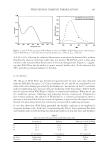
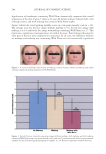
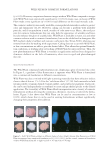
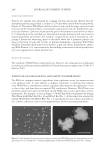
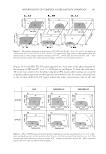
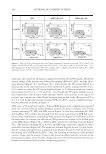
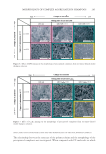
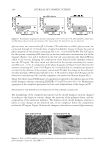
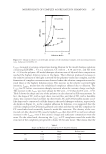
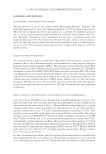
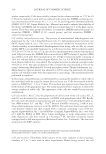
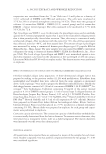
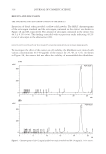
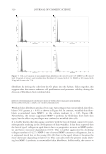
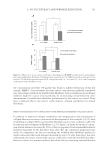
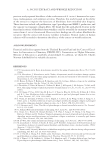
JOURNAL OF COSMETIC SCIENCE 320 fi broblasts by driving the cells from the G1 phase into the S phase. Taken together, this suggests that the extract enhances cell proliferation and promotes viability during the division of fi broblasts from wrinkled skin. EFFECTS OF THE EXTRACT ON PRODUCTION OF TYPE I PROCOLLAGEN AND MATRIX METALLOPROTEINASE-1 (MMP-1) BY HUMAN FIBROBLASTS Wrinkled-skin fi broblasts produced less type I procollagen than nonwrinkled-skin fi bro- blasts (76% greater, p 0.01) as shown in Figure 6A. In contrast, wrinkled-skin fi bro- blasts accumulated more MMP-1 in the culture medium ( p 0.05, Figure 6B). Nevertheless, the extract suppressed MMP-1 synthesis by fi broblasts from both skin types, but the effect on procollagen was confi ned to wrinkled-skin cells. It is widely known that skin aging correlates with the loss of dermal connective tissue, subsequently resulting in the development of skin wrinkles. It has been reported that the loss of type I collagen in aged skin is due to a progressive increase in MMP synthe- sis and hence increased degradation (9,19). This is further aggravated by declining collagen synthesis (14,27). MMP-1 one of several MMP cutaneous collagenases, but it is expressed much less in the young (28–30) than in the aged, where it becomes the more dominant degrading enzyme (31). This coincides with the present study show- ing less MMP-1 synthesis in nonwrinkled-skin fi broblasts. Additionally, the extract at Figure 5. Cell-cycle analysis of nonwrinkled-skin fi broblasts (A) treated with 0.1% DMSO or (B) treated with 50 μg/ml of extract and wrinkled-skin fi broblasts (C) treated with 0.1% DMSO or (D) treated with 50 μg/ml of extract for 72 h.

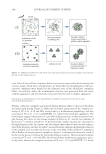
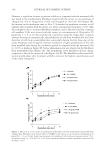
A. INCISUS EXTRACT AND WRINKLE REDUCTION 321 the concentration used here (50 μg/ml) was found to inhibit elaboration of this key enzyme, MMP-1. Concomitantly, the same extract concentration markedly stimulated type I procollagen synthesis by wrinkled-skin fi broblasts. Such a stimulation of procollagen synthesis might be caused, at least partially, by an increasing cell proliferation, since enhancement of wrinkle-skin fi broblast proliferation by the extract was found. From these combined effects, the extract could improve collagen metabolism by dermal fi broblasts. EFFECT OF THE EXTRACT ON CONTRACTION OF THE FIBROBLAST-EMBEDDED COLLAGEN LATTICE In addition to improved collagen metabolism, the reorganization and reorientation of collagen fi bers are necessary to minimize the development of skin wrinkles (12,32). Such remodeling of collagen fi bers is governed by fi broblasts and, in turn, is shown to affect the locomotion and attachment of fi broblasts (11,33). Figure 7A shows the extent of contrac- tion (initial diameter decreased by 56%) of lattices populated with nonwrinkled-skin fi - broblasts vigorously for the fi rst three days after that, the contraction progressed more slowly. In comparison, the lattices containing the wrinkled-skin fi broblasts produced a slight contraction (the initial diameter decreased by only 12% after three days), but most importantly, the extract restored the capacity of the lattice with the wrinkled-skin fi bro- blasts to contract in a manner similar to that of the lattices containing nonwrinkled-skin Figure 6. Effects of A. incisus extract on (A) type I procollagen or (B) MMP-1 production by nonwrinkled- skin and wrinkled-skin fi broblasts. Fibroblasts were treated with 0.1% DMSO (control) or 50 μg/ml of ex- tract for 72 h. Each bar represents mean ± S.D. of triplicate study. *p 0.05 and **p 0.01, when compared with control values (Student’s t-test).
Purchased for the exclusive use of nofirst nolast (unknown)
From: SCC Media Library & Resource Center (library.scconline.org)