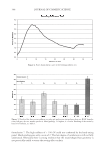
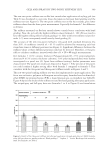
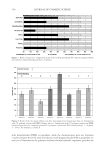
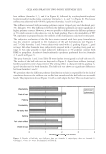
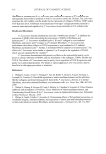
JOURNAL OF COSMETIC SCIENCE 334 radiation. Some organic materials like octyl dimethyl para-aminobenzoic acid (PABA) and salicylate are used to absorb ultraviolet radiation, while some inorganic particles like zinc oxide and titanium dioxide are used to refl ect the ultraviolet rays (5–8). Both chem- ical and physical methods use active ingredients to insulate the skin from ultraviolet ra- diation, but unfortunately some ingredients may act as allergens to the skin. In addition, the active ingredients may break down after hours of exposure to the sun. This decompo- sition raises questions about how long the UV protective ability of sunscreens will last. Consumers demand comfortable, stable, and safe sunscreen ingredients (9). The current trend in the sunscreen market is towards using ingredients extracted from natural prod- ucts, which are generally considered safe (10–13). Anthocyanins are good anti-oxidative compounds (14–16). Since anthocyanins have been reported to have the ability to absorb UV-A and UV-B radiation (17,18), they can also protect skin against wrinkling and other aging effects. Although anthocyanins are ideal ingredients for making sunscreens, it is important to maintain an acidic environment to avoid degradation of anthocyanins (19). Anthocyanins are pH-sensitive (20,21), and their color changes with pH. The effect of pH on the UV absorption ability of anthocyanins requires further study. Anthocyanins can be found in many deep-colored vegetables and fruits such as grapes, cherries, plums, eggplants, and caulifl ower (22–25). Anthocyanins and their derivatives are widely used as natural pigments and food additives. Crop scientists at the Agricul- tural Research Institute (ARI), Chia-Yi Agricultural Experiment Station, have been working on a sweet potato breeding program to create new cultivars. A newly cultivated purple sweet potato, named Tainung No. 73 (TNG73), has reddish-purple root fl esh. TNG73 is the fi rst sweet potato variety developed by a Taiwanese breeder with high an- thocyanin content. It was proven that the anthocyanins extracted from purple sweet po- tato have increased stability during thermal treatments (26). Anthocyanins can be directly extracted from purple sweet potato using acidic ethanol and acidic water. Although new extraction methods have been developed, acidic-solvent extraction is still preferred due to its relatively low cost. The main goal of this study was to incorporate TNG73 purple sweet potato extract into a cosmetic cream and analyze the infl uence of anthocyanins on the apparent UV protec- tion. The DPPH radical scavenging activity, total phenolic content, and the reducing ability of the anthocyanin extracts were also carefully evaluated. MATERIALS AND METHODS TNG73 purple sweet potatoes provided by the Agricultural Research Institute (ARI), Chia-Yi Agricultural Experiment Station, Taiwan, were used as the anthocyanin source in this study. TNG73 was extracted with either acidic ethanol (1.5 N HCl in ethanol 15:85 (v/v)) or acidic water (1.5 N HCl in water 15:85 (v/v)) to provide anthocyanin solutions. The extracted anthocyanin solutions were purifi ed using resins, then freeze-dried to col- lect the reddish-purple powders. The total anthocyanin content, expressed as cyanidin- 3-glucoside, was determined by the following equation (27): ε − × × × 1.0 4.5 ( ) Total anthocyanin content (mg/l)= pH pH A A MW DF1000× d (1)

PURPLE SWEET POTATO EXTRACTS IN UV PROTECTION 335 where ApH1.0 = measured absorbance in pH 1.0 potassium chloride buffer with HCl ApH4.5 = measured absorbance in pH 4.5 sodium acetate buffer with HCl DF = the dilu- tion factor MW = the molecular weight of cyanidin-3-glucoside, 449.2 ε = molar ab- sorptivity, 26,900 and d = the optical path of the cuvette (1 cm). Based on the ingredients of commercial sunscreens collected from the market, a plain cosmetic cream recipe was designed for this study to test the UV-absorbing ability of purple sweet potato extract. The cosmetic cream contained 5% emulsifi er, 5% Tween 80, 2% olive oil, 2% xanthan gum, 0.2% disodium EDTA, 1% sodium chloride, 0.2% meth- ylparaben, 0.2% butylparaben, and distilled water. Then 5 or 10 ml of purple sweet po- tato extracts were added per 100 g of cream. The UV-visible spectra of anthocyanin extracts were analyzed using a JascoR V-530 UV/VIS spectrophotometer. Acidic ethanol solution (0.1N HCl (aq) in ethanol, 15:85 (v/v)), was used to dilute the samples before running spectrophotometric analysis. To study the infl uence of pH, 0.1 ml of anthocya- nin extracted solution was dissolved in 40 ml of distilled water. The pH of the solution was increased from acidic to basic by slowly adding 0.1N NaOH(aq). Samples with pH ranging between 4 and 11 were used for UV absorption analysis. The scavenging activity of anthocyanin extracts on DPPH (1,1-diphenyl- 2-picrylhydra- zyl) radicals was determined using the method provided by Huang et al. (28). The radical scavenging activity of ascorbic acid was measured as a positive control. Fifty microliters of the extract was mixed with 150 μl of freshly prepared 1 mM DPPH in ethanol. The mixture was kept in the dark for 30 min. The absorbance of the mixture at 517 nm was then measured using an ELISA reader (TECANR, Austria). The radical scavenging activ- ity was calculated as follows: (1- (ASample/ABlank)) × 100. The EC50 value was defi ned as the effective concentration at which 50% of the DPPH radicals were scavenged, and was determined by interpolation based on linear regression analysis. Total phenolic content was determined according to the Folin–Ciocalteu method, using gallic acid as a standard (29). The extracted sample was dissolved in methanol/water (50/50 (v/v)). Six hundred microliters of the dissolved sample was mixed with 600 μl of 1N Folin–Ciocalteu reagent. The mixture was allowed to stand for 5 min, and then 1 ml of 20% Na2CO3 was added. After a 10-min resting period, the mixture was centrifuged for an additional 10 min (6,000g). Following centrifugation, the absorbance of the super- natant was measured at 730 nm, using a UV-Vis spectrophotometer. The total phenolic content was expressed as the gallic acid equivalent (GAE) in μg/ml of the sample. The reducing ability was measured following the method described by Singh and Rajini (30). Two hundred microliters of the extract were mixed with 200 μl of 1% (w/v) K3Fe(CN)6 and 200 μl of 0.2 M phosphate buffer with a pH of 6.6. The mixture was kept at 50°C for 20 min. Two hundred microliters of 10% (w/v) trichloroacetic acid was then added, and the mixture was centrifuged at 3,000 rpm for 10 min. One hundred microli- ters of the supernatant was transferred to a 96-well plate, with each well containing 100 μl of distilled water and 20 μl of 0.1% (w/v) FeCl3 solution. The absorbance of each well was measured using an ELISA reader at a 700-nm wavelength. To study the infl uence of anthocyanins on the UV protection ability, anthocyanin extracts were added to the prepared cosmetic cream at ratios of 0, 5, and 10 ml/100 g of cream, respectively. After each sample was well-mixed, 0.1 g of the cream was dissolved in 2 ml of acidic ethanol (0.1 N HCl(aq) in ethanol, 15:85 (v/v)). The UV absorbance of the solu- tion was measured using a UV spectrophotometer at wavelengths of 300, 325, 350, and
Purchased for the exclusive use of nofirst nolast (unknown)
From: SCC Media Library & Resource Center (library.scconline.org)