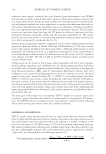
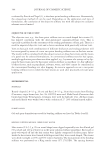
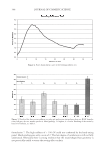
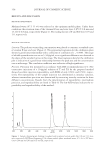
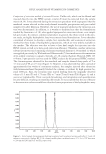
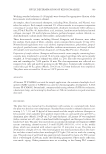
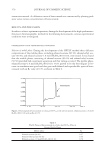
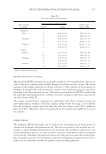
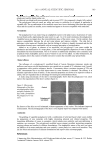
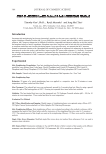
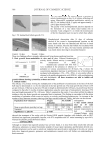
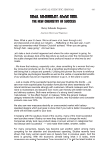
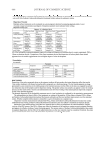
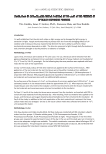
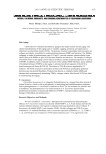
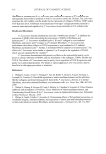
JOURNAL OF COSMETIC SCIENCE 336 375 nm. The prepared cosmetic cream was also evenly spread on a slide. Two cover slides were placed on the ends of the above slide, and another slide was placed on top of the two cover slides, creating a space with a depth of 0.15 mm, equivalent to the thickness of the spread cream layer. The slides fi lled with cream were placed under a UV light source (Model# PS-160, Horng & Fung Corporation, Taiwan). A UV light meter (Model# UV- 340, LutronR, Taiwan) was put beneath the slides to measure the UV irradiation through the samples. A blank test was performed to calibrate the effect of the slides on the UV irradiation. All experimental tests were repeated three times. Data were analyzed using analysis of variance (ANOVA), and the results were compared using the Student t-test. A difference was considered to be statistically signifi cant when the p-value was less than 0.05 ( p 0.05). RESULTS AND DISCUSSION The absorbance of ethanol extract diluted 15× in pH 1.0 and pH 4.5 buffers was 0.686 and 0.198, respectively. Based on Equation 1, the total anthocyanin content was calcu- lated to be 122.2 mg/l. The color of the ethanol-extracted anthocyanin solution was reddish-purple with a pH of 4.1. When the pH was raised from 4 to 11 by the gradual addition of 0.1 N NaOH(aq), the solution color changed from pink to green, and fi nally to yellow. The pH value had a signifi cant effect on the color of the anthocyanin solution. A pH between 4 and 5 was considered ideal, because anthocyanins are more stable under an acidic environment. According to Figure 1, the purple sweet potato extracts demon- strated a good ability to absorb ultraviolet radiation, particularly at wavelengths between 250 and 350 nm. Therefore, the purple sweet potato extracts appear to be an ideal ingre- dient for improving the cosmetic cream’s UV-A and UV-B absorption properties. The results shown in Figure 1 were obtained from solutions diluted 400×. After correcting for the dilution, the UV absorbing ability of the initial extracts was excellent. Although a neutral pH condition resulted in the best UV-absorbing ability, the greenish-yellow color might not appeal to consumers. Figure 1. The infl uence of pH on the absorbance of anthocyanin solution extracted from TNG73 purple sweet potato (with 400× dilution) measured by the spectrophotometric method.

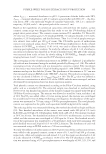
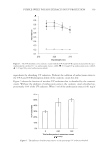
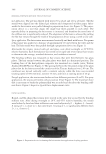
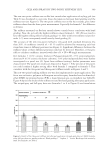
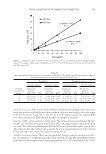
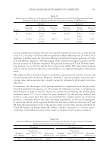
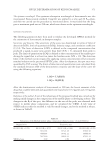
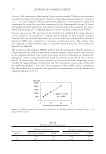
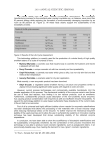
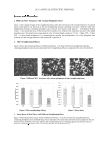
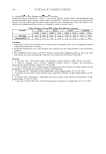
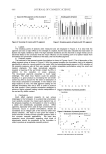
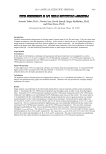
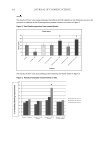
PURPLE SWEET POTATO EXTRACTS IN UV PROTECTION 337 The DPPH radical scavenging activity of the anthocyanin extracts was measured as the decrease in absorbance of DPPH at a wavelength of 517 nm. Figure 2 shows the results that were plotted as a function of anthocyanin extracts. The DPPH radical scavenging activity increased with increasing anthocyanin extract content. The difference was more signifi cant when the anthocyanin extract content was less than 2%. Anthocyanins ex- tracted by using acidic ethanol had a better radical scavenging activity. With a high antho- cyanin extract content, the DPPH radical scavenging activity was approximately 78% for acidic ethanol extracts. The DPPH radical scavenging activity of acidic ethanol and acidic water extracts was signifi cantly different ( p 0.05) at 0.25%, 1.25%, 2.5%, and 5% anthocyanin extract content. The anti-oxidative activity can be represented by the EC50 value, and the results are shown in Table I. The EC50 values of acidic ethanol and water extracts were 1.63 ± 0.14% and 3.32 ± 0.22%, respectively. The results revealed that the acidic ethanol extract had better radical scavenging activity than the acidic water extract. The total phenolic content of the acidic ethanol and acidic water extracts of TNG73 purple sweet potato was expressed as μg GAE/ml sample, and the results are shown in Table II. When 10% extracts were used, the phenolic content analysis results were 97.26 ± 9.07μg/ml and 80.95 ± 8.86 μg/ml for acidic ethanol- and water-extracted sam- ples, respectively. In addition, the phenolic content of the acidic ethanol extract was always higher than that of the acidic water extract. The reducing ability measured as the change in absorbance with a 700-nm wavelength correlated to the anti-oxidative ability of the anthocyanins. The higher reducing ability Figure 2. 1,1-diphenyl- 2-picrylhydrazyl (DPPH) radical scavenging activity of acidic ethanol (AE)- and acidic water (AW)-extracted anthocyanin solutions. Each value is the mean ± SD (n=3) of the measurements performed. *Indicates a signifi cant difference ( p0.05) between the two groups. Table I The EC50 Values of Acidic Ethanol (AE) and Acidic Water (AW) Extracts of Purple Sweet Potato EC50 value (%) AE extract 1.63 ± 0.14 AW extract 3.32 ± 0.22 Ascorbic acida 82.5 ± 3.3 a The unit of EC50 of ascorbic acid is μg/ml.
Purchased for the exclusive use of nofirst nolast (unknown)
From: SCC Media Library & Resource Center (library.scconline.org)