JOURNAL OF COSMETIC SCIENCE 356 view to justify the accuracy of the proposed method. A standard solution of the mix- ture containing both ester and base (10 μg/ml each) were spiked with 50, 100, and 200% extra standard and the mixtures were analyzed by the proposed method. The experiment was performed in triplicate. Recovery values (%) were calculated for each concentration. (d) Detection (LOD) and quantifi cation (LOQ) limits. In order to estimate the limit of detection and limit of quantifi cation, the blank sample was injected six times and the peak area of this blank was calculated (the noise level was determined). The limit of de- tection was calculated to be three times the noise level, and ten times the noise value gave the limit of quantifi cation (250 and 400 ng/ml for T and TA, respectively). (e) Sample solution stability. The stability of T/TA in solution during analysis was deter- mined by repeated analysis of the samples during the course of experimentation on the same day and also after storage of the drug solution for 72 h under laboratory bench con- ditions (25° ± 1°C) and refrigeration (8° ± 0.5°C). An accurately weighed quantity of vitamin E base and ester was dissolved in methanol to get a fi nal concentration of 10 μg/ ml. The solution was subjected to HPLC analysis immediately and after periods of 24, 48, and 72 hr. (f) System suitability tests. The chromatographic systems used for analyses must pass the system suitability limits before sample analysis can commence. The capacity factor (K), injection repeatability (as mentioned under Precision), the tailing factor (t), the theoreti- cal plate number (N) and the resolution (Rs) for the principal peak were tested on a 10-μg/ml sample of the T and TA mixture to assess the accuracy and precision of the developed HPLC system. (g) Analysis of vitamin E in lab and marketed cosmetic creams. Two creams (formu- lated in the lab) each containing about 0.5% T or TA, as well as four commercial creams, viz., A, B, C, and D containing only TA, were analyzed after being extracted by the following method: Five hundred milligrams of each of the preparations was weighed out, and a small amount of methanol was added for extraction by sonication ( J.P. Selecta s.a, Barcelona, Spain) for 15 min in order to dissolve the vitamin E base and ester. The mixture was transferred to a 50-ml standard fl ask and the volume was made up with methanol. The solution was centrifuged (Sorvall t-c-6, Newtown, CT) for 10 min at 3700 rpm and was fi ltered through a 0.45-μm fi lter and analyzed by HPLC. (h) Preparation of vitamin E-containing laboratory products. Two cream–emulsion cos- metic formulations were prepared according to the method reported by Zaghloul et al. (12) to simulate the complex composition of commercial cosmetic preparations, each containing about 0.5% T/TA (Table I). The cream was prepared by melting stearic acid in a porcelain dish over a water bath (75–80°C), then the semisolid ingredients (lanoline, white soft paraffi n, and Captex SBE) were added until all the mixture was melted, and fi nally soybean oil and corn oil were added (oily phase). Potassium hydroxide was dissolved in water followed by Acconon S-35, and then glycerin and sorbitol were added and the mixture was heated to 75°–80°C (aqueous phase). The aqueous phase was added to the oily phase with trituration, and the mixture was then removed from the water bath and mixing was continued until a homog- enous creamy liquid was obtained. Accurately weighed amounts of T and TA were added to the mixture, avoiding addition of the vitamin to the cream while hot to avoid possible

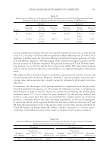
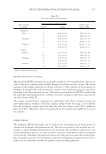
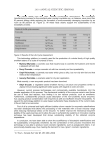
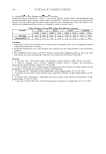
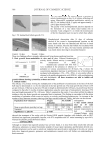
HPLC ANALYSIS OF VITAMIN E IN COSMETICS 357 degradation. This resulted in nominal concentrations of 0.532% and 0.539% w/w, respectively. The fi nal cream was fi lled in well-closed plastic jars. (i) Commercial cosmetic products. Four commercial products (A, B, C, and D), obtained from retail pharmacies, were used to validate the proposed analytical HPLC method and the extraction method. The products contained only TA without declaration of its quantity. The commercial and cosmetic preparations were tested for emulsion type by the dilution method, performed by mixing about 1-g samples of each with about 5 ml of distilled water and observing them for phase separation. Both experimental formulations and products A, B, and C were O/W emulsions, while product D was a W/O emulsion. (j) Method of extraction of vitamin E/acetate from cosmetic products. Initially, isopropyl alcohol was utilized as the solvent for extraction of T/TA with reference to the method reported by Guaratini et al. (8). An approximately 500-mg sample of the formulation was taken in a 50-ml volumetric fl ask containing 20 ml of isopropyl alcohol. The sample was extracted by sonication for 20 min and centrifuged at 3700 rpm for 10 min after making up the volume to 50 ml with isopropyl alcohol. The supernatant samples were fi ltered through a 0.45-μm cellulose fi lter and were intended to be used for injection by the re- ported HPLC method. Further trials were run using n-hexane-methanol (1:9 v/v) as the extraction solvent (method 1) or 100% methanol (method 2). In each method, a 500-mg sample of the for- mulation was extracted similarly as that described above under the extraction method by isopropanol. The supernatant of the extracts was fi ltered through a 0.45-μm cellulose fi lter and was found to be clear it was therefore used for injection. The extraction meth- ods differ basically in the polarity of the extraction solvent system. The relative extraction effi ciency of both methods was assessed in terms of the percent recovery before and after addition of a known quantity (2.5 μg) of T and TA to 500-mg samples of the products. (k) Statistical analysis. The difference in the mean percent recovery of T and TA from the cosmetic products with the two methods of extraction was tested for statistical signifi - cance using a t-test and the non-parametric Mann-Whitney test. Table I General Formula of Laboratory Formulations Containing 0.5% (w/w) of Vitamin E or Vitamin E Acetate Ingredient Percent (w/w) Stearic acid 6 White soft paraffi n 4 Lanoline 4 Soybean oil 8.4 Corn oil 8.3 Captex SBE (caprylic/capric/ stearic triglyceride) 4 Glycerol 11 Sorbitol 15 Acconon S-35 (PEG-35 soy glycerides) 5 Potassium hydroxide 0.28 Water 34.02
Purchased for the exclusive use of nofirst nolast (unknown)
From: SCC Media Library & Resource Center (library.scconline.org)