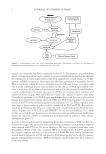
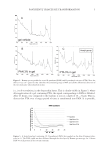
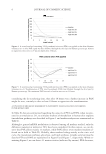
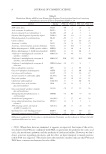
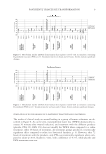
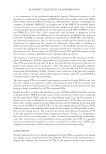
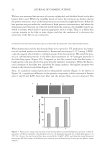
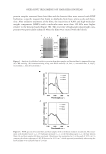
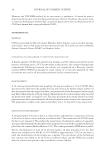
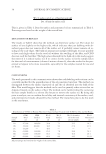
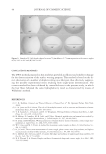
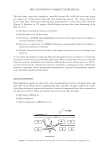
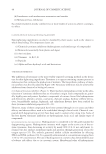
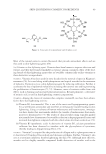
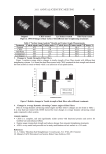
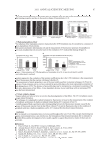
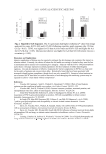
JOURNAL OF COSMETIC SCIENCE 10 DISCUSSION This paper examines some activities of vitamin B5 derivatives such as D-panthenol (PAN) and D-panthenyl triacetate (PTA), with particular attention to their effect on metabolism markers and their capacity for wound-healing stimulation. In this paper, we have shown that both PAN and PTA penetrate the human skin when carried by a gel or by an emul- sion and that both elicit metabolic changes. In particular, utilizing Raman spectroscopy, we demonstrated that both PTA and PAN can travel through the stratum corneum, while PTA is slowly de-acetylated in PAN with time. Interestingly, in human volunteers this effect peaks at around 24 hours. When a human skin biopsy is observed, the metabolic changes induced by PTA start happening more rapidly (six hours). This could be due to the faster penetration of the actives in human skin explants compared to in vivo skin (14) and possibly also to the vehicle used to carry the actives (emulsion vs gel), allowing an earlier bioavailability of PTA for de-acetylation in the human skin explants. Furthermore, Raman studies show that, indeed, most PTA is converted in PAN, since almost no PTA residue is seen after 24 hours (Figure 4). If most, if not all, PTA is converted in PAN over time, it is possible that the metabolic effect observed in human skin explants (see Table II) are mostly due to PAN. Analysis of the data from the metabolic marker study indi- cates, in fact, strong analogies between PTA and PAN treatment. Both ingredients push the citric acid cycle by stimulating mitochondrial enzymes such as aconitase 2 mi- tochondrial, aconitate hydratase (ACO2), while PTA also stimulates malate dehydroge- nase 2 (MDH2). The effect on ACO2 and MDH2 could be explained, considering that panthotenic acid is a key component of coenzyme A (CoA) and that acetylCoA is upstream and feeding the citric acid cycle (see Figure 1). The same observation can be made when markers involved in the metabolism of isopren- oids or lipids, which are stimulated by PTA and PAN, are involved, with particular interest in cholesterol synthesis and modifi cation. Cholesterol synthesis is essential for homeosta- sis of the epidermis, being required for both cell division and for differentiation, as well Figure 8. Wound healing measured by transepidermal water loss (TEWL) on the skin of human volunteers (n = 37) after treatment with an emulsion containing 3% D-panthenyl acetate (PTA) or D-panthenol (PAN). T0 is 30-minute treatment after wound induction. *p0.05 vs saline, Student’s t-test.

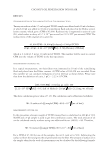
PANTHENYL TRIACETATE TRANSFORMATION 11 as for maintenance of the epidermal permeability barrier. Cholesterol synthesis in the epidermis is correlated with changes in mRNA levels for key enzymes, such as the HMG- CoA synthase family and HMG-CoA reductase. Mitochondrial 3-hydroxy-3-methylglutaryl coenzyme A synthase (HMGCS2), an enzyme part of the HMG-CoA synthase family, catalyzes the fi rst step in isoprenoid/mevalonate synthesis and under some conditions controls the fl ux into the pathway (15,16). The capacity of both PTA and PAN to stimu- late HMGCS2 (+201% and +220% respectively, after 24 hours) is impressive. In the context of lipid synthesis and cholesterol it is also interesting to highlight the capacity of both PTA and PAN to stimulate cholesterol sulfotransferase (SULT2B1), thus infl uenc- ing cholesterol modifi cation. Also, in this case this enzyme has been linked to skin dif- ferentiation by infl uencing the amount of cholesterol sulfate and its binding to differentiation receptors such as PPAR and LXR (17-19). SULT2B1 has also been associ- ated with the sulfonation of cytotoxic oxysterols and therefore could have a role in skin detoxifi cation (20). The activation of SULT2B1 by both PTA and PAN suggests a new role for these vitamins as prodifferentiation and detoxifi cation agents. The increase in enzymes such a glucose phosphate isomerase (GPI) and glucose-6-phos- phate dehydrogenase (G6PD), representatives of glycolysis activity, was only observed when PTA was used and only after 24 hours. It is possible that activation of glycolysis to produce more piruvic acid is necessary to “feed” the energetic and metabolic pathways downstream (citric acid cycle and lipogenesis). It is also possible that PTA, providing a longer-term bioavailability of PAN, sustains a later activation of the glycolysis pathway only detectable at 24 hours and possibly lasting even longer, while the available PAN is consumed earlier in the skin metabolism. The data suggest PTA as a possible long-lasting reservoir for feeding PAN to the skin. We have, indeed, some previous evidence that treatment with PTA from persons with oily skin provided a long-lasting effect even when treatment was discontinued (8), sug- gesting a longer bioavailability of PTA-originated PAN. Finally, in order to correlate the metabolic activity of PTA and PAN with their capacity to heal and reduce TEWL after skin injury, we have conducted a clinical study comparing the two ingredients. PAN’s capacity as a skin-healing agent (2,21) has been mainly re- lated to its activity on fi broblasts (1) and on keratinocytes (5,6). In effect, we have con- fi rmed that enzymes involved in skin differentiation and the building of the skin lipid barrier, such as HMGCS2 and SULT2B1, are strongly stimulated by both PTA and PAN, although we don’t know whether there would also be an effect by PTA and PAN on fi bro- blasts in the healing process. The results of our clinical study (Figure 8) indentifi ed PTA as the only signifi cant treatment when compared to saline at 72 hours. It is intriguing to detect this effect at a late time point, i.e., after 72 hours of treatment from wound induc- tion. Also, in this case it can be postulated as a long-term effect from PTA. It is possible that a sustained action would be necessary to stimulate an added value of PTA when compared to a placebo or a PAN treatment in the context of wound healing. CONCLUSIONS We have demonstrated in vivo that D-panthenyl triacetate (PTA) can penetrate the human skin deeply and be transformed into D-panthenol. We have further demonstrated, in human skin explants, the activation by PTA of the enzymes involved into metabolic
Purchased for the exclusive use of nofirst nolast (unknown)
From: SCC Media Library & Resource Center (library.scconline.org)