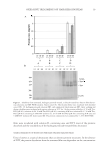
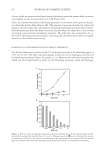
J. Cosmet. Sci., 63, 15–25 (January/February 2012) 15 Effects of oxidative treatments on human hair keratin fi lms T. FUJII, Y. ITO, T. WATANABE, and T. KAWASOE, Faculty of Textile Science and Technology, Shinshu University, 3-15-1 Tokida, Ueda-shi, Nagano, 386-8567 (T.F., Y.I.), and Shiseido Co., Ltd, Research Center, 2-2-1, Hayabuchi, Tsuzuki-ku, Yokohama-shi, Kanagawa, 224-8558 (T.W., T.K.), Japan. Accepted for publication July 20, 2011. Synopsis The effects of hydrogen peroxide and commercial bleach on hair and human hair keratin fi lms were examined by protein solubility, scanning electron microscopy (SEM), immunofl uorescence microscopy, immunoblot- ting, and Fourier-transform infrared spectroscopy. Protein solubility in solutions containing urea decreased when the keratin fi lms were treated with hydrogen peroxide or bleach. Oxidative treatments promoted the urea-dependent morphological change by turning fi lms from opaque to transparent in appearance. Immuno- fl uorescence microscopy and immunoblotting showed that the oxidation of amino acids and proteins occurred due to the oxidative treatments, and such occurrence was more evident in the bleach-treated fi lms than in the hydrogen peroxide-treated fi lms. Compared with hair samples, the formation of cysteic acid was more clearly observed in the keratin fi lms after the oxidative treatments. INTRODUCTION Human hair is generally classifi ed into three layers. From the outside inward, it is com- prised of cuticle, cortex, and medulla. The cortex, which occupies 80% or more of the total mass, is constructed of a hierarchical fi brous structure mainly consisting of keratin fi laments and keratin-associated proteins (KAPs). Since the cysteine contents in keratin and KAPs are considerably higher than in other proteins (1,2), the cysteine residues of these proteins can easily crosslink and form intermolecular and intramolecular covalent bonds. Thus, keratin and KAPs are considered to be closely related to the physical and mechanical properties of the hair. In order to create straight, curly, or colored hair styles, human hair usually goes through chemical treatments and heating. During these processes, the disulfi de crosslinks among the fi brous structures of keratin and KAPs are occasionally cleaved and recombined at different sites. Such oxidation and reduction of hair and its proteins is responsible for hair damage (2,3). Amino acid analysis showed that the cystine, methionine, and tyrosine contents of human hair decreased after bleach treatment, while the amount of cysteic acid increased (4,5). Nagai et al. (6) indicated a possibility that the isoelectric points of human hair proteins are changed when hair is treated by bleaching, dyeing, or perming. Re- cently, Plowman et al. (7) reported that oxidative treatment of wool had little effect on the
Purchased for the exclusive use of nofirst nolast (unknown)
From: SCC Media Library & Resource Center (library.scconline.org)