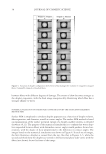
JOURNAL OF COSMETIC SCIENCE 34 Historically, Kamath et al. (3) were the fi rst to adopt Wilhelmy’s balance principle to characterize the wetting property of single human hair fi bers. By assuming the perfect elliptical cross section of the hair fi bers, the circumference of the hair fi bers was calculated from the lengths of the major and minor axes measured by means of optical microscopy. In the study, the contact angle of the hair fi bers in water was determined using the wet- ting force and the estimated circumference. More recently, Molina et al. (4) and Lodge and Bhushan (5) reported the contact angle measurements on human hair fi bers using Wilhelmy’s balance approach as well, but with the notable exception of estimating the hair fi ber circumference based on the fi ber wetting force measured in low-energy hydrocar- bon fl uids where complete wetting was assumed. These studies indicated lower contact angles on damaged vs undamaged hair, as expected. In addition, Lodge and Bhushan (5) measured an increase in contact angle on damaged hair treated with a conditioner. Contact angle can also be measured by a direct observation. Though it is a relatively simple process when a liquid droplet is sitting on fl at surface, the high curvature assumed by fi bers requires specialized equipment, such as that described by Jones and Porter (6). The technique mentioned therein was based on passing a fi ber horizontally through a stationary eyelet containing a droplet of water. The fi ber produces an advancing or receding contact angle that can be directly measured using a low-magnifi cation optical microscope. Another method of determining the contact angle on microfi bers is based on observing the barrel-shaped droplets as they envelop the surface of fi bers. In this case, the barrel dimensions, i.e., the diameter and length, accurately defi ne the contact angle as a func- tion of the wetting length and fi ber diameter (7–10). This method has been utilized to determine the contact angles of cholesterol-containing squalane on hair fi bers, in which the measurement was conducted in water (10). Furthermore, Carroll (10) reported a de- crease in contact angle with increasing cholesterol concentration, an outcome attributed to the decreasing water/squalane interfacial tension with increasing cholesterol concentra- tion. So far, the above methods have provided practicable measurements of contact angles on hair fi bers however, the measurements usually are time-consuming and rely on single-point measurements. In this paper we provide a novel method to determine the wetting property of human hair fi bers. This method is based on the observation that a droplet suspended between two stretched parallel fi bers of dissimilar wetting characteristics will invariably assume a skewed confi guration towards the fi ber of larger hydrophilicity. This paper demonstrates that such an observation can be utilized to develop an effi cient and reliable technique for fi ber wetting characterization, referred herein as fi ber differential wetting characteriza- tion (DWC). We provide detailed validation based on direct experimental observation of droplet confi guration as a function of fi ber wetting properties and numerical simulations. Although developed and validated for characterization of human hair fi bers, the proposed DWC method can be considered as a universal technique equally applicable for rapid characterization of the wetting property variation of other microfi bers. EXPERIMENTAL In this study, hair characterization was carried out using a 12-inch-long Caucasian brown virgin hair tress and a Caucasian brown hair tress bleached for one hour. All the

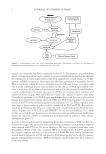
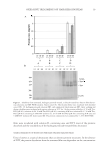
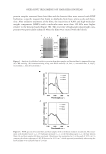
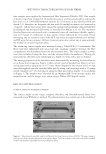
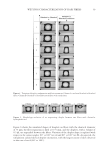
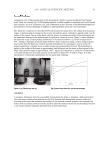
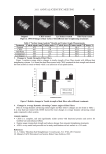
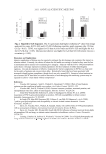
WETTING CHARACTERIZATION OF HAIR FIBERS 35 hair samples were supplied by International Hair Importers (Valhalla, NY). One sample of brown virgin hair stripped of 18-methyl-eicosanoic acid was produced by soaking the hair tress in a 0.1 M KOH/methanol solution for 30 minutes as described by Swift and Smith (11). Hereafter, we designate the hair with 18-methyl-eicosanoic acid removed as “stripped.” All the hair tresses were cleaned by rinsing with methylene chloride followed by methanol and deionized (DI) water, as described by Molina et al. (4). The one-hour- bleached hair tress was treated with a commercial rinse-off conditioner (double applica- tion of 0.5 gram of conditioner to three grams of hair, followed by 30 seconds of hair massaging and an extensive rinse with 40°C tap water for approximately two minutes and DI water for one minute). All hair characterization was carried out at approximately the middle of 12-inch-long hair fi bers. The advancing contact angles were measured using a Cahn DCA-315 tensiometer. The fi bers were fi rst submerged into iso-octane and, assuming complete wetting, the fi ber circumference was determined based on the measured force. The contact angles in water were then calculated using the force and the estimated fi ber circumference. During the measurement, the fi bers were submerged to a depth of 2 mm with a rate of 20 μm/s. The wetting properties of the hair fi bers were determined by mounting the hair fi bers on an in-house built stage (see Figure 1) that carried a pair of parallel hair fi bers in a hori- zontal plane with a separation of ∼0.75 mm. Water droplets of the volume of 0.2∼0.4 μl were then applied onto the stretched fi ber pair by using a microsyringe with a 33-gauge needle. Droplets (10∼15) were placed along the fi ber pair with a length ∼6 cm as shown in Figure 1. The droplets were observed by an Olympus BX 40 microscope under 20× magnifi cation, and the images were taken using a Nikon 4500 digital camera. RESULTS AND DISCUSSION CONTACT ANGLE BY WILHELMY’S METHOD The contact angles on the virgin, stripped, bleached, and bleached/treated fi bers were measured using Wilhelmy’s method. The determination was carried out at the middle of Figure 1. Experimental assembly used for differential wetting characterization (DWC). The upper image is the top view of the droplet placement between hair fi bers. The lower image is the side view of the assembly to show the droplets suspended between parallel hair fi bers.
Purchased for the exclusive use of nofirst nolast (unknown)
From: SCC Media Library & Resource Center (library.scconline.org)