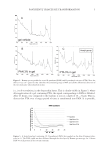
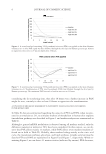
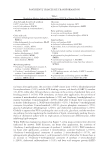
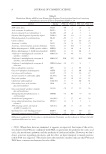
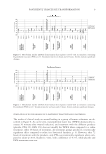
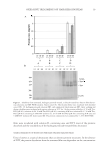
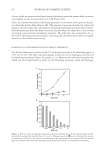
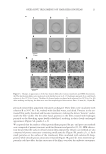
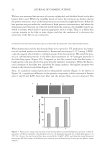
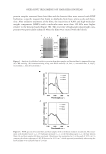
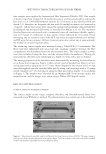
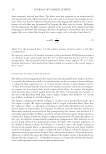
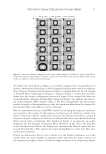
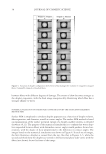
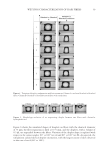
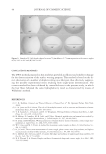
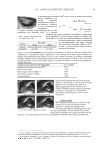
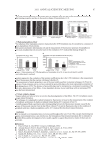
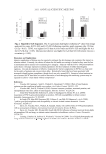
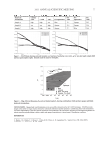
JOURNAL OF COSMETIC SCIENCE 4 (52.0 ± 5.5 years). Before starting the study there was a preconditioning period of three days. Within this period the use of skin care products on the volar forearms was not al- lowed. To generate small suction blisters of about 5-mm diameter on both volar forearms (two or three areas per forearm), a vacuum of 450–800 mbar was applied. Transepidermal water loss (TEWL) was detected after 30 min (T0), 48 hours (T48), and 72 hours (T72) from suction blisters. The treatments were immediately after formation of the suction blisters and consisted of an emulsion containing 3% PTA, an emulsion containing 3% PAN, an emulsion placebo, and saline. They were compared to each other and to an untreated area. Treatments were applied at 100 μl in occlusion using Finn Chambers on Scanpor® (Almirall Hermal, Reinbeck, Germany) over a period of 30 minutes, 48 hours, and 72 hours. All procedures were performed in a climate-controlled room at 21.5°C (± 1°C) and 50% (± 5%) relative humidity. STATISTICAL ANALYSIS To analyze the data from the clinical study, the intergroup comparisons were performed by Student’s t-test. The pair differences varied in their distribution, and so for compari- sons with the normally distributed pair differences, a t-test for dependent samples was used. The following table summarizes the statistical data obtained for all conditions tested: Comparison 48 hours 72 hours 3% PTA vs 3% PAN 0.8073 0.3153 3% PTA vs Placebo emulsion 0.6690 0.2727 3% PTA vs Saline 0.0001 0.0162 3% PAN vs Placebo emulsion 0.3488 0.7003 3% PAN vs Saline 0.0007 0.0620 Placebo emulsion vs Saline 0.0008 0.1962 Bold: statistically signifi cant differences. RESULTS D-PANTHENYL TRIACETATE AND D-PANTHENOL PENETRATION IN THE HUMAN SKIN As shown in Figure 2, the spectra profi les of the water-based gel (panel A), the PAN gel (panel B), and the PTA gel (panel C) differ when the gels are applied on the skin. Importantly, it is possible to detect a peak shift in the 1722 cm-1 region of the panel C spectrum that allows differential detection between PTA and PAN. This shift corresponds to the acety- lated groups present in PTA but not in PAN. In Figure 3 the depth penetration profi le of PAN is shown. PAN penetrates to a maxi- mum depth of 20 μm, which covers the whole stratum corneum. Five hours after applica- tion a rise is seen in the content in the skin, and deeper in the stratum corneum. Twenty-four hours after application, PAN is still present in the stratum corneum. In Figure 4 the depth penetration profi le of PTA is shown. Compared to PAN, PTA is detected mainly in the upper layer of the stratum corneum. After fi ve hours the product is diffused through the upper layers and the content is decreased. After 24 hours almost no active is visible in the skin. The reason, principally, is the conversion of PTA into PAN,

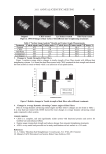
PANTHENYL TRIACETATE TRANSFORMATION 5 i.e., its de-acetylation, in the deeper skin layers. This is clearly visible in Figure 5, where after application of a gel containing PTA, the signal corresponding to PAN is followed. After 24 hours a rise compared to the baseline is seen at a depth of 10 – 24 μm. This in- dicates that PTA over a longer period of time is transformed into PAN. It is possible, Figure 2. Raman spectra profi les for tested D-panthenol (PAN) and D-panthenyl triacetate (PTA). Note the shift at 1722 cm–1 (panel C) that identifi es the acetylated groups of PTA and allows differential detection of the two molecules when absorbed in skin. Figure 3. A water-based gel containing 3% D-panthenol (PAN) was applied on the skin of human volun- teers (n=3). The PAN signal was then followed through the skin layer by Raman spectroscopy. At 24 hours PAN was still present in the stratum corneum.
Purchased for the exclusive use of nofirst nolast (unknown)
From: SCC Media Library & Resource Center (library.scconline.org)