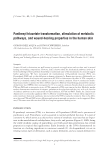
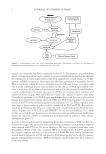
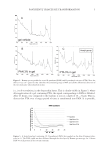
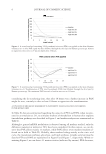
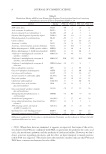
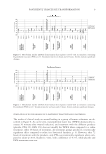
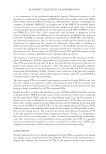
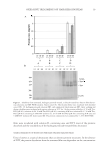
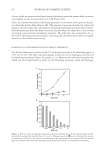
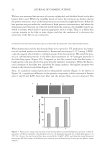
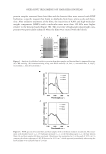
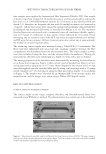
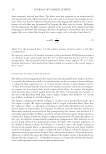
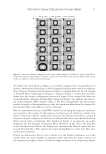
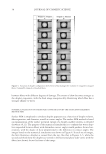
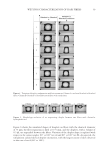
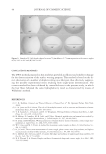
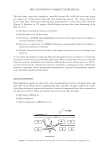
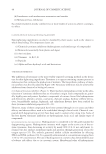
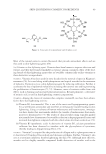
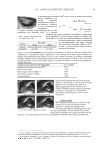
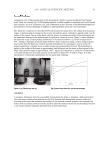
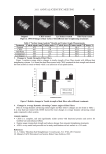
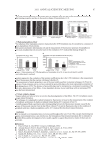
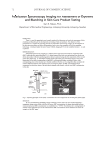
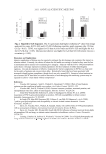
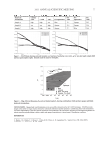
JOURNAL OF COSMETIC SCIENCE 6 considering the de-acetylating time, that after 48 hours even a further increase in PAN might be seen certainly it takes at least 24 hours to appreciate the transformation. ACTIVATION OF METABOLIC MARKERS BY D-PANTHENYL TRIACETATE AND D-PANTHENOL IN THE HUMAN SKIN In Table II, data are summarized regarding the capacity of PTA and PAN, when incorpo- rated in an emulsion at 2%, to stimulate markers of metabolism in human skin explants (metabolism pathways are described in Figure 1 and marker analyses are summarized in Table I). Although a general mRNA modulation is observed among all markers studied, only the differences superior or inferior at 50% have been considered. In this context, we can ob- serve that PTA affects mainly 11 markers, while PAN affects seven markers (markers af- fected are in bold in Table II). Globally, these markers belong mainly to the citric acid cycle, the mevalonate pathway, glycolysis, and lipid synthesis. Graphs summarizing the data for PTA and PAN are represented in Figure 6 and Figure 7, respectively. When ex- amining Figure 6, we can detect 11 main activities (indicated by arrows). PTA decreases, Figure 4. A water-based gel containing 3% D-panthenyl triacetate (PTA) was applied on the skin of human volunteers (n=3). The PTA signal was then followed through the skin layer by Raman spectroscopy. Almost no signal was detected at a 25-micron depth after 24 hours. Figure 5. A water-based gel containing 3% D-panthenyl triacetate (PTA) was applied on the skin of human volunteers (n=3). Transformation of PTA into D-panthenol (PAN) was followed through the skin layer by Raman spectroscopy. The maximum PAN increase vs baseline was seen at 24 hours.

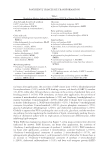
PANTHENYL TRIACETATE TRANSFORMATION 7 six hours after application, the activities of ATP citrate lyase (-56%), dihydrolipoamide S-acetyltransferase (-52%), and the ATP-binding cassette, sub-family A (ABC1), member 12 (-62%), while after 24 hours there is a decrease in the activity of epidermal fatty acid- binding protein 5 (-65%). PTA stimulates, six hours after application, the activities of aconitase 2 mitochondrial, aconitate hydratase (+72%) and 3-hydroxy-3-methylglutaryl co- enzyme A synthase 2 (mitochondrial) (+218%), while after 24 hours there is an increase in malate dehydrogenase 2, NAD (mitochondrial) (+62%), 3-hydroxy-3-methylglutaryl coenzyme A synthase 2 (mitochondrial) (+201%), glucose phosphate isomerase (+55%), glucose-6-phosphate dehydrogenase (+68%), and cholesterol sulfotransferase (+60%). Globally it appears that PTA is pushing the citric acid cycle, glycolysis, and the mevalon- ate pathway, but also regulating the metabolism of lipids, interestingly pushing the syn- thesis of cholesterol sulfate with its implications on keratinocyte differentiation, while inhibiting lipid transport. When PAN was examined as depicted in Figure 7, seven main activities were detected (indicated by arrows). PAN decreases, six hours after application, the activities of 3-hydroxy-3-methylglutaryl-coenzyme A synthase 1 (soluble) (-61%). PAN stimulates, six hours after application, aconitase 2 mitochondrial, aconitate hydratase (+191%), 3-hydroxy-3-methylglutaryl coenzyme A synthase 2 (mitochondrial) (+137%), and sphingomyelin phosphodiesterase 1, acid lysosomal (+83%), while after 24 hours there is an increase in 3-hydroxy-3-methylglutaryl coenzyme A synthase 2 (mitochondrial) (+220%), cholesterol sulfotransferase (+51%), and fatty acid transport protein (FATP) Table I Metabolism Markers Analyzed by Quantitative RT-PCR in Human Skin Explants Acyl-CoA and Acetyl-CoA synthesis • ATP citrate lyase, ACLY • acyl-CoA synthetase, FACL1 • acetyl-coenzyme A acetyltransferase 1, ACAT1 Citric acid cycle • pyruvate dehydrogenase (lipoamide) alpha 1, PDHA1 • dihydrolipoamide S-acetyltransferase, DLAT • citrate synthase, CS • aconitase 1, soluble, ACO1 • aconitase 2 mitochondrial, aconitate hydratase, ACO2 • malate dehydrogenase 1, NAD (cytosolic soluble), MDH1 • malate dehydrogenase 2, NAD (mitochondrial), MDH2 Mevalonate pathway • 3-hydroxy-3-methylglutaryl-coenzyme A synthase 1 (soluble), HMGCS1 • 3-hydroxy-3-methylglutaryl-coenzyme A synthase 2 (mitochondrial), HMGCS2 • 3-hydroxy-3-methylglutaryl-coenzyme A reductase, HMGCoAred Glycoysis • glucose phosphate isomerase, GPI • glucose-6-phosphate dehydrogenase, G6PD Fatty acid beta oxidation • carnitine acetyltransferase, CRAT • acetyl-coenzyme A carboxylase alpha, ACACA Lipid synthesis • fatty acid synthase, FAS • cholesterol sulfotransferase, SULT2B1 • glucosidase, beta acid (includes glucosylceramidase), GBA • glucosylceramide synthase (ceramide glucosyltranferase), UGCG • sphingomyelin phosphodiesterase 1, acid lysosomal, SMPD1 • arachidonate lipoxygenase 3, ALOXE3 • serine palmitoyltransferase, long chain base subunit 1, SPTLC1 Lipid transport • ATP-binding cassette, sub-family A (ABC1), member 12, ABCA12 • epidermal fatty acid-binding protein 5 FABP5 • fatty acid transport protein (FATP) SLC27A4
Purchased for the exclusive use of nofirst nolast (unknown)
From: SCC Media Library & Resource Center (library.scconline.org)