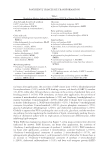
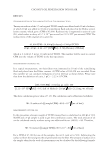
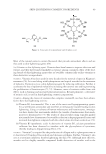
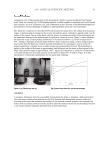
JOURNAL OF COSMETIC SCIENCE 46 (d) Interference with melanosome maturation and transfer (e) Melanocyte loss, exfoliation Successful treatments mostly combine two or more modes of action to achieve a synergis- tic effect. CLASSIFICATION OF SKIN-LIGHTENING INGREDIENTS Skin-lightening ingredients can also be classifi ed by their source, such as the classes to which they belong. The important classes are: (i) Chemical tyrosinase inhibitors (hydroquinone and similar type of compounds) (ii) Botanicals (essentially from plants and algae) (iii) Anti-oxidants (iv) Vitamins—A, B, C, E (v) Peptides (vi) Alpha and beta hydroxyl acids and derivatives TYROSINASE INHIBITION The inhibition of tyrosinase is the most widely reported screening method in the litera- ture for skin-lightening ingredients. Tyrosinase is a copper-containing enzyme present in melanocytes that catalyzes the production of melanin. The biosynthetic pathway of mela- nin synthesis was fi rst elucidated by Raper (18). Tyrosinase inhibition may be achieved by inhibitors from chemical or biological sources. (i) Chemical tyrosinase inhibitors (Figure 3). There has been tremendous activity in the iden- tifi cation of tyrosinase inhibitors that are of synthetic origin. Such compounds are gener- ally highly pure and potent. Synthetic compounds of various classes like hydroquinone and derivatives, phenolic amines, coumarins, chalcone analogs, hydroxy stilbene deriva- tives, benzaldehyde analogs, biphenyls, and trihydroxy fl avones have been studied for their tyrosinase inhibitory properties (21–33). However, many of these compounds have been screened through in vitro assays and their effi cacy and adverse effects need to be established through clinical trials. Chemical com- pounds with depigmenting activity have been used in cosmetics for a long time. Some of the best known tyrosinase inhibitors are hydroquinone, kojic acid, and similar types of compounds. (a) HYDROQUINONE AND DERIVATIVES. Hydroquinone is considered to be the gold standard for depigmenting agents. Hydroquinone interacts with copper at the active site of the en- zyme tyrosinase, thus decreasing its activity by nearly 90% (34). It not only limits ty- rosinase but also oxidizes membrane lipids and proteins through generation of reactive oxygen species (35). The radicals generated inhibit cellular metabolism by affecting DNA and RNA synthesis (36). It is generally administered at concentrations ranging from 1.5% to 5% concentration. The use of hydroquinone in cosmetics has diminished because of adverse side effects due to its cytotoxic nature. Monobenzyl ether of hydroquinone

SKIN-LIGHTENING COSMETIC INGREDIENTS 47 (MBEH) and monomethyl ether of hydoquinone (MMEH) also demonstrate tyrosinase inhibitory properties (37–39). Further, they also cause melanocyte loss through genera- tion of free radicals. However, the use of these compounds for depigmentation is limited by their adverse effects, similar to those of hydroquinone. (b) ARBUTIN. Arbutin is a naturally occurring β,D-glycopyranoside derivative of hydro- quinone. Although it shows tyrosinase inhibition, it is not found to affect RNA synthe- sis as does hydroquinone. The α-derivative shows a stronger inhibitory effect on tyrosinase and melanosome maturation (40,41). It is also present in many of the botanical extracts. Arbutin is highly pH-sensitive and can hydrolyze to hydroquinone at both acidic and alkaline pH. Hence, care should be taken during use in commercial skin-lightening products. (c) KOJIC ACID. Kojic acid is a powerful tyrosinase inhibitor. It functions by the chelation of copper at the active site of the enzyme tyrosinase (42). Further, it acts as an antioxidant and a free radical scavenger. Although powerful, the use of kojic acid is under scrutiny by dermatologists because of its adverse side effects such as allergic dermatitis (43). It is found to be unstable in formulations and may also cause discoloration. Some stable derivatives, such as kojic acid dipalmitate, are being used to enhance effectiveness by enhanced skin penetration. Thus there exists a demand for safe and effective alternative botanicals as preferred skin-lightening ingredients. Figure 3. Structures of some skin-lightening agents.
Purchased for the exclusive use of nofirst nolast (unknown)
From: SCC Media Library & Resource Center (library.scconline.org)