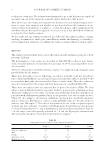
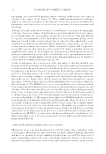
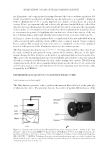
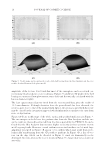
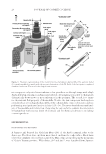
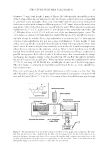
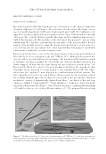
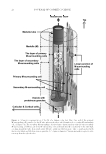
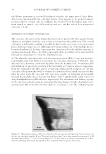
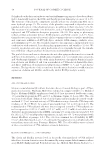
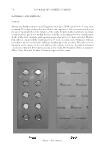
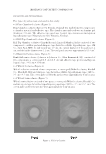
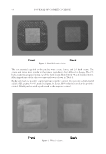
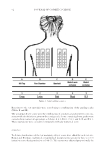
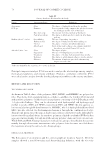
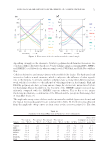
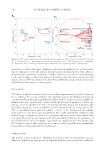
STRUCTURE OF HUMAN SCALP HAIR−II 23 (diameter 55 mm, bank height, 3 mm) cf. Figure 2B. Subsequently, the middle position of the U-shaped fi ber was cut with razor to give the two pieces which were hence antiparallel to each other on the glass plate. Next, each of the right- and left-end sections of the paired shafts was overlaid with a dampened blotting paper (5 × 15 mm), whereas the midsection (gap about 7 mm) of the fi bers was not covered with the paper. When the whole system was equilibrated to 25° ± 1°C, a glass lid (0.17 mm thickness) was temporally removed to add 0.5 M hydrochloric acid (0.05–0.1 mL) onto one of the two dampened paper covers. The color change occurring in the hair shafts was analyzed by means of the upright microscope. OH--fl ow through the medulla: The use of phenolphthalein as an indicator. A 0.5% (w/v) aqueous solution of phenolphthalein was put into a glass vial (diameter 22 mm, height 55 mm) with a screw cap till the solution level reached about 3 mm. Subsequently, the white hairs (jm67, about 40 mm in length) were vertically stood in the vial at ambient temperature, where the root side was in the indicator solution. After 7–14 d, the fi bers were briefl y washed with distilled water and extended on the aforementioned Petrie chamber in a parallel arrangement. Both sides of each of the fi bers were then covered with the damp- ened papers in a manner similar to that described in “H+ ion-fl ow through the medulla: the use of Congo red as an indicator.” When the whole system was equilibrated to about 25° ± 1°C, one drop of 1 M NaOH was carefully placed onto one of the blotting papers. The color change occurring in the hair shafts was followed by the use of the upright bio- logical microscope. Flow of the anthocyanin dye through medulla: Application of a DC voltage to a hair shaft. The white hair fi bers (jm67 about 30 mm length) were warmed in an aqueous solution of 8 M urea and 4% (w/v) SDS at 55°C for 2 h. One strand of the softened fi bers was put through Figure 3. The in strumental setup for the DC voltage-assisted fl ow of the purple anthocyanin dye. The white hair fi ber was put into a glass capillary, and the fi ber ends were dipped into the electrode solutions as de- picted in the fi gure. An aqueous solution of the cationic dye and the buffer solution were initially set as the positive and the minus electrode solutions, respectively see the procedure “Flow of the anthocyanin dye through M: Application of a DC voltage to a hair shaft” for more details.

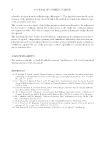
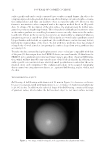
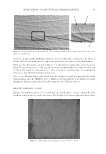
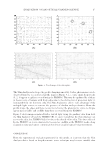
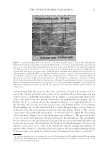
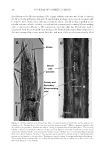
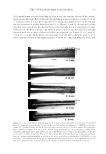
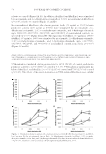
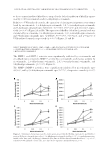
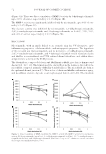
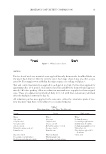
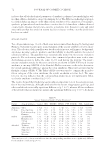
JOURNAL OF COSMETIC SCIENCE 24 the U-shaped glass capillary (inner width 1.0 mm, wall thickness 0.1 mm, and length 25 mm) which had been fi lled with pure water see Figure 3. After making each of the fi ber ends protrude by about 3 mm in length from the capillary terminals, the water in- side the capillary was soaked up with blotting paper, then the capillary ends were sealed with a poly(vinyl alcohol)-glue to prevent the infi ltration of the electrode solutions (vide infra) into the capillary. Subsequently, the capillary with the hair shaft was placed hori- zontally between positive and minus electric bathes [both: 2 cm (W), 2 cm (H), and 1 cm (D)], where the former and the latter bathes had been fi lled with a 0.5% (w/v) aqueous solution of the cationic anthocyanin dye and a pH 7/0.067 M PBS, respectively. Initially, the root side of the hair fi ber was put into the positive electric bath (anode). When the whole system equilibrated to about 25°C, DC 550 voltage, in most cases, was applied between the Pt-electrodes, using a power supply (model Crosspower 1000 ATTO, Tokyo, Japan) and an ammeter (model PC700 resolution, ±0.1 μA Sanwa, Tokyo, Japan). By means of the stereomicroscope, a dark purple-colored zone was recognized exclusively in the medulla and became longer toward the cathode side with increasing time of the voltage application. By reversing the electrode polarity, the colored zone was quickly moved back or faded out from the anode side, which had once been the cathode side. It was also noticed that a direct current was not only varied with the hair samples but gradually increased with time for instance, from 20 to 25 μA in one sample and from 1.3 to 2.5 μA in the other sample over a span of the experimental period (0–10 min). We consider that the current fl uctuation was caused by the uncontrollable electric conduc- tance over the wet hair surface and by the irregular inner structure of the medulla. Figure 4. The hai r fi ber (jf8) was treated with papain in pH 7/PBS at 30°C (the procedure “Enzymatic thin- ning of hair fi bers using the papain”). Pictures (A–F) were taken at the incubation time of 4 min, 2, 4, 6, 7, and 10 h, respectively. We consider on the basis of the diameter measurement that the dark part of the picture (E) is mainly composed of the M which consists of the M-surrounding cells and the tube cf. Figure 6.
Purchased for the exclusive use of nofirst nolast (unknown)
From: SCC Media Library & Resource Center (library.scconline.org)