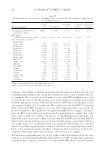
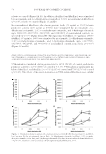
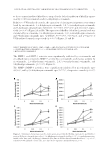
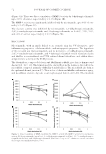
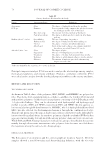
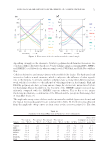
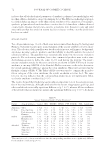
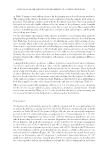
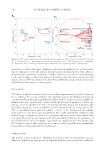
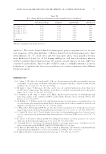
DETECTING MOLDS IN PERSONAL CARE PRODUCTS 45 condition can be provided for detecting the presence or absence of mold contamination and allow the expression of other non-mold microorganisms that may present in an incubated test sample. By adding PDB (Difco), Becton™ Neopeptone, Sucrose to Difco™ TAT Broth Base, the purpose of these components is to provide additional microbial nutrients to support the growth of mold. By adding polysorbate 20 and sodium thiosulfate to the Difco™ TAT Broth Base, the purpose of these two components is to neutralize the anti- microbial activity of preservative systems that may be present in a test sample. Further- more, the addition of L-glutamic acid to this new enrichment broth mixture is used to accelerate mold growth by shortening the lag phase of the mold growth cycle in which mold can be detected faster by using an ATP bioluminescence assay. The effects of amino acids including glutamic acid on fungi growth had been previously studied on Saccharo- myces cerevisiae for transaminase activity (11), as a carbon source for the growth of Cryptococcus albidus (12) and on Streptomyces viridoochromogenes for spore germination (13). However, none of these articles had reported on the effects of glutamic acid in shortening the lag phase of the microbial growth cycle, and there had been no studies conducted that involved the usage of a rapid microbial detection method such as an ATP bioluminescence assay. Microbial growth or proliferation is defi ned as an orderly increase of the components of an organism that is followed by cell multiplication. The microbial growth cycle consists of three phases. The fi rst phase of the microbial growth cycle is the lag phase in which a microorganism adapts to their new environment by forming proteins and metabolites for multiplication. For mold, the lag phase involves the preparation of hyphal elongation and branching. The second phase of the mold growth cycle is the exponential phase when new cell materials are synthesized at a constant rate and the amount of cell mass increases in an exponential manner. For mold, this is the germination period. The third phase of the mold growth cycle is the stationary phase where there is an exhaustion of microbial nu- trients or the accumulation of toxic byproducts from mold metabolism that causes growth or proliferation to cease completely (10,14). The length of the lag phase of the growth cycle for a microorganism will depend on the microorganism and as to whether microbial nutrients are available for metabolism. The lag phase of the mold growth cycle such as A. brasiliensis is 0–15 h in length in comparison with bacteria which is 0–6 h in length (10,15,16). For a yeast such as C. albicans, the length of the lag phase is between 0 and 3 h (17). The length of the lag phase will vary between different types of mold species (18). Without direct biochemical evidence, we are proposing that the signifi cant increase in the RLU by the ATP production by A. brasiliensis is a result of a shorter lag phase in the fungal growth cycle allowing the advancing and enhancing of the exponential phase for mold growth. This is refl ected by the increased production of ATP from A. brasiliensis that directly corresponds to the increased concentrations of 1 and 10 mM L-glutamic acid. Furthermore, the RLU signal up at least 40-fold in R-TATP broth alone after 24 h incubation period (Figure 1). After 18 h of incubation, the RLU signal was greater than a 20-fold in the 1% test suspensions in R-TATP broth for 15 of 17 personal care product formulations and 13 of 15 raw ingredients (Tables III and IV). However, this rate of de- tection in a test sample at 18 h is not a concern because this type of situation will be de- tected during the validation testing of an ATP bioluminescence assay for a nonsterile raw ingredient or product formulation by a personal care or pharmaceutical company. If mold could not be detected after using an 18 h incubation period, it looks like that the presence of mold in a 1% test sample suspension in R-TATP broth would eventually be detected instead with a 24 h incubation period based on our test results.

JOURNAL OF COSMETIC SCIENCE 46 To date, the use of an 18 h incubation period for detecting the presence or absence of microbial contamination in a raw ingredient or personal care product formulation raw ingredient or personal care product formulation test sample by using an ATP biolumines- cence assay has not been reported elsewhere. There is no prior art to the best of our knowl- edge in using L-glutamic acid in an enrichment broth to promote the growth of mold in a rapid microbial detection method such as an ATP bioluminescence assay. ACKNOWLEDGMENTS We would like to thank Ly’ Tran-Osowski, Adele Bednar, and June Chen for their techni- cal assistance in conducting this study. REFERENCES (1 ) P. Meighhan, D. Nelson, K. Layte, and N. Foote, Rapid and reliable detection of molds within 24 hours. Poster No. Q037. American Society of Microbiology Conference 1997 (1997). (2 ) Evaluation, Validation and Implementation of Alternative and Rapid Microbiology Methods. Technical Report No. 33 (Parenteral Drug Association, Inc., Bethesda, MD, 2013). (3 ) Home & Beauty Solutions, Reagent technology-rapid detection, http://mycelsis.criver.com/Technical- Center/home-beauty-solutions/reagent-technology. (4 ) J. Madden, Screening raw material for microbial contamination. Pharm. Formul. Qual., (Oct. 46-5, 2005). (5 ) D. English and Y. Yang, Using an ATP bioluminescence assay to screen raw ingredients for microbial contamination. Cosmet. Toilet. Manuf. Worldw., 1, 25–28 (2005). (6 ) K. Willis, “ATP Bioluminescence and Its Use in Pharmaceutical Microbiology,” in Rapid Microbio- logical Methods, M. C. Easter. Ed. (Interpharm/CRC, New York, 2003), pp. 57–64. (7 ) L. Machlis, Factors affecting the lag phase of growth of fi lamentous fungus, Allomyces macrgynus. Am. J. Bot., 44, 113–119 (1957). (8 ) D. H. Griffi n, “Chemical Requirements for Growth,” in Fungal Physiology, 2nd Ed. (John Wiley & Sons, New York, 1996), pp. 130–157. (9 ) A. A. Ashtaputre and A. K. Shah, Studies on the exopolysaccharide from Sphingomonas paucimobilis-GS1: nutritional requirements and precursor-forming enzymes. Curr. Microbiol., 31, 234–238 (1995). (1 0) D. H. Griffi n, “Growth,” in Fungal Physiology, 2nd Ed. (John Wiley & Sons, New York, 1996), pp. 102–129. (1 1) K. W. Thomulka and A. G. Moat, Inorganic nitrogen assimilation in yeasts: alteration in enzyme ac- tivities associated with changes in culture conditions and growth phase. J. Bacteriol., 109, 25–33 (1972). (1 2) S. L. Tang and D. H. Howard, Uptake and utilization of glutamic acid by Cryptococcus albidus. J. Bacteriol., 115, 98–106 (1973). (1 3) C. F. Hirsch and J. C. Ensign, Nutritionally defi ned conditions for germination of Streptomyces viridochromogenes spores. J. Bacteriol., 126, 13–23 (1976). (1 4) S. A. Morse and T. A. Meitzner, “The Growth, Survival and Death of Microorganisms.” in Fundamentals of Microbiology. Jawetz, Melnick and Adelberg’s Medical Microbiology, 26 Ed., C. F. Brook, K. C. Carrol, J. S. Butel, S. A. Morse, and T. A. Mietzner. Eds. (McGraw Hill, New York, 2013), pp. 55–65. (1 5) G. Dorn and W. Rivera, Kinetics of fungal growth and phosphatase formation in Aspergillus nidulans. J. Bacteriol., 92, 1618–1622 (1996). (1 6) J. Shapira and K. Dittmer, Unsaturated amino acids. V. Microbiological properties of some halogenated olefi nic amino acids. J. Bacteriol., 82, 640–647 (1961). (1 7) A. Ogaswawara, K. Odahara, M. Tourne, T. Watanable, T. Mikami, and T. Matsumoto, Change in the respi- ration system of Candida albicans in the lag and log growth phase. Biol. Pharm. Bull., 29, 448–450 (2006). (1 8) S. Marin, V. Sanchis, R. Saenz, A. J. Ramos, I. Vinas, and N. Magan, Ecological determinants for ger- mination and growth of some Aspergillus and Penicillium spp. from maize grain. J. Appl. Microbiol., 84, 25–36 (1998).
Purchased for the exclusive use of nofirst nolast (unknown)
From: SCC Media Library & Resource Center (library.scconline.org)