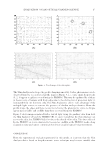
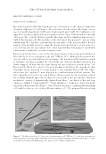
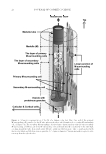
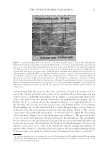
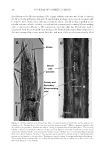
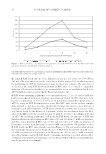
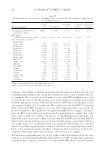
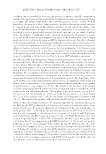
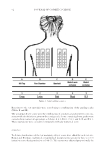
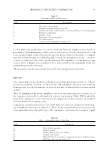
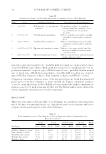
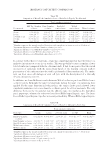
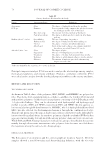
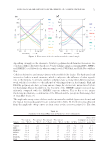
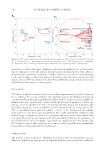
RHEOLOGICAL AND SKIN SENSORY PROPERTIES OF COSMETIC EMULSIONS 73 in Table V, fi rmness was infl uenced most by thickening agents for all sensory attributes. The samples with cellulose derivatives had less fi rmness than the samples with synthetic polymers. This fi nding correlates well with the rheology results. Ease of pick-up and peak after pick-up were also highly infl uenced by the nature of the polymers, as the formulas with cellulose derivatives received lower scores due to lower viscosity. These samples fl ow easily, so a smaller quantity of these products could be picked up by fingers, and the peaks after pick-up were lower. On the other hand, the formulas with cellulose derivatives scored higher than synthetic polymers for spreadability because of the lower viscosity and yield stress. It is well known that PAA-type thickening agents lead to a breakdown in contact with existing electro- lytes on skin, which reduces the spreading force of a formulation. However, this break- down is not as signifi cant as the effect of their high viscosity and yield stress, which aligns with our spreadability prediction. The formulas with cellulose derivatives showed higher original gloss than the synthetic polymers (p 0.05), which is also reported by Savary (7). Notably, the scores for gloss (after-feel) on skin tended to be higher for the synthetic polymers than for the cellulose derivatives, although no statistically signifi cant difference was found. Compared with synthetic polymers, cellulose derivatives tended to have more hydration, less oil feel, and slower absorbency. This could be explained by the nature of cellulose, which has more hydrophilic groups (hydroxyl groups) in its structure. These hydroxyl groups help the formula to retain water and give a greater hydration feel during the rub- in phase. However, this also leads to a lower absorbency of the formula because the absor- bency is closely related to the moisture evaporation during the rub-in phase. In addition, of the synthetic polymers tested in this study, PAA has a relatively better gloss and hydration feel, which may be because of its chemical structure and process technology (Table V). There were no statistically signifi cant differences (p 0.05) among the seven emulsions for the after-feel factor (tackiness, gloss, slipperiness, greasiness, and moisture). Similar results were reported by Wang et al. (5), who found that the effi cacy of moisturizing was not necessarily linked to the hydrophilic polymers used in the formula. PCA ANALYSIS To illustrate the relationships among the eight rheological and 13 sensorial parameters, as well as the differences among the seven emulsions, PCA was conducted based on all the variables in Tables IV and V. As shown in Figure 2B, the fi rst two principal components account for 86.3% of the total variance (component 1 = 75% and component 2 = 11.3%). Except for the damping factor, the positions of all the rheological parameters are close, which means they are related to one another. Regarding the sensorial attributes, absor- bency, fi rmness, and peak after pick-up are closely related to the rheological parameters in the positive side of the Component 1 axis (PC1), whereas spreadability is closely re- lated to the rheological parameters in the negative side of PC1. Based on the PCA results, the seven emulsions studied can be divided into two groups—cellulose-derivative & con- trol and synthetic polymers(Figure 2A). The cellulose-derivative & control-based emul- sions are on the negative axis of Component 1, and tend to have lower fi rmness, G′, G″, yield stress and viscosity, more original gloss before use and less gloss on the skin after use, easier spread as lotions, more hydration feel and less oil feel during rub-in, and lower

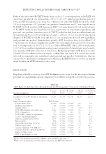
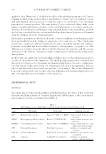
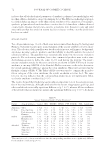
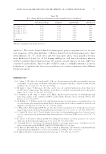
JOURNAL OF COSMETIC SCIENCE 74 absorbency. On the other hand, synthetic polymer-based emulsions are on the positive axis of Component 1, with the opposite rheological and sensorial properties from cellulose- derivative and control-based emulsions. Cellulose derivatives are closer to each other than to the control sample, with greater fi rmness, absorbency and slipperiness, and less spread- ability whereas PVP was distinct from the PAA and PAA Na group, with more moisture and oil feel in the synthetic polymer group. PCC ANALYSIS PCC were calculated to analyze how seven rheological parameters (except the damping factor) infl uenced 13 sensory attributes. Among them, four sensory attributes were mostly correlated with the rheological parameters studied the PCC results are listed in Table VI. Firmness was most signifi cantly correlated with the rheological parameters, with a sig- nifi cance of 0.01 and PCC of 0.87–0.97, followed by Absorbency and Peak after pick- up, with a signifi cance of 0.03 and PCC of 0.80–0.84 and 0.83–0.93, respectively. The PCC of spreadability has a negative number, -0.80 to -0.87, which means the samples with higher viscosity have lower spreadability. The results showed that emulsions with high rheological parameters, such as viscosity and yield stress, tend to have higher fi rm- ness, peak after pick up, absorbency, and lower spreadability. But for the parameters of the after-feel factor such as tackiness or moisture, no signifi cant PCC were shown. The PCC analysis suggests that a rheology test is more suitable for predicting primary skin feel parameters rather than after-feel parameters. CONCLUSION The purpose of this study was to illuminate how and to what extent polymer structure differences and rheological properties can affect the fi nal skin sensory attributes of different Figure 2. PCA results based on the rheology and sensory parameters. (Zone 1 from top to bottom: viscosity at 1 s-1 viscosity at 0.1 s-1 shear stress at crossover point viscosity at 10 s-1 G′ viscosity at 100 s-1 greasiness G″ absorbency. Zone 2 from top to bottom: gloss (after-feel) ease of pick-up oil feel and tackiness.)
Purchased for the exclusive use of nofirst nolast (unknown)
From: SCC Media Library & Resource Center (library.scconline.org)