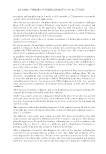
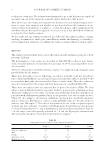
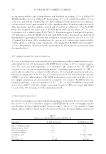
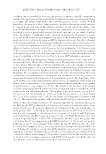
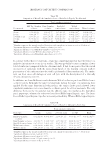
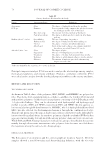
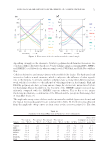
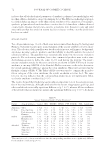
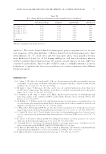
LIP BALM: SUMMARY OF THREE DERMATOLOGICAL STUDIES 7 In addition to the subject who withdrew from Study 1 due to the presentation of moder- ate eczema, there was one additional clinical sign of skin discomfort reported in Study 1 as shown in Table V. The mild skin irritation reported in this subject was thought to be infl uenced by the weather conditions during the study period and did not impact the data generated during the study observation period. Patches were reapplied at the next visit and the subject did not experience any further discomfort or irritation. There were no reports by any subjects of skin discomfort during the conduct of Studies 2 and 3. Under the conditions of assessment, Study 1 showed that the prototype lip balm had no primary dermal irritation potential, cumulative dermal irritation potential, or dermal sensitization potential. No photoirritation potential or photosensitization potential was observed in any of the 30 volunteers who completed Study 2. Of the 30 volunteers who completed Study 3, none experienced any adverse skin reaction under close dermatological monitoring. In addition, the analyses of Diary of Use entries provided at the end of the study period by the subjects indicated no reports of discomfort on the lips during the 28 d of product use. The product did not cause irritation or sensi- tization reactions and can be considered suitable for use in people with sensitive skin. DISCUSSION In the two cases of contact eczema observed in Study 1, the fi rst case was medically evalu- ated and classifi ed as moderate with the diagnostic hypothesis as contact eczema probably Table IV Number of Adverse Events and Discontinuation Data for Subjects in Studies 1–3 Study 1 Study 2 Study 3 Subjects enrolled 55 31 33 Subjects completed 52 30 30 Number of adverse events 2 0 0 Reasons for discontinuation Lost to follow-up 1 0 3 Protocol violation 1 1 0 Adverse event 1 0 0 Table V Clinical Signs of Skin Discomfort in Study 1 Subject Event Severity Relation to test product Subject discontinued from study 08 Contact Eczema Moderate Unlikely related (investigator deemed event likely due to glue from the adhesive tape/Micropore patch) Yes 42 Contact Eczema Mild Not related (investigator deemed event likely due to glue from the adhesive tape/Micropore patch) No

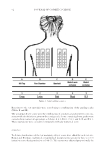
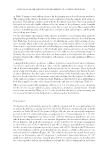
JOURNAL OF COSMETIC SCIENCE 8 related to the glue from the adhesive tape (Micropore®). This hypothesis was based on the location of the irritation being observed under all patched sites under the adhesive tape in the posterior chest area. The second case was a report of mild skin irritation which was thought to be infl uenced by the weather conditions during the study period, as the study was conducted during the summer months. This did not impact the data generated during the study observa- tion period. The data from the three studies described herein, summarizing the dermatological assess- ments of topical compatibility (primary and cumulative irritability and sensitization), photoirritant and topical photosensitizer potential, and acceptability under normal use conditions, support the use of the prototype cosmetic lip balm as a suitable product for use on sensitive skin. ACKNOWLEDGMENTS The author would like to thank Health Interactions, San Francisco, CA, for their medical writing assistance with this article. REFERENCES (1) Z. Ya-Xian, T. Suetake, and H. Tagami, Number of cell layers of the stratum corneum in normal skin– relationship to the anatomical location on the body, age, sex and physical parameters, Arch. Dermatol. Res., 291, 555 (1999). (2) R. J. Rycroft, T. Menné, P. Frosch, and J.-P. Lepoittevin, “International Contact Dermatitis Research Group (ICDRG) Adapted Scale,” in Textbook of Contact Dermatitis, 3rd Ed. (Springer-Verlag, Berlin, 2001), p. 1114. (3) J. Escalas-Taberner, E. González-Guerra, and A. Guerra-Tapiac, Sensitive skin: A complex syndrome. Actas Dermosifi liogr, 102(8), 563–571 (2011). (4) M. A. Farage and H. I. Maibach, “Sensitive skin: New fi ndings yield new insights,” in Textbook of Cosmetic Dermatology, 4th Ed., R. Baran and H. Maibach. Eds. (CRC Press, London, 2010), Chapter 8. (5) H. I. Maibach and F. N. Marzulli, “Chapter 10 Sensitive Skin,” in Dermatotoxicology, 7th Ed. (CRC Press, Boca Raton, Florida, 2007). (6) Z. Draelos, Atlas of Cosmetic Dermatology, 1st Ed. (Churchill Livingstone, New York, 2000). (7) K. J. Frosch, A. M. Kligman. A method for appraising the stinging capacity of topically applied substances, J. Soc. Cosmet. Chem., 28(5), 197–209 (1977). (8) T. B. Fitzpatrick, Soleil et peau (Sun and skin), J. Méd. Esthét., 2, 33–34 (1975) (in French).
Purchased for the exclusive use of nofirst nolast (unknown)
From: SCC Media Library & Resource Center (library.scconline.org)