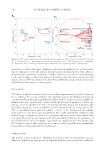
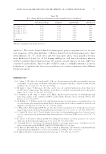
JOURNAL OF COSMETIC SCIENCE 48 Polyphenols with their antioxidative and anti-infl ammatory properties have been identi- fi ed to benefi cially regulate the ECM, and thereby, prevent skin aging or cancer (1–8,27). The structure of the phenolic components includes at least one aromatic ring with one or more hydroxyl groups (5). The activity of the phenolic compounds is dependent on the number and location of these hydroxyl groups, in addition to their structure (5,28–34). The structure of nicotinamide or its derivatives, such as 3-hydroxypicolimanide, has pho- tophysical and UV radiation absorptive properties (28–34). Skin aging or photoaging reduces cellular antioxidant defense, ECM structure, and NAD content (1–8,35). Nico- tinamide serves as a precursor for several cellular coenzymes that are essential to metabolism and counteracts inhibition of ATP/glycolysis, oxidative DNA damage, oxidative stress, and infl ammation (35–41). Nicotinamide improves skin appearance, independently or in combination with retinoids, by reducing hyperpigmentation and wrinkles (42–46). We recently reported an anti–skin aging mechanism of nicotinamide through the stimula- tion of fi brillar collagen and heat shock proteins in dermal fi broblasts (27). The goal of this research was to determine the anti–skin aging mechanism of nicotinamide and three of its derivatives, 2,6-dihydroxynicotinamide, 2,4,5,6-tetrahydroxynicotinamide, and 3-hydroxypicolinamide (collectively niacin derivatives), through the benefi cial regula- tion of elastin and fi brillin (1 and 2) in nonirradiated or UVA-radiated dermal fi broblasts, and direct inhibition of on matrix metalloproteinases (MMP) (1, 3, and 9) and elastase activities. The hypothesis of this research was that the niacin derivatives would stimulate expression of elastin and fi brillin, and directly inhibit ECM proteolytic activity. METHODS CELL CULTURE AND DOSING Human neonatal dermal fi broblasts from two donors (Cascade Biologics, part of Ther- mofi scher Scientifi c, Waltham, MA) were cultured in complete Dulbecco’s Modifi ed Eagle’s Medium (DMEM) supplemented with 10% heat inactivated fetal bovine serum, 1% penicillin/streptomycin (P/S), and 1% L -glutamine (Sigma, St. Louis, MO). The cells were rinsed with Hank’s Balanced Salt solution (Sigma) and nonirradiated (control) or radi- ated with 2.5 J/cm2 (minimal toxicity) of UVA radiation using a four-tube UVA lamp with irradiance of 1E-03 W/cm2 for a sum of wavelengths from 320 to 400 nm (2,4,27). The nonirradiated or UVA-radiated cells were then not exposed (control or UVA-radiated con- trol) or exposed to 0.01% (0.05 mM), 0.1% (0.5 mM), or 1% (5 mM) of each of the niacin derivatives in experimental media (DMEM containing 1% serum replacement and 1% P/S) for 24 h (2,4,27). Four independent experiments, in replicates of 3–4, were performed with dermal fi broblasts at passages 4–12. The cells were examined for cell viability by MTS (3-(4,5-dimethylthiazol-2-yl)-5-(3-carboxymethoxyphenyl)-2-(4-sulfophenyl)-2H- tetrazolium, inner salt) assay (Promega, Madison, WI). The cell viability was not altered at these concentrations of UVA radiation or niacin derivatives. ELASTIN, AND FIBRILLIN (-1, -2) PROTEIN LEVELS The elastin and fi brillin proteins levels in the media of nonirradiated or UVA radiated fi broblasts ± niacin derivatives were determined by using enzyme linked immunosorbant assay (ELISA) (Kirkguaard and Perry Laboratories Inc., Milford, MA Elastin Products Co.)

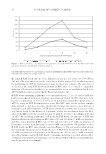
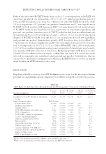
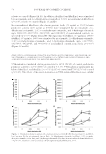
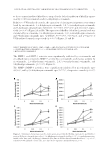
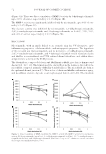
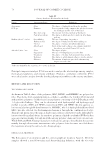
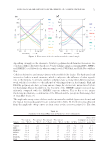
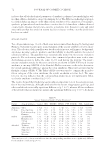
REGULATION OF EXTRACELLULAR MATRIX BY NICOTINAMIDE AND ITS DERIVATIVES 49 (1–4,8,27). One hundred microliter aliquots of media or cells from each sample, or respective standards were added to independent wells of 96 well plates for 24 h. The wells were blocked with bovine serum albumin, and then incubated with respective antibod- ies (Elastin Products Co.) for 1 h. The plates were washed with wash buffer, incubated with respective secondary antibodies linked to peroxidase for 1 h, washed, and subse- quently incubated with peroxidase substrate until color development, which was mea- sured spectrophotometrically at 405 nm and quantitated from standard curves. ELASTIN PROMOTER ACTIVITY Fibroblasts were cotransfected with elastin promoter-fi refl y luciferase (Pgl4 vector) and TK-Renilla luciferase plasmids (for normalization of transfection effi ciency) using Escort (Sigma) for 24 h before dosing with or without UVA-radiation ± niacin derivatives for 24 h (2,4,8). The cells were measured for luminescence from fi refl y or renilla luciferase with specifi c substrates and quantitated using recombinant luciferase as standard (Promega). MMP-1, -9, AND -9, AND ELASTASE ACTIVITIES The inhibition of ECM proteolytic enzymes (MMP-1, MMP-2, MMP-3, Elastase) (Biomol, Torrance, CA Enzo Life Sciences, Farmingdale, NY Elastin products Co.) was per- formed as previously reported (1,3). Each of the enzymes at optimal concentration was incubated with the niacin derivatives at 0%, 0.01%, 0.1%, or 1% for 10 min followed by the addition of its respective substrate (Bachem). The reaction kinetics were measured fl ourometrically (355 excitation/450 emission) every 10 min for a total of 60 min. The initial reading (0 time) was subtracted from the fi nal reading (60 min) and the data con- verted to percentage of control. DATA ANALYSIS The data were analyzed for signifi cant difference by analysis of variance and student t-tests at 95% confi dence interval. The effects of UVA radiation on dermal fi broblasts were analyzed relative to nonirradiated control cells. The effects of the niacin derivatives on nonirradiated cells were analyzed relative to nonirradiated cells (control). The effects of each of the niacin derivatives on UVA-radiated fi broblasts were analyzed relative to UVA radiation effect alone (UVA-radiated respective control). The direct MMP or elastase in- hibitory activity of the niacin derivatives was analyzed relative to control. RESULTS STIMULATION OF EXPRESSION OF ELASTIN, ELASTIN PROMOTER, FIBRILLIN-1, AND FIBRILLIN-2 BY NICOTINAMIDE, 2,6-DIHYDROXYNICOTINAMIDE, 2,4,5,6-TETRAHYDROXYNICOTINAMIDE, AND 3-HYDROXYPICOLINAMIDE IN NONIRRADIATED FIBROBLASTS Niacin or its derivatives stimulated the expression of elastin and fi brillin in dermal fi bro- blasts. The niacin derivatives signifi cantly stimulated elastin expression (protein and pro- moter) and fi brillin-1 and fi brillin-2 at 0.1% and 1% in nonirradiated fi broblasts ( p 0.05,
Purchased for the exclusive use of nofirst nolast (unknown)
From: SCC Media Library & Resource Center (library.scconline.org)