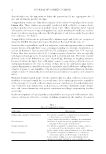
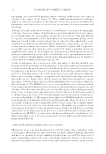
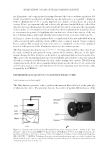
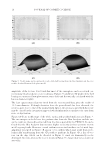
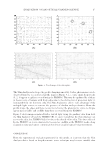
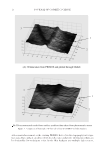
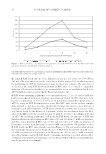
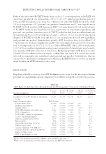
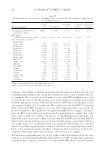
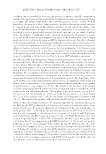
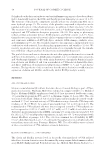
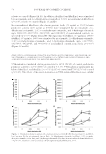
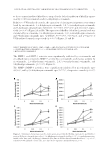
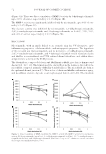
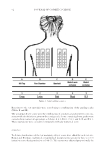
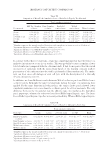
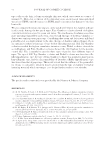
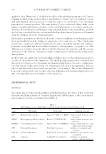
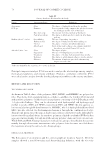
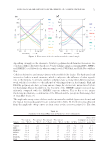
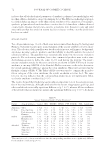
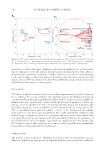
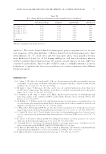
JOURNAL OF COSMETIC SCIENCE 74 absorbency. On the other hand, synthetic polymer-based emulsions are on the positive axis of Component 1, with the opposite rheological and sensorial properties from cellulose- derivative and control-based emulsions. Cellulose derivatives are closer to each other than to the control sample, with greater fi rmness, absorbency and slipperiness, and less spread- ability whereas PVP was distinct from the PAA and PAA Na group, with more moisture and oil feel in the synthetic polymer group. PCC ANALYSIS PCC were calculated to analyze how seven rheological parameters (except the damping factor) infl uenced 13 sensory attributes. Among them, four sensory attributes were mostly correlated with the rheological parameters studied the PCC results are listed in Table VI. Firmness was most signifi cantly correlated with the rheological parameters, with a sig- nifi cance of 0.01 and PCC of 0.87–0.97, followed by Absorbency and Peak after pick- up, with a signifi cance of 0.03 and PCC of 0.80–0.84 and 0.83–0.93, respectively. The PCC of spreadability has a negative number, -0.80 to -0.87, which means the samples with higher viscosity have lower spreadability. The results showed that emulsions with high rheological parameters, such as viscosity and yield stress, tend to have higher fi rm- ness, peak after pick up, absorbency, and lower spreadability. But for the parameters of the after-feel factor such as tackiness or moisture, no signifi cant PCC were shown. The PCC analysis suggests that a rheology test is more suitable for predicting primary skin feel parameters rather than after-feel parameters. CONCLUSION The purpose of this study was to illuminate how and to what extent polymer structure differences and rheological properties can affect the fi nal skin sensory attributes of different Figure 2. PCA results based on the rheology and sensory parameters. (Zone 1 from top to bottom: viscosity at 1 s-1 viscosity at 0.1 s-1 shear stress at crossover point viscosity at 10 s-1 G′ viscosity at 100 s-1 greasiness G″ absorbency. Zone 2 from top to bottom: gloss (after-feel) ease of pick-up oil feel and tackiness.)

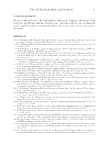
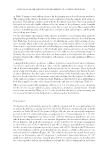
RHEOLOGICAL AND SKIN SENSORY PROPERTIES OF COSMETIC EMULSIONS 75 emulsions. The results showed that thickening agents play an important role in the sen- sory properties of the fi nal formulas. Cellulose derivative-based emulsions tend to have lower fi rmness, G′, G″, yield stress and viscosity, more gloss, easier spread as lotions, more hydration feel and less oil feel during rubbing in, and lower absorbency, whereas synthetic polymer-based emulsions have the opposite sensory impacts on skin, and better suspension and stability. These results could be used as a valuable reference point for formulators to optimize the skin sensory attributes of cosmetic emulsions with different thickening agents. REFERENCES (1) S. Ozkan, T. W. Gillec e, L. Senak, and D. J. Moore, Characterization of yield stress and slip behaviour of skin/hair care gels using steady fl ow and LAOS measurements and their correlation with sensorial attributes, Int. J. Cosmet. Sci., 34, 193–201 (2012). (2) M. Lukic, I. Jaksic, V . Krstonosic, N. Cekic, and S. Savic, A combined approach in characterization of an effective w/o hand cream: The infl uence of emollient on textural, sensorial and in vivo skin perfor- mance, Int. J. Cosmet. Sci., 34, 140–149 (2012). (3) S. Tamburic, Q. M. Cra ig, G. Vuleta, and J. Millic, An investigation into the use of thermorheology and texture analysis in the evaluation of W/O creams stabilized with a silicone emulsifi er, Pharm. Dev. Technol., 1, 299–306 (1996). (4) M. Bekker, G. V. Webbe r, and N. R. Louw, Relating rheological measurements to primary and second- ary skin feeling when mineral-based and Fischer-Tropsch wax-based cosmetic emulsions and jellies are applied to the skin, Int. J. Cosmet. Sci., 35, 354–361 (2013). (5) S. Wang, M. S. Kislali oglu, and M. Breuer, The effect of rheological properties of experimental moistur- izing creams/lotions on their effi cacy and perceptual attributes, Int. J. Cosmet. Sci., 21, 167–188 (1999). (6) G. Savary, M. Grisel, and C. Picard, Impact of emollients on the spreading properties of cosmetic prod- ucts: A combined sensory and instrumental characterization, Colloids Surf. B Biointerfaces, 102, 371–378 (2013). (7) L. Gilbert, C. Picard, G. Savary, and M. Grisel, Impact of polymers on texture properties of cosmetic emulsions: A methodological approach, J. Sens. Stud., 27, 392–402 (2012). (8) “Standard Practice for Descriptive SkinFeel Analysis of Creams and Lotions”, ASTM, E 1490-03 https://www.astm.org/DATABASE.CART/HISTORICAL/E1490-03.htm. (9) H. Fares, K. Deruddre, M. A. Gidel, T. Gillece, and R. L. Mcmullen, The versatility of hydrophobically modifi ed hydroxyethylcellulose in skin care formulations, SOFW J., 141, 2–8 (2015). (10) J. Martin, Yield stres s measurements for personal care, C & T, 130, 44–56 (2015). Tab le VI PCC among Rheological Parameters and Sensory Evaluation Attributesa Peak after pick up Firmness Spreadability Absorbency Viscosity at 0.1 s-1 0.83 0.88 -0.80 0.81 Viscosity at 1 s-1 0.83 0.87 -0.81 0.80 Viscosity at 10 s-1 0.90 0.94 -0.85 0.83 Viscosity at 100 s-1 0.93 0.97 -0.87 0.83 G′ 0.88 0.90 -0.80 0.81 G″ 0.91 0.92 -0.85 0.84 Yield stress 0.86 0.91 -0.85 0.81 a All have signifi cant correlation (p 0.05).
Purchased for the exclusive use of nofirst nolast (unknown)
From: SCC Media Library & Resource Center (library.scconline.org)