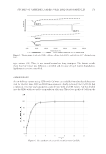
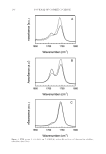
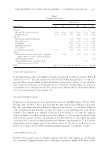
JOURNAL OF COSMETIC SCIENCE 192 FOURIER TRANSFORM INFRARED SPECTROSCOPY Infrared spectra of the fats were acquired on a Brüker ALPHA spectrometer (Brussels, Belgium) with a platinum ATR single refl ection diamond module. Each spectrum was the result of averaging 24 scans taken at a resolution of 4 cm-1. All spectra were measured at 21°C. CHALLENGE TEST The effi cacy of microbial preservation was tested according to the method described in the European Pharmacopoeia version 7.0 (21). The inoculum consisted of Pseudo- monas aeruginosa, Staphylococcus aureus, Escherichia coli, Candida albicans, and Aspergillus brasiliensis. VISCOSITY The viscosities of the oils were determined using 125 ml of the oils in 250 ml beakers at 25°C using a Brookfi eld (Elscolab, Kruibeke, Belgium) type RVDV-II + program- mable viscometer using spindle 3 at 60 rpm. Several other oils were measured as a reference. These were isopropyl myristate (BASF, Ludwigshafen, Germany), cyclo- pentasiloxane (Dow Corning Europe, Barry, UK), octyl stearate (BASF), C12–C15 alkyl benzoate (Innospec, Littleton, CO), decyl oleate (BASF), C8/C10 triglyceride (BASF), octyldodecanol (BASF), and dimethicone (BRB International, Ittervoort, The Netherlands). SPREADABILITY The spreadability of the oils was measured following the protocol by Dietz (22). Gelatin fi lms made from lime bone were kindly donated by Rousselot (Gent, Belgium). Five mil- liliter of oil was pipetted onto the fi lms and after 5 min the drop diameter was measured using a caliper. The reported values are an average of 4 or 8 measurements. FORMULATING OF HAND CREAMS The insect fats were formulated as 1%, 2%, 4%, 5%, and 10% fractions in a hand cream. The composition of the formulation and the origin of the used materials are given in Table I. The typical formulation contains 5% fat, and the variation in fat con- tent was compensated by adding more or less water in phase 2. The formulations with insect fats were compared with formulations containing 5% mink or macadamia nut oil. Macadamia nut oil was purchased from IMCD Benelux BV. The origin of the mink oil is proprietary information. The natural antioxidant sunfl ower seed oil extract of rosemary leaf (INCI Helianthus Annuus Seed Oil Rosmarinus Offi cinalis Leaf Extract) was obtained from Gattefossé.

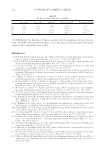
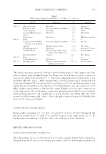
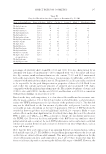
INSECT FATS FOR COSMETICS 193 The hand cream was prepared according to the following protocol. All components of the various phases were weighed separately. Next, the oil and aqueous phases, phases 1 and 2 respectively, were heated to 75°C. Once this temperature was reached, phase 1 was gradually added to phase 2 while mixing with a Silverson mixer until a homogeneous cream was obtained. This cream was left to cool down to 30°C at which point phase 3 was added. The rise in pH due to the addition of 30% NaOH will cause the acrylates/C10-30 alkyl acrylate crosspolymer to thicken the cream. Finally, once the hand cream was at room temperature the fourth phase component, phenylpropanol, which serves together with methylpropanediol and caprylyl glycol as preservative, was added. The pH of the cream should be between pH 5 and 6. If not, the pH is adjusted using 30% NaOH solu- tion or 50% citric acid solution. STABILITY TESTING OF HAND CREAMS Hand creams containing 1%, 2%, 4%, 5%, and 10% of insect fat were formulated and placed in incubators at 5°C and 45°C, and also kept at room temperature (21°C). At regular time intervals, up to 8 weeks, color, odor, and aspect were evaluated. RESULTS AND DISCUSSION EXTRACTION AND REFINING OF INSECT FATS After harvesting, the insects were dried at 65°C until constant weight before extraction. Starting from whole insects, the average percentage of fats to dry weight (regardless of Table I Hand Cream Composition (Th e Fat % x Can Be 1, 2, 5 or 10 %) INCI Function % Supplier Phase 1 Glyceryl stearate Emulisfi er 2–3 Gattefossé Behenyl alcohol Viscosity enhancer/stabilizer 2–3 BTC Europe Cetyl Phosphate Emulsifi er 1–2 DSM Cetearyl Ethylhexanoate Emollient 2–3 Mosselman Fat/oil x — Dimethicone Emollient 1–2 BRB International Phase 2 Aqua q.s. — Acrylates/C10-30 Alkyl Acrylate Crosspolymer Viscosity enhancer/stabilizer 0.3–0.5 Lubrizol Glycerin Emollient/moisturizer 3–4 Vivochem Methylpropanediol Emollient 3–4 Stearinerie Dubois Caprylyl Glycol Wetting agent with strong antimicrobial properties 0.3–0.6 Dr Straetmans Disodium EDTA Chelator 0.02 BTC Europe Phase 3 Aqua 5 — Sodium Hydroxide pH adjuster 0.6 Brenntag Phase 4 Phenylpropanol Fragrance ingredient with antimicrobial activity 0.1–0.2 Dr Straetmans
Purchased for the exclusive use of nofirst nolast (unknown)
From: SCC Media Library & Resource Center (library.scconline.org)