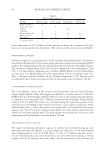
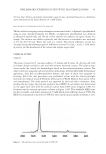
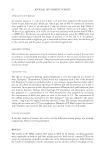
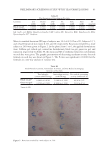
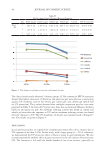
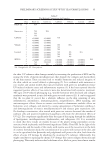
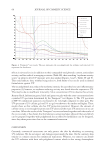
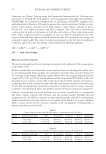
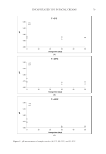
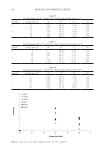
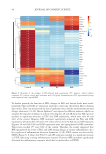
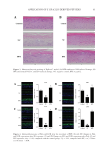
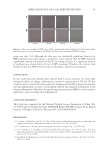
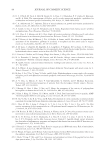
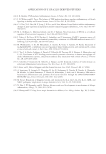
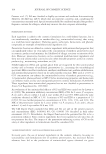
66 JOURNAL OF COSMETIC SCIENCE effects in vitro and in vivo. In addition to their comparable total phenolic content, antioxidant activity, and free radical scavenging activities (Table III), their resulting “erythema severity scores” in subjects after UV exposure were also similar (Figures 2 and 3, Tables IV and V). This could indicate that, without being selective, both forms of tea can be used in dermal formulations against UV. The tea polyphenols may reduce the erythema intensity because they have anti-inflammatory properties (5) however, no erythema reducing activity was found after the exposure to UV. This may be due to insufficient time (only 2 d) or concentration (3%) to observe this activity. Kenyan black, Indonesian green, black and green tea gels with the same concentration have a similar UV spectrum determined by the Transpore® test (Figure 4). The UV spectrum of SPF 50 commercial sunscreen was found to be very high compared to other gels. The UV spectrum of 2% caffeine gel and 5% tea gel was shown to be similar and higher. These results show us that caffeine also has UV protection potential. However, the amount of caffeine in tea is not enough for protection UV alone and the main UV protectors in tea are catechins. When the results of the Transpore® test are evaluated together with the results of the in vivo study, it has shown that formulations containing fewer physical filters and which can be prepared together with polyphenols for an effective formulation can be designed, since they show protection close to the commercial sunscreen. CONCLUSION Currently, commercial sunscreens can only protect the skin by absorbing or scattering UV radiation. We do not expect any damage repair inside the skin. On the contrary, skin toxicity is a major concern for commercial sunscreens. Whereas, tea extracts can absorb the UV radiation with their rich polyphenol content which is also strong chromophore ____Black Tea Gel (3%) _____Kenyan Black Tea Gel (3%) _____Green Tea Gel (3%) _____Black Tea Gel (5%) _____Green Tea Gel (5%) _____Indonesian Green Tea Gel (3%) _____Caffeine Gel (0.3%) _____Caffeine Gel (2%) _____Gel-Base _____SPF 50 Commercial Sunscreen Figure 4. Transpore® test results. The axis represents the wavelength and the ordinate (each interval 0.2) represents the absorbance.

67 PRELIMINARY SCREENING STUDY WITH TEA FORMULATIONS molecules. Tea polyphenols are strong antioxidants, when inside the skin they will fight against oxidative stress. The safety of tea extracts for humans and the environment is also a big advantage. REFERENCES (1) N. Khan and H. Mukhtar, Tea polyphenols in promotion of human health, Nutrients, 11, 39 (2018). (2) R. R. Korac and K. M. Khambholja, Potential of herbs in skin protection from ultraviolet radiation, Pharmacogn. Rev., 5, 164–173 (2011). (3) P. Sharma, M. K. Montes de Oca, A. R. Alkeswani, S. F. McClees, T. Das, C. A. Elmets and F. Afaq, Tea polyphenols for the prevention of UVB-induced skin cancer, Photodermatol Photoimmunol. Photomed., 34, 50–59 (2018). (4) J. Intra and S. M. Kuo, Physiological levels of tea catechins increase cellular lipid antioxidant activity of vitamin C and vitamin E in human intestinal caco-2 cells, Chem. Biol. Interact., 169, 91–99 (2007). (5) M. I. Prasanth, B. S. Sivamaruthi, C. Chaiyasut and T. Tencomnao, A review of the role of green tea (Camellia sinensis) in antiphotoaging, stress resistance, neuroprotection, and autophagy, Nutrients, 11, 474 (2019). (6) S. Sang, J. D. Lambert, C. T. Ho and C. S. Yang, The chemistry and biotransformation of tea constituents, Pharmacol. Res., 64, 87–99 (2011). (7) N. Khan, F. Afaq and H. Mukhtar, Cancer chemoprevention through dietary antioxidants: progress and promise, Antioxid. Redox Signal, 10, 475–510 (2008). (8) N. Morley, T. Clifford, L. Salter, S. Campbell, D. Gould and A. Curnow, The green tea polyphenol (−)-epigallocatechin gallate and green tea can protect human cellular DNA from ultraviolet and visible radiation-induced damage, Photodermatol Photoimmunol Photomed., 21, 15–22 (2005). (9) M. C. Menet, S. Sang, C. S. Yang, C. T. Ho and R. T. Rosen, Analysis of theaflavins and thearubigins from black t by MALDI-TOF mass spectrometry, J. Agric. Food Chem., 52, 2455–2461 (2004). (10) H. Wang, G. J. Provan, and K. Helliwell, Tea flavonoids: Their functions, utilization and analysis, Trends Food Sci. Technol., 11, 152–160 (2000). (11) J. Zhao, X. Jin, E. Yaping, Z. S. Zheng, Y. J. Zhang, M. Athar, V. A. DeLeo, H. Mukhtar, D. R. Bickers and Z.Y. Wang, Photoprotective effect of black tea extracts against UVB induced phototoxicity in skin, Photochem. Photobiol., 70, 637–644 (1999). (12) K. Yoshino, Y. Hara, M. Sano and I. Tomita, Antioxidative effects of black tea theaflavins on lipid peroxidation of rat liver homogenates induced by tert-butyl hydroperoxide, Biol. Pharm. Bull., 17, 146– 149 (1994). (13) M. Turkoglu and N. Cigirgil, Evaluation of black tea gel and its protection potential against UV, Int. J. Cosmet. Sci., 29, 437–442 (2007). (14) M. Turkoglu, T. Uğurlu, G. Gedik, A. M. Yılmaz, A. S. Yalcin, In vivo evaluation of black and green tea dermal products against UV radiation, Drug Discov. Ther., 4, 362–367 (2010). (15) H. Wang, K. Helliwell and X. You, Isocratic elution system for the determination of catechins, caffeine and gallic acid in green tea using HPLC, Food Chemistry, 68, 115–121 (2000). (16) R. Apak, K. Güçlü, M. Ozyürek, S. E. Karademir and E. Erçağ, The cupric ion reducing antioxidant capacity and polyphenolic content of some herbal teas, Int. J. Food Sci. Nutr., 57, 292–304 (2006). (17) A. Peksel, A. I. Arısan and R. Yanardag, Antioxidant activities of aqueous extracts of purslane, Ital. J. Food Sci., 3, 297–311 (2006). (18) Medisun, Professional Accessories https://www.medisun.de/en/professional-products/accessories accessed December 24, 2021. (19) S. A. Wissing, K. Mader, R. H. Müller, Solid lipid nanoparticles (SLN)- a novel carrier for UV blockers, Die Pharmazie, 10, 783–786 (2001).
Purchased for the exclusive use of nofirst nolast (unknown)
From: SCC Media Library & Resource Center (library.scconline.org)