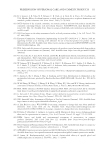
82 JOURNAL OF COSMETIC SCIENCE (9) S. Burt, Essential oils: their antibacterial properties and potential applications in foods—a review. Int. J. of Food Microbiol., 94(3), 223–253 (2004). (10) N. Pazyar, R. Yaghoobi, N. Bagherani, and A. Kazerouni, A review of applications of tea tree oil in dermatology, Int. J. Dermatol., 52(7), 784–790 (2013). (11) C. F. Carson, K. A. Hammer, and T. V. Riley, Melaleuca alternifolia (T. Tree) oil: a review of antimicrobial and other medicinal properties, Clin. Microbiol. Rev., 19(1), 50–62 (2006). (12) M. Michalak, Plant-Derived Antioxidants: Significance in Skin Health and the Ageing Process, Int J Mol Sci., 23(2):585, 1–24 (2022). (13) J. Reichling, J. Fitzi, K. Hellmann, T. Wegener, S. Bucher, and R. Saller, Topical tea tree oil effective in canine localised pruritic dermatitis--a multi-centre randomised double-blind controlled clinical trial in the veterinary practice, DTW. Deutsche tierärztliche Wochenschrift. 111(10), 408–414 (2004). (14) R. P. Vieira, A. R. Fernandes, T. M. Kaneko, V. O. Consiglieri, C. A. SdO. Pinto, C. S. C. Pereira, A. R. Baby, and M. V. R. Velasco, Physical and physicochemical stability evaluation of cosmetic formulations containing soybean extract fermented by Bifidobacterium animalis, Braz. J. Pharm. Sci., 45(3), 515–525 (2009). (15) C. F. Carson, K. A. Hammer, and T. V. Riley, Melaleuca alternifolia (T. Tree) oil: a review of antimicrobial and other medicinal properties, Clin. Microbiol. Rev., 19(1), 50–62 (2006). (16) T. Muta, A. Parikh, K. Kathawala, H. Haidari, Y. Song, J. Thomas, and S. Garg, Quality-by-design approach for the development of nano-sized tea tree oil formulation-impregnated biocompatible gel with antimicrobial properties, Pharm., 12(11), 1091 (2020). (17) L. Banes-Marshall, P. Cawley, and C. A. Phillips, In vitro activity of Melaleuca alternifolia (tea tree) oil against bacterial and Candida spp. isolates from clinical specimens, Br. J. of Biomed. Sci., 58(3), 139–145 (2001). (18) J. May, C. H. Chan, A. King, L. Williams, and G. L. French, Time–kill studies of tea tree oils on clinical isolates, J. Antimicrob. Chemother., 45(5), 639–643 (2000). (19) L. Halcón and K. Milkus, Staphylococcus aureus and wounds: a review of tea tree oil as a promising antimicrobial, Am. J. Infect. Control, 32(7), 402–408 (2004). (20) D. Larson and S. E. Jacob, Tea tree oil. Dermatitis: Contact, Atopic, Occupational, Drug, 23(1), 48–49 (2012). (21) Z. Khalil, A. L. Pearce, N. Satkunanathan, E. Storer, J. J. Finlay-Jones, and P. H. Hart, Regulation of wheal and flare by tea tree oil: complementary human and rodent studies, J. Invest. Dermatol., 123(4), 683–690 (2004). (22) C. Brand, S. L. Townley, J. J. Finlay-Jones, and P. H. Hart, Tea tree oil reduces histamine-induced oedema in murine ears, Inflammation Res., 51(6), 283–289 (2002). (23) A. Herman, A. P. Herman, B. W. Domagalska, and A. Młynarczyk, Essential oils and herbal extracts as antimicrobial agents in cosmetic emulsion, Indian J. Microbiol., 53(2), 232–237 (2013). (24) A. Lohani, A. Verma, H. Joshi, N. Yadav, and N. Karki, Nanotechnology-based cosmeceuticals, ISRN Dermatol., 843687 (2014). (25) I. T. Carvalho, B. N. Estevinho, and L. Santos, Application of microencapsulated essential oils in cosmetic and personal healthcare products – a review, Int. J. Cosmet. Sci., 38(2), 109–119 (2016). (26) C. Maes, S. Bouquillon, and M. L. Fauconnier, Encapsulation of essential oils for the development of biosourced pesticides with controlled release: a review, Molecules. 24(14), 2539 (2019). (27) N. Bhardwaj and S. C. Kundu, Electrospinning: A fascinating fiber fabrication technique, Biotechnol. Adv., 28(3), 325–347 (2010). (28) Y. Ge, J. Tang, H. Fu, Y. Fu, and Y. Wu, Characteristics, controlled-release and antimicrobial properties of tea tree oil liposomes-incorporated chitosan-based electrospun nanofiber mats, Fibers and Polymers. 20(4), 698–708 (2019). (29) T. T. T. Nguyen, C. Ghosh, S. G. Hwang, N. Chanunpanich, and J. S. Park, Porous core/sheath composite nanofibers fabricated by coaxial electrospinning as a potential mat for drug release system, Int. J. Pharm., 439(1–2), 296–306 (2012).

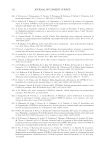
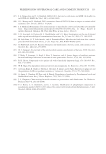
83 ENCAPSULATED TTO IN FACIAL CREAMS (30) T. Adegoke and D. Arotupin, Preservative capacity of some commercial cosmetics in Akure Metropolis, Nigeria, J. Adv. Microbiol., 5(2), 1–11. (31) M. B. Oliveira, D. C. M. Vieira, T. M. Fiúz, H. R. N. Salgado, and M. Chorilli, Microbiological control of moisturizing mask formulation added of hibiscus flowers, assai palm, black mulberry and papaw glycolic extracts, Int. J. Pharm. Pharm. Sci., 5(1), 342–345 (2013). (32) H. Lambers, S. Piessens, A. Bloem, H. Pronk, and P. Finkel, Natural skin surface pH is on average below 5, which is beneficial for its resident flora, Int. J. Cosmet. Sci., 28(5), 359–370 (2006). (33) T. Mitsui, “Stability of cosmetics,” in New Cosmet. Sci., T. Mitsui. Ed. (Elsevier Amsterdam, 1997), pp. 191–198. (34) R. Campana, C. Scesa, V. Patrone, E. Vittoria, and W. Baffone, Microbiological study of cosmetic products during their use by consumers: health risk and efficacy of preservative systems, Let. Appl. Microbiol., 43(3), 301–306 (2006). (35) ISO International Organization for Standardization. ISO 22717:2015, Cosmetics — Microbiology — Detection of Pseudomonas aeruginosa. In: (2015). (36) ISO International Organization for Standardization. ISO 22718:2015, Cosmetics — Microbiology — Detection of Staphylococcus aureus. In: (2015). (37) ISO International Organization for Standardization. ISO 16212:2017, Cosmetics — Microbiology — Enumeration of yeast and mould. In: (2017). (38) J. Behravan, F. Bazzaz, and P. Malaekeh, Survey of bacteriological contamination of cosmetic creams in Iran (2000), Int. J. Dermatol., 44(6), 482–485 (2005). (39) D. K. Brannan and P. A. Geis, Cosmetics microbiology. In: Schaechter M, ed. Encyclopedia of Microbiology (3rd Edition), Cambridge: Academic Press. 270–280 (2009). (40) H. Zeitoun, M. Kassem, D. Raafat, H. AbouShlieb, and N. Fanaki, Microbiological testing of pharmaceuticals and cosmetics in Egypt, BMC Microbiol., 15, 275–275 (2015). (41) I. T. Some, P. Bogaerts, R. Hanus, M. Hanocq, and J. Dubois, Improved kinetic parameter estimation in pH-profile data treatment, Int. J. Pharm., 198(1), 39–49 (2000).
Purchased for the exclusive use of nofirst nolast (unknown)
From: SCC Media Library & Resource Center (library.scconline.org)