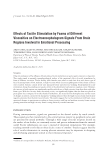
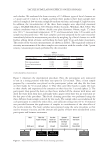
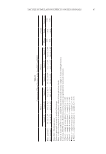
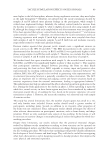
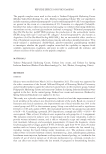
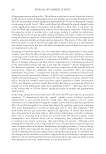
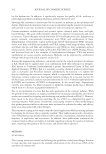
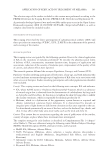
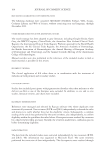
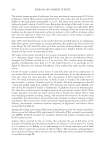
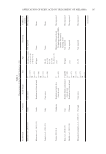
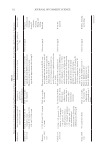
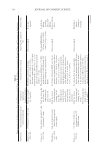
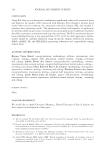
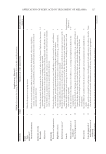
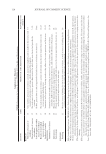
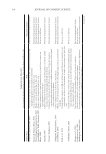
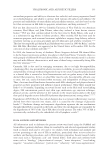
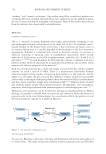
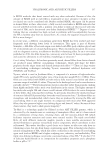
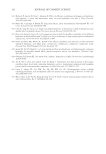
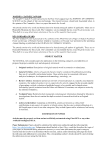
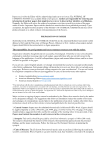
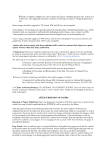
Table II Characteristics of the Intervention Regarding Pharmaceutical Forms of KA Delivery, Concentration, Treatment Time, and Frequency of Application Author/year Association/pharmaceutical form/concentration Frequency of application/ treatment duration Reduced severity of stains Improving the quality of life Adverse effect Tsilika et al. ,2011 (24) Azelaic acid, KA, alpha arbutin, Glycyrrhiza glabra extract, and ascorbic acid cream Daily use for 12 weeks. Patients were evaluated in the week that started, weeks 4, 8, 12, and at week 12 +4. Before treatment, the mean MASI score was 22. After completion of treatment, the MASI decreased to 11 (=0.008). Decrease in MASI after 1 month of treatment maintained up to 1 month after the end of the treatment. It does not apply Mild irritation Xing et al. ,2021 (25) 3% TXA, 5% niacinamide, 1% KA, and 5% HEPES sérum Daily use, twice a day, for 12 weeks. Patients were evaluated in the following weeks: 0.2, 4, 8, and 12. Two weeks after treatment, mMASI scores decreased significantly (=0.044, which was very close to the cutoff value for significance of 0.05). At 4, 8, and 12 weeks, mMASI scores decreased significantly, indicating gradual improvement of melasma: 4 weeks (0.01) 8 weeks (0.001) 12 weeks (0.001). It does not apply It was not reported Draelos et al. ,2010 (26) KA, emblica extract, and GA cream Daily use, twice a day, for 12 weeks. Patients were evaluated at weeks 4, 8, and 12. At week 8, a statistically significant improvement was observed for uniform tone (=0.003) and hyperpigmentation (=0.007). At week 12, a highly statistically significant improvement was observed for skin texture/softness, clarity, uniform tone, hyperpigmentation, brightness, and general appearance (=0.001) and the size of dark spots (=0.021) and in the intensity of dark spots (=0.001). It does not apply It was not reported ()116 JOURNAL OF COSMETIC SCIENCE

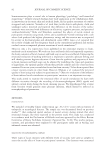
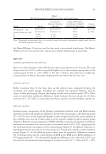
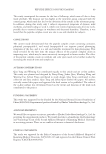
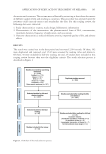
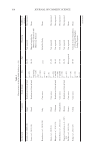
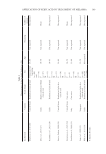
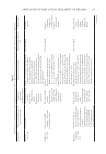
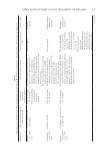
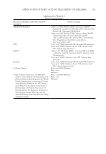
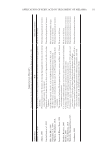
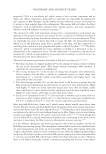
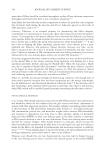
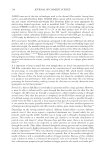
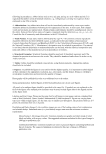
Table II Characteristics of the Intervention Regarding Pharmaceutical Forms of KA Delivery, Concentration, Treatment Time, and Frequency of Application Author/year Association/pharmaceutical form/concentration Frequency of application/ treatment duration Reduced severity of stains Improving the quality of life Adverse effect Deo et al. ,2013 (27) Group A: 1% KA cream Group B: 1% KA and 2% HQ cream Group C: 1% KA, and 0.1% betamethasone cream Group D: 1% KA, 2% HQ, and 0,1% betamethasone cream Daily use, at night, for 12 weeks. Patients were evaluated at weeks 4, 8, and 12. Group A: the mean percentage of improvement in the MASI score was 58.72% Group B: the mean percentage of improvement in the MASI score was 71.87%, with an excellent response at 60%, good at 30%, and regular and poor at 5% each Group C: showed the lowest improvement (36.46%) Group D: the mean percentage of improvement in the MASI score was 54.03%, with 25% showing excellent improvement, a good response at 35%, a reasonable at 35%, and a poor at 5% It does not apply A: burning B: burning C: it was not reported D: acneiform rashes Arunnair et al.2021 ,(28) HQ, KA, GA, and vitamin E cream The treatment lasted 3 months, with three visits for follow-up. Frequency of unreported application. It does not apply The DLQI score at baseline was 9.65. On the first visit, there was a reduction of 7.84. On the second, it decreased to 5.75. And on the third visit, there was a reduction to 3.12. The DLQI scores from the beginning to the end of the study and from the beginning until each visit were significant with a p 0.01. Erythema, itching, irritation, and dryness of the skin ()117 Application of Kojic Acid in Treatment of Melasma
Purchased for the exclusive use of nofirst nolast (unknown)
From: SCC Media Library & Resource Center (library.scconline.org)