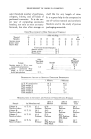
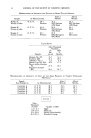
INHERENT INVALIDITY OF ODOR CLASSIFICATION 33 ferring to the previous work of Boring, they declare that "if the system is consistent to such an ex- tent, when an odor is compared with the series, then it is certainly difficult to understand why it lacks self- consistency to such a marked degree when component odors of a group are contrasted, one against the other, for intensity differences." In conclusion, they point out that the results indicate "little cor- respondence with the standard ar- rangement of the intensities of the four basic odor groups." Use by Ross and Harriman of untrained observers, although criti- cized by Foster (36), is actually consistent with the methods of Crocker and Henderson in the data supplied to Boring. In my opinion, the work at Bucknell was favorable to Crocker-Henderson, and was not a truly impartial investigation. This is because only materials were used as stimuli which had pre- viously been chosen by Crocker to typify the various intensities of the particular quality. Had materials been chosen at random, it is doubtful if there would have been even the slight agreement that distinguishes these results from those predictable by the laws of chance. Foster conducted an independent test of the Crocker-Henderson sys- tem, utilizing only one observer. Again, conditions were deliberately chosen that were favorable to a verification of the system. The subject was not only trained in ol- faction, and in the Crocker-Hender- son method, but in preliminary tests with two other trained subjects, her responses were found to be closest to those of Crocker-Hender- son. The purpose of the test was to compare this subject's placement of odor numbers with those found in a directory recently published by Crocker and Dillon (38). Foster points out that the odors in this directory have a mean tendency, centering around the mid-point odor of 4444. When the mean of each quality was determined, it resulted in an approximate mean of 6445. Analyzing the results obtained with his observer, Foster concluded that "we could more nearly approximate the Crocker-Dillon directory num- bers by assigning the mean value, 6445, than by utilizing any of the aids we employed, i.e., smelling the samples or using other descriptions." Furthermore, I maintain that Dean Foster's anosmics would give less variation than was given in the tests described by Mr. Crocker at this meeting (37). Utilizing the mean of 6445, I find that the devia- tion that would be obtained for the substance geraniol would be only 0.75, whereas these four observers had a deviation of 0.87. On cas- toreum, it would be 1.25, whereas here it was 0.78 and on oil of anise it would be only 0.25, instead 6f 1.41. To take the four figures below, on the fragrance element, we would get a deviation of only 1.33 on the acid 0.56 on burned 1.00 and on caprylic 1.37. The deviation of these tests from those that would be obtained by our

34 JOURNAL OF THE SOCIETY OF COSMETIC CHEMISTS theoretical anosmic, on the basis of a mathematical study, would be 1.065. The deviation actually obtained here is 1.07. The conclusions are rather obvious. The investigations of psycholo- gists to determine the reproducibil- ity of the Henning and the Crocker- Henderson systems have been sum- marized in detail because they are the sole methods of odor classifica- tion which have been put to the test of verification, and both have failed that test. The psychologists who have evaluated these systems have found them unproved, but their cumulative data are of great signifi- cance. Viewing all of these tests together, one finds experimental evidence that, at this stage of our knowledge and until further data are forthcoming, the same materials are not classified qualitatively, as far as odor is concerned, in the same or essentially similar manner, when tested by different observers. All experimental work in odor classification demonstrates that the only consistency is the lack of con- sistency all that is predictable is the lack of predictability. We are forced to draw an empirical con- clusion that, at this stage of our knowledge, consistency is unat- tainable. Inasmuch as consistency is a prerequisite for validity, validity is itself unattainable, or all current systems are inherently invalid. The lack of agreement that we have here summarized has not es- caped the attention of previous observers, and was referred to by Foster (36) as follows: "One need only to point out that we have less agreement in describing our smell experiences today than man had in the early periods in which he referred to blood or grass colors rather than the now common labels, red and green." IV If reproducibility is a prerequisite for scientific validity, and if it is unattainable in the classification of odors, shall we conclude that such a classification is impossible? We would say that, at the present state of our knowledge, this is the case. The sole hope for a valid classifi- cation of odors is the establishment of a sound and proved theory of odor, throwing further light on the nature of the olfactory stimulus, and perhaps indicating an affinity of some sort among certain stimuli which differentiate them from others. V I have found great inspiration from the work of Ernest C. Crocker, who has stimulated more thinking on this subject than has anyone else in our time. Paraphrasing the statement by W. S. Jevons with which I opened my remarks, I should like to say, as a tribute to the work of Crocker: "To mark out a theory of science which, on the basis of further in- vestigation and discussion, is still inacceptable to scientific under- standing, often constitutes a valu- able, though negative, contribution to scientific progress."
Purchased for the exclusive use of nofirst nolast (unknown)
From: SCC Media Library & Resource Center (library.scconline.org)