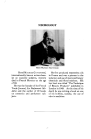
RALPH LIGGETT EVANS, MEDALIST By FOSTEP, Dv.v. SNV. LL, P.D. President, Foster D. Snell, Inc., New York 17, N.Y. MR. TOASTMASTER, Presi- dent Reed, Dr. Evans, Ladies and Gentlemen: Our Medalist, Ralph Liggett Evans, reversed the famous ad- vice of Horace Greeley to young men, and came East.' He was born in the Arkansas part of Tex- arkana in 1895. If he'd been born across the line in Texas, I suppose he would wear a ten- gallon hat today. Not having had that privilege, he saves a lot of money and wears none at all. Do you own one, Ralph? He went to the local high school where he made such a good record that immediately on graduating, he was asked to teach. This he did for a year and then moved the first eastward step to the University of Chicago. Speaking of teaching, it is only through grim determination on his part that Evans avoided this as a life career. Everywhere he went, he proved to be such a good student with an aptitude for clear presenta- tion of a subject that he was offered a teaching post. During his period of college train- ing, World War I broke out and Evans went into the Army. After 43 attending the OfFicers' Training School at Fort Monroe, he became a lieutenant and thereafter was kept on as an instructor. For a year, our Medalist taught gunnery, a far cry from research in cosmetics. He then returned to the University of Chicago and was graduated in 1919 with the degree of S.B. Although I ran across this in an official record, it puzzled me at the time and still does why he is called an S.B, while most of the rest of us refer to the degree as B.S. In the fall of 1919 Evans moved the rest of the way east to Columbia University to take graduate work in chemistry. I know. We ar- rived at the same time, although I didn't travel so far to get there. Here he was an assistant for one year and had a lectureship for two years. Before finishing his studies, Evans formed a partnership for the manufacture of cosmetics. This did not prevent Evans from finishing his research under Professor Marston T. Bogerr, a former recipient of the Medal of this SOC•F.T¾. He ob- tained a Ph.D. from Columbia University in 1925. So industrious was this young

44 JOURNAL OF THE SOCIETY OF COSMETIC CHEMISTS man that he did not stop with solv- ing one research problem. His doctor's thesis is divided into two parts, covering the entirely unre- lated subjects of "A Preliminary Investigation of the Chlorination of Toluene" and "Diamino and Ni- troamino Diaryl Ethers and Certain of Their Derivatives." TECHNICAL ACCOMPLISHMENTS Our Medalist is acknowledged to be the first real scientist to set up a research staff to tackle problems of the cosmetic industry. The study of hair lent itself more easily to a scientific approach than applications to the skin. Evans began a study of hair dyes in 1922, and in that connection was the first to recognize the existence of a topic much dis- cussed today, that of allergy. His efforts were directed first to reduc- ing instances of allergy to hair dyes, and second, to reducing the extent of injury. At the time, the com- monly used dyes were made from para-phenylene diamine, and about 3 people out of 100 using these were allergic to them. By developing new materials which gave true fast colors on hair, Evans reduced the incidence of allergy to 1 in 100,000. In four years, his hair dyes became the number one commercial prod- ucts in the whole world. The first book on hair dyes was written by Florence E. Wall under Evans' direction and sponsorship. This was called "Canitics," meaning the graying of hair. It is still the classic authority in the hair-dyeing industry. Another book called "Beautistry," sponsored by Evans, served as a textbook for the training of beauticians and laid down the principles which have been copied into other textbooks on procedures for the use of cosmetics. Evans was the first to produce stable hydrogen peroxide which could be put on the market and which would last for years rather than weeks this was at least ten years before anyone else was suc- cessful in doing so. The impor- tance of this development was so well recognized that during World War II, Evans was asked to write the specifications for peroxide for the Navy. These were later adopted by the Army Medical Corps. Evans brought the machineless wave to the beauty industry. This was the first real advance made in permanent waving since Charles Nessler invented a machine in 1905 for the permanent waving of hair with electrically heated cutlers. The improvement this offered made it the most popular method of per- manent waving for many years, and it still continues in wide use. They even created the "Hour of Charm" on the radio networks to sell it. Remember that ? Evans also sponsored and con- ducted research on mercaptans for reduction of cystine of the hair, although he already had a tre- mendous commercial success in ma- chineless permanent waving. The first commercial product in this class, however, was an odorless depilatory covered by the Evans and McDonough patent. Three
Purchased for the exclusive use of nofirst nolast (unknown)
From: SCC Media Library & Resource Center (library.scconline.org)