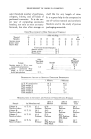
MEASUREMENT OF ODORS IN COSMETICS 5 the construction of the Osmom- eter--and was confirmed as being sound--was that when people are in good health and have sufficient training, and also when as many variables as possible are eliminated, it is possible to obtain actual re- producible readings in the measure- ment of odors with the human nose and to evaluate odors by means of numerical figures. Therefore, un- der these conditions, anybody is able to make the same readings and consequently obtain the same nu- merical results, on the same sample. As we said before, we believe that the essential condition for an odor tester is to be in good health. By that we mean: to be free from any chronic or acute disease, and of average activity, without any ex- cess in exertion or depression. Next to health, and consequently to the resistance to outside agents and increase of sensitivity, is the control of the humidity of the air or of the odor itself whether or not it is mixed with odorless air. Consequently, it is greatly ad- visable that the air or the odor have as low a moisture content as possible. Other factors of great importance had to be taken care of in the elim- ination of variables, and will be described with the Osmometer. THE OSMOMETER. The Osmometer is the first ap- paratus wherein the elimination of variables has been so perfected that the testing of an odor can be made by several individuals in good health and still result in less than 5 per cent variations. Some of the ap- paratus that were previously de- vised were too simple to be accurate for the determination of rather faint odors, like the putrefaction odors in water. A single one, built for this very purpose, the Fair and Welles osmoscope, is quite satisfactory, but on the other hand, it is of absolutely no value for the measurement of other types of odors. The apparatus which were more elaborate were already too complicated to be useful. They contained too many gadgets, de- vices, and lengthy tubing, which considerably reduced the intensity of the odor. Furthermore, they did not eliminate the most im- portant variables, so that no two individuals were able to obtain the same results when testing the same odors. The differences varied con- siderably, so that these apparatus were quickly abandoned and for- gotten. In order to obtain accurate re- sults in the measurement of odors, it was necessary to build an ap- paratus of great reliability. As no way has yet been found to measure odors without using human olfac- tory nerves, such an apparatus should enable anyone to obtain reproducible results provided the following conditions be met: 1. The amount of air to be smelled should be known. 2. The air to be smelled should reach the nose of the technician under its own pressure. This pres- sure should be known. 3. The air to be smelled should

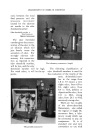
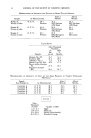
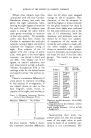
6 JOURNAL OF THE SOCIETY OF COSMETIC CHEMISTS contain only the odor to be meas- ured, and should have no odor of its own. 4. The air should be clean prior to its being contaminated with the odor to be tested. The moisture of the air to be tested should be known. 5. All tests should be made under the same conditions. DESCRIPTION OF THE OSMOMETER As no such apparatus was avail- able, we built our own, following the above-described specifications, and the precision of our Osmometer is such that, for the same specimen, trained technicians obtain readings that never vary more than 4 or $ per cent. This shows that, by elimination of all variables, the organoleptic errors are reduced to a minimum. The Osmometer is based on the air dilution principle, using quantities of odor-free air and odorous air, which are diluted and mixed in various concentrations. The dilution is performed under moderate pressure, which can be made to vary from 1 to 300 mm. mercury. However, pressures higher than 150 ram. are seldom used. This pressure was found to be necessary for two reasons: first, a pressure difference was needed to move air from one container to another. Secondly, a stream of air which suddenly strikes the olfac- tory nerves will cause an im- mediate perception of odor if any may be present. The instrument is connected to a source of corn- pressed air.4. It consists of a flow- meter B, an air washer C, a desicca- tor D, a deodorizer E, a mixing jar F, a sample-containing tube G, a pressure gauge H, and an outlet funnel I. The odorous material is placed in the sample tube, and a measured volume of washed, mois- ture-free and odor-free air is forced through the specimen and into the mixing jar. This, of course, will increase the pressure in the mixing jar and also dilute the odorous vapors in a known proportion, de- pending on the volume of air forced through the specimen and upon the volume of air in the mixingj dr. Additional fresh air is then intro- duced into the mixing jar via a separate connection which by-passes the specimen tube in order to obtain a moderate pressure sufficient to cause a stream of air to pass through a narrow orifice upon the opening of a release valve. This final total pressure must be kept constant for all measurements. If no odor is detected when the air is suddenly released from the mixing flask, the experiment is repeated, this time with twice the volume of air forced through the specimen. The experiment is re- peated until sufficient air has been pumped through the odorous object to produce the sensation of odor. The concentration at which the odor becomes just barely perceptible is called the "threshold value." This threshold value can be ex- pressed numerically, and this numerical expression is called the "odor threshold number." The
Purchased for the exclusive use of nofirst nolast (unknown)
From: SCC Media Library & Resource Center (library.scconline.org)