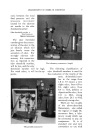
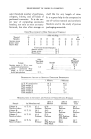
MEASUREMENT OF ODORS IN COSMETICS 7 ratio between the total final pressure and the pressure increment caused by the odorous air results in the odor threshold number: Odor threshold number = Total pressure Odorous increment The odor threshold number gives the concen- tration of the odor in the air dilution which will just barely cause the sensation of odor. For strongly odorous sub- stances, this concentra- tion as reported in the odor threshold number, will be low, and the odor threshold number will For weak odors, it will posite. be high. be the op- The portable osmometer --- " ."' '2: :,3 _ "' 'C '. ?, .* ..-%,./?'•.-. ... - .---. . . ß ..: ......... .... ,... The laboratory osmometer (single) The following classification of odor threshold numbers is used for the evaluation of the results of the tests. A threshold num- ber in the range from 1.0 to 5.9 means a very slight odor from 6.0 to 8.3, slight odor from 8.4 to 13.0, definite or objectionable odor from 13.1 to 26.0, strong odor from 26.1 to 91.0, extremely strong odor. There are two models of the above-described Osmometer, also called ...:• the regular or single Os- mometer: first, a labo- ratory model which can ..... be connected to any air compressor. It is of "' standard size and very convenient to use with

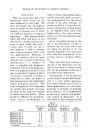
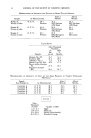
JOURNAL OF THE SOCIETY OF COSMETIC CHEMISTS any supply of compressed air and when sufficient bench space is avail- able. There is also a portable model especially built for field tests. This is the type we use outside in labora- tory and plant tests. It is of a slightly smaller size and receives its compressed air supply from a bottle of compressed air. As the com- pressed air bottle is equipped with a flowmeter, it does not feature any flowmeter. of its own. DEODORANTS Among the cosmetics that can be tested with the Osmometer are the various types of deodorants. We have tested with the Osmometer the comparative value of the deodorants that are now on the American market. The procedure is as follows: The samples of previously steri- lized fabrics are soaked in artificial perspiration. Some are kept as controls and their odor threshold number determined by means of the Osmometer. Also as controls, odor measurements are made on the perfumes used in the deodorants in the proportion therein contained. The other samples are smeared with various amounts of the competitive brands of deodorants. The de- odorants are left in contact with the fabric for various lengths of time, after which the odor threshold number is determined for each of them. The results of this investigation showed quite a large difference in the speed and strength of the deodoriz- ing action. Later, similar tests were conducted on samples that had been specially prepared without the addition of any perfume. This way, as no masking odor was pres- ent, it was possible to obtain a complete elimination of the perspira- tion odor which varied in speed with the various compounds. We have been the first to es- tablish that sterile human perspira- tion is absolutely odorless. It is acid. Its pH is around4.5. How- ever, as soon as perspiration is pro- duced it becomes contaminated with bacteria. There are bacteria on the skin, on the hair, in the air, and on the clothes. Streptococcus albus is always found on the skin, and in normal human perspiration, but it is not the only organism present. On normal, healthy skin, several species of bacteria can be fourida- and practically all species of bacteria and fungi have been identified on the skin and in the perspiration of dis- eased persons. These bacteria and fungi decompose human sweat, and this microbial decomposition causes its odor. The odor varies with the species of bacteria and fungi in- volved. This also explains whysthe body odor is stronger on sick people than on healthy individuals. This fact enabled us to reproduce natural sweat by adding the proper bacteria to our chemical formula for sterile perspiration. The most interesting feature of bacterial decomposition is the ad- justment of the pH by bacteria which can live in a relatively large pH range. During the decomposi- tion process, the concentration in
Purchased for the exclusive use of nofirst nolast (unknown)
From: SCC Media Library & Resource Center (library.scconline.org)