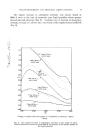
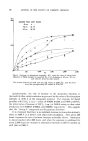
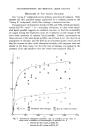
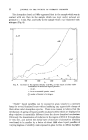
18 JOURNAL OF THE SOCIETY OF COSMETIC CHEMISTS With samples of liquid paraffin from widely different refineries in this country, on the continent of Europe, and from the United States of America, the author never came across any materials showing absorption ratios "from 20 upwards." In fact, there is every likelihood that no larger absorption ratio than 3.98 can exist, since the "Group A" compounds have been identi- fied as alkylated symmetrical octahydrophenanthrene. Liquid paraffin solutions prepared with a solvent of the hexane or iso- octane type must give similar spectra to the "neat" material, provided that there is no leakage from the cell which contains the solution. If there were such leakage it might obscure the cell windows. From a large amount of experimental data we drew the conclusion that the ratio of the absorption intensities at the maximum at 2710 A and the minimum at 2490 A must be at least 2.0, when the absorption intensity at the maximum lies between E(1%, 1 cm.)= 0.100 and E(1%, 1 cm.)---- 0.010, for the material to be stable. This does not exclude the possibility that a material of an absorption ratio of 1.5 stored in a glass bottle in diffused daylight up to twelve months may have remained colourless and odourless. I have never suggested that both tests, the spectrophotometric method and the sulphuric acid test, should be used in future. On the contrary, the whole emphasis of to-night's paper is to counsel the abandoning of the sulphuric acid test and the adoption of the described spectrophotometric quality and stability criterion instead. Samples of liquid paraffin have been exchanged by various laboratories and very close agreement of the results was obtained, even though different types of spectrophotometers, i.e., instruments with photographic plate recording and photo-electric instruments, were applied. Dr. Mitchell: Information supplied since the meeting The high ratios referred to above were obtained in tests conducted on dilute (4 to 5 per cent w/v) solutions of liquid paraffin in n-hexane. Since the meeting, and using experimental details supplied to us by Dr. Schnur- mann, we have found that lower ratios, more of the order of those obtained by Dr. Schnurmann, have been obtained by taking readings on undiluted liquid paraffin. In fact, the ratios have generally been around 1.5, though the samples appeared to be of satisfactory quality and stability. Several had been stored for up to twelve months in diffused daylight, yet they had remained colourless and odourless. Of course, these conditions of storage are much less severe than exposure to direct sunlight. Since Dr. Schnur- mann's test and standard would condemn such samples, we still consider that the test, in its present form, is unsuitable as an official standard.* Dr. Posner: Since it might be possible to produce artifacts in the ratio * Editorial Note. Dr. Mitchell's mild storage stability test has no relation to Dr. Schnurmann's and no useful comparison can be made.

SPECTROPHOTOMETRY AND MEDICINAL LIQUID PARAFFIN 19 absorption maximum/absorption minimum by preferential purification, should not the proposed critical ratio be used with great care ? The need for having the ratio 2 also seems to imply that addition of one component to increase the ratio above the critical value should increase the stability of the oil. Thi• cannot be so, as both components lead to instability of the oil. Since maximum stability would be obtained when both components are absent, a less ambiguous criterion would seem to be the heights of the maximum and minimum above the wavelength axis, without actual refer- ence of these values to one another. Author: The spectrophotometric quality and stability criterion for medicinal liquid paraffin takes into consideration the absorption intensities at two wavelengths. These two wavelengths of 2710/k and 2790/k mark the position of the peak of the absorption band, and of the minimum of the absorption curve for materials which show band structure in this spectral region. A ratio of the absorption intensities of at least two is required for a stable material whose E (1 øfo, 1 cm.) value lies within the range 0.010 and 0 100. For any material which has been purified to such a degree that its spectrum does not show any band structure, the E(1 øfo, lcm.) value at 2710/k must lie below 0 006 for the material to be stable. It is thus clear that the spectrophoto- metric criterion is based on two numerical values: either the absorption ratio in conjunction with the value of the absorption intensity at the maxi- mum (2710 A), or the values of the absorption intensities at the maximum and the minimum. There is the additional precaution necessary of ascer- taining that the position of the minimum has not been displaced to appreci- ably longer wavelengths than 2490/k. There is no suggestion of discriminat- ing between various degrees of stability, but of ascertaining whether or not a material will be stable. Dr. Matalon: I have been very interested by the study that has been made on the nature of the impurities in paraffin oil which cause deterioration on ageing and I would like to know what is the minimum amount required of these impurities to produce an undesirable effect in colour and odour on storage of the white oils." Author.' It depends on the quality of a given stable liquid paraffin what amount of Group B compounds one has to add in order to make it unstable. Experiments were made in which minute amounts of Group B compounds were added to a highly purified liquid paraffin whose E(1 øfo, 1 cm.) value was 0.0025 at 2700 /k. These minute additions had a noticeable effect on the stability of the thus contaminated material. REFERENCES • Pauline Mary Martin, "The Physical Meaning of the British Pharmacopoeia Acid Test." M.Sc. Thesis, London, 1951. 2 R. Schnurmann, Pauline M. Martin and W. F. Maddams, "An ultraviolet spectro- photometric quality and stability criterion for medicinal liquid paraffin." The Journal of Pharmacy and Pharmacology, 8, 298, 1951.
Purchased for the exclusive use of nofirst nolast (unknown)
From: SCC Media Library & Resource Center (library.scconline.org)