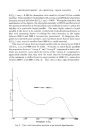
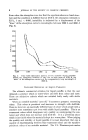
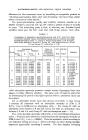
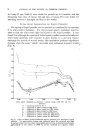
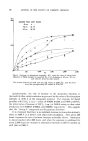
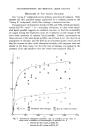
20 JOURNAL OF THE SOCIETY OF COSMETIC CHEMISTS a R. Schnurmann, "l•,tude spectroscopique de la stabilitd photochimique d'huiles de paraffine mddicinales." Journal de Physique, 11i, 503, 1954. ' R. Schnurmann, "The 'Group A' compounds in medicinal liquid paraffin."-- Transactions of the 27th International Congress of Industrial Chemistry, Brussels 1954 THE EFFECT OF VARIATION OF THE WATER AND OIL RATIO ON THE DIFFUSION RATE OF SULPHATHIAZOLE FROM COLD CREAM TYPE OINTMENT BASES AUBERT CORAN* and C. LEE HUYCKi The authors study the effect of varying the phase ratio of cold cream con- raining sulphathiazole. They find that reversal of the external phase is a gradual change and describe two methods for determining the rate of diffusion of the drng from the cream. IT WAS recently established • that cold cream type ointments containing mineral oil, beeswax, borax, and water may be either of the oil-in-water or water-in-oil type, depending upon their oil and water concentration. It was shown •,• that sulphathiazole diffuses more rapidly from oil-in-water type emulsions than from the water-in-oil type. The purpose of this investigation is to show the change in the rate of diffusion of sulphathiazole from this type of base as the water and oil concentrations are changed and to compare two methods of testing the diffusion of sulphathiazo]e from ointment bases. In vitro studies of diffusion rates of drugs from ointment_bases have been &X•..e_nsively conducted by the use of the agar gel method which was developed by Waud and Ramsay.' This method employed an agar 'g• •cø•[•[ihing an i•dicator. The ointment being tested was placed on top of the gel which was contained in a test tube. Measurements of the extent of diffusion was based upon the distance from the top of the gel to the bottom of the indicated area. Other methods 5'6 have shown the extent of diffusion into saline solutions, blood-serum, and water. The method used here was taken from a recent note7 which presented a new method of determining the extent of diffusion of drugs from various ointment bases. This method employed a piece of filter paper moistened with indicator solution. The ointment was placed in the centre of the filter paper in a small hollow cylinder open at both ends. Determinations of the diffusion rates were made by measuring the distance from the outer edge of the ointment to the outer edge of the indicated ring on the filter paper. * Graduate Assistant in Chemistry, St. Louis College of Pharmacy & Allied Sciences, St. Louis 10, Mo. t Professor Industrial Pharmacy, St. Louis College of Pharmacy & Allied Sciences, St. Louis 10, Mo.

20 JOURNAL OF THE SOCIETY OF COSMETIC CHEMISTS a R. Schnurmann, "l•,tude spectroscopique de la stabilitd photochimique d'huiles de paraffine mddicinales." Journal de Physique, 11i, 503, 1954. ' R. Schnurmann, "The 'Group A' compounds in medicinal liquid paraffin."-- Transactions of the 27th International Congress of Industrial Chemistry, Brussels 1954 THE EFFECT OF VARIATION OF THE WATER AND OIL RATIO ON THE DIFFUSION RATE OF SULPHATHIAZOLE FROM COLD CREAM TYPE OINTMENT BASES AUBERT CORAN* and C. LEE HUYCKi The authors study the effect of varying the phase ratio of cold cream con- raining sulphathiazole. They find that reversal of the external phase is a gradual change and describe two methods for determining the rate of diffusion of the drng from the cream. IT WAS recently established • that cold cream type ointments containing mineral oil, beeswax, borax, and water may be either of the oil-in-water or water-in-oil type, depending upon their oil and water concentration. It was shown •,• that sulphathiazole diffuses more rapidly from oil-in-water type emulsions than from the water-in-oil type. The purpose of this investigation is to show the change in the rate of diffusion of sulphathiazole from this type of base as the water and oil concentrations are changed and to compare two methods of testing the diffusion of sulphathiazo]e from ointment bases. In vitro studies of diffusion rates of drugs from ointment_bases have been &X•..e_nsively conducted by the use of the agar gel method which was developed by Waud and Ramsay.' This method employed an agar 'g• •cø•[•[ihing an i•dicator. The ointment being tested was placed on top of the gel which was contained in a test tube. Measurements of the extent of diffusion was based upon the distance from the top of the gel to the bottom of the indicated area. Other methods 5'6 have shown the extent of diffusion into saline solutions, blood-serum, and water. The method used here was taken from a recent note7 which presented a new method of determining the extent of diffusion of drugs from various ointment bases. This method employed a piece of filter paper moistened with indicator solution. The ointment was placed in the centre of the filter paper in a small hollow cylinder open at both ends. Determinations of the diffusion rates were made by measuring the distance from the outer edge of the ointment to the outer edge of the indicated ring on the filter paper. * Graduate Assistant in Chemistry, St. Louis College of Pharmacy & Allied Sciences, St. Louis 10, Mo. t Professor Industrial Pharmacy, St. Louis College of Pharmacy & Allied Sciences, St. Louis 10, Mo.
Purchased for the exclusive use of nofirst nolast (unknown)
From: SCC Media Library & Resource Center (library.scconline.org)